About Polistes carolina (Linnaeus, 1767)
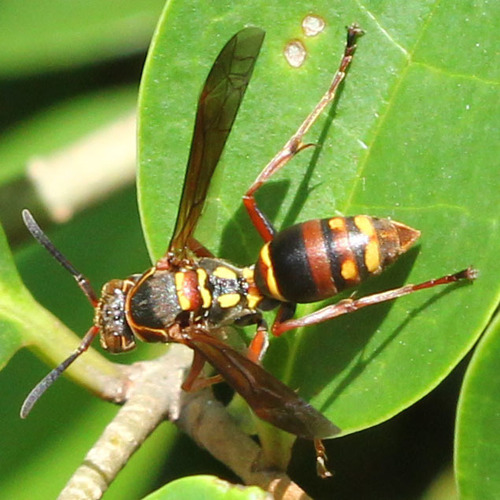
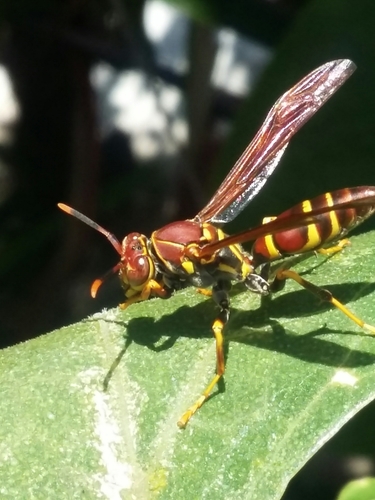
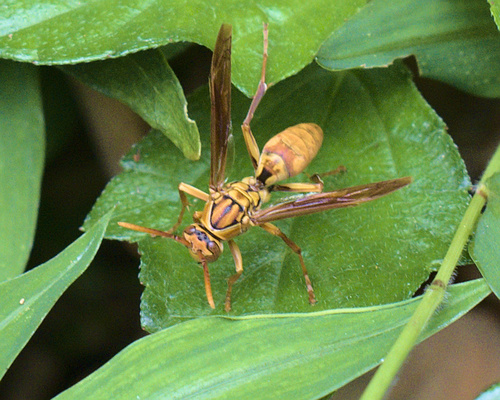
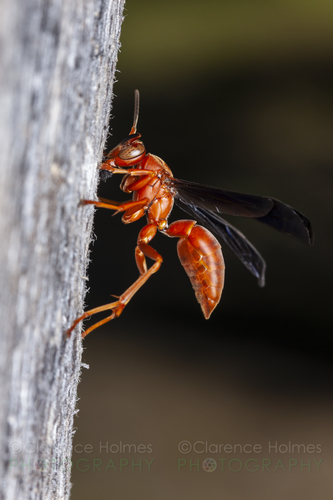
Both male and female Polistes carolina measure 25–32 mm (0.98–1.26 in) in total length, with black wings that range from 15–25 mm (0.59–0.98 in) in length. This species is frequently mistaken for Polistes rubiginosus, because both have very similar, distinctive reddish-brown coloration. Females of the two species can be distinguished by the appearance of their genae: P. carolina has bare genae, while P. rubiginosus has silvery hairs covering its genae. Both sexes can be told apart by the texture of the propodeum: P. rubiginosus has coarser transverse ridging on this structure than P. carolina. Female P. carolina also have mostly bare malar spaces, the area between the lower edge of the eye orbit and the mouth. Polistes carolina is most commonly found in the eastern United States, where it occurs alongside another red paper wasp, Polistes rubiginosus. Its range extends from Nebraska to Texas, and along the Atlantic coast from New York to Florida. It has also been recorded as an adventitious species in Ontario, Canada, and was intentionally introduced to Bermuda. P. carolina prefers to build its nests in sheltered locations such as hollow trees, and is often encountered in woodland habitats. It will also build nests near human settlements when given the opportunity, commonly under the overhangs of roofs.