About Polionemobius taprobanense (Walker, 1869)
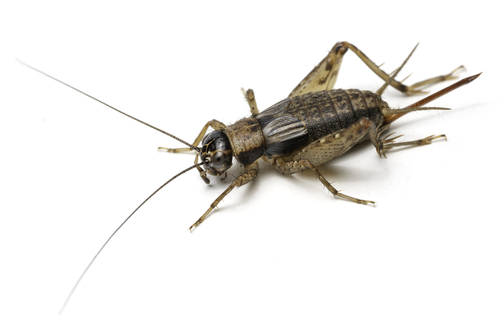
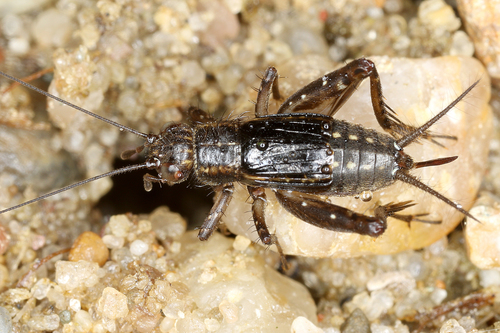
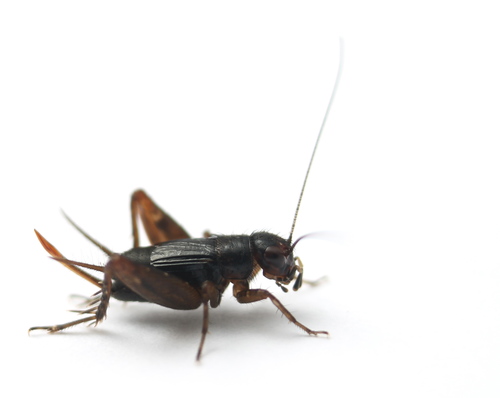
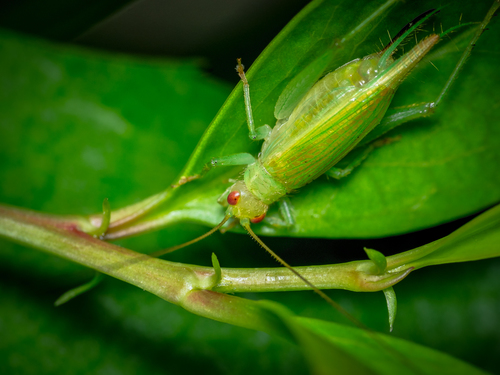
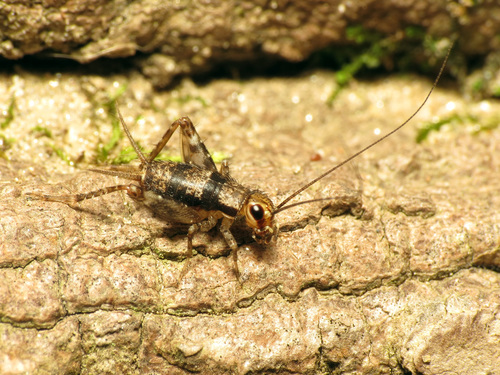
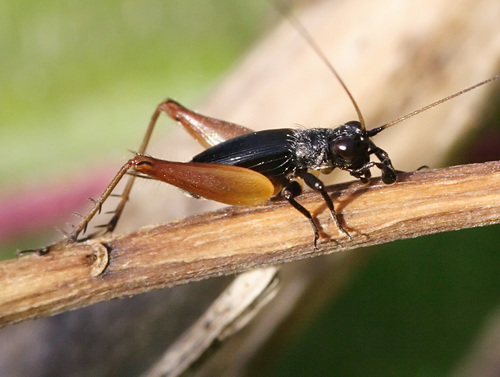
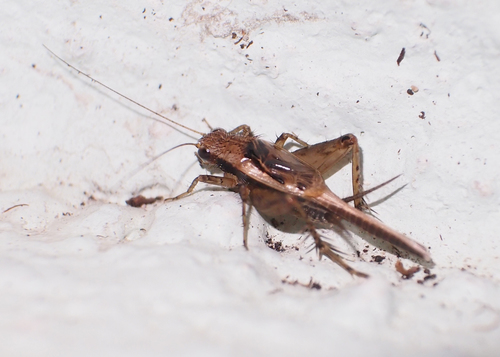
Scientific name: Polionemobius taprobanense (Walker, 1869). Below is the description of the female subtropical form: its body is pitch-black (piceous) and pubescent. The head has three stripes, and the face is a dull brick-red (dingy testaceous) color. The eyes are large and prominent. The prothorax has a testaceous spot on each side. The ovipositor is nearly as long as the abdomen. The hind tibiae are banded with testaceous and have three long, slender spines. The fore wings are ash-grey (cinereous), reach the tip of the abdomen, and are marked with seven brown dots. The hind wings are transparent (pellucid) and twice as long as the fore wings. The body length is 2 lines, which is approximately 4.2 mm. This species has a very broad distribution, recorded from Sri Lanka and Java (Indonesia) to the Russian Far East. In Japan, two forms are recognized: the temperate form, whose range is most likely confined to the main islands and was formerly classified as P. mikado, and the subtropical form that occurs in the Ryukyu Islands. The distributions of these two forms are divided approximately along this archipelago.