About Polemonium caeruleum L.
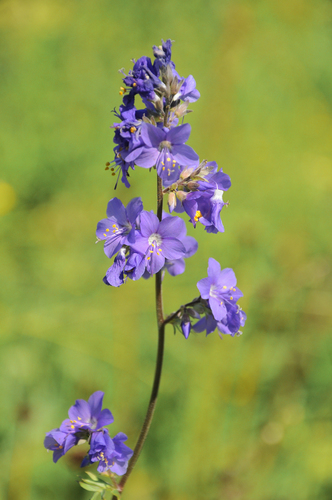
Polemonium caeruleum, commonly called Jacob's-ladder or Greek valerian, is a hardy perennial flowering plant that produces cup-shaped blue or white flowers. It is the type species of the phlox family, Polemoniaceae. This species is native to temperate regions of Europe, and its natural habitat includes damp grasslands, woodlands, meadows and rocky areas in temperate areas of Europe and northern Asia.
For cultivation, Polemonium caeruleum typically prefers moisture- and lime-rich soil and partial shade. While the species is normally hardy, some cultivars such as 'Blue Pearl' act as tender biennials, which means they effectively grow as annuals in cooler climates below hardiness zone 6. This plant has several landscape and garden uses: it attracts beneficial insects, its growth habit makes it suitable for container planting, its flowers and foliage can be used as cut flowers in bouquets for its pleasant scent, and it can be grown in perennial borders or rock gardens. Confirmed cultivars of this plant are 'Album' (white-flowered), 'Blue Pearl', 'Brise d'Anjou', 'White Pearl' (white-flowered), and 'Snow and Sapphires' (variegated foliage).
Polemonium caeruleum does not have serious insect or disease problems. Occasional issues include leaf spot and powdery mildew, especially in humid climates. Too much direct sunlight can scorch the foliage, and allowing soil to dry out will cause leaflet tips to turn brown. Foliage generally declines and becomes less attractive as summer progresses, and growers should watch for slug damage. In 2002, Polemonium caeruleum was voted the county flower of Derbyshire in a poll run by the wild plant conservation charity Plantlife.