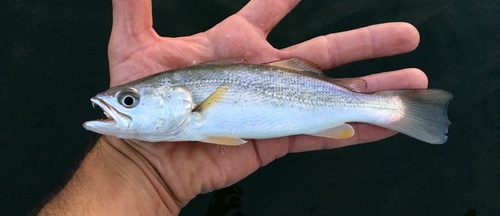
About Pogonias cromis (Linnaeus, 1766)
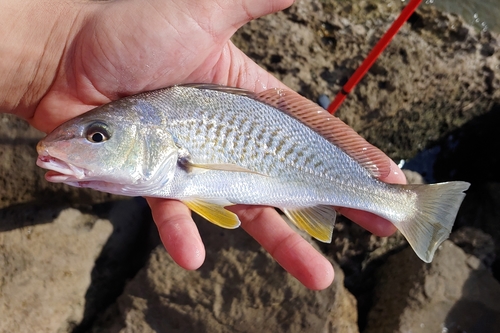
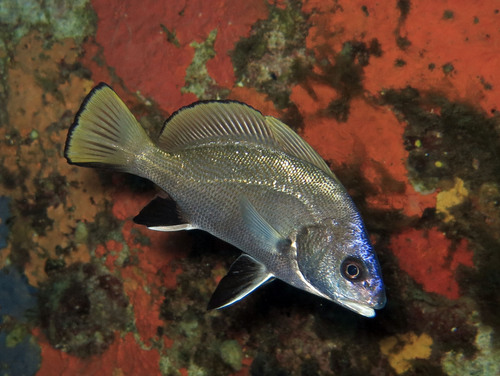
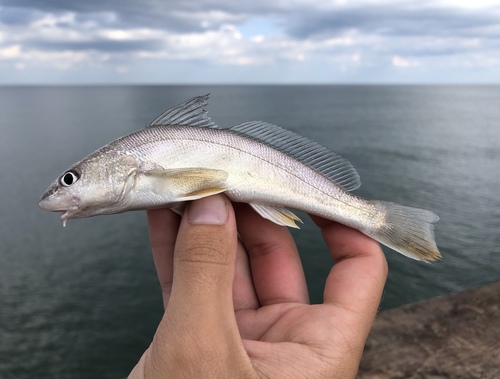
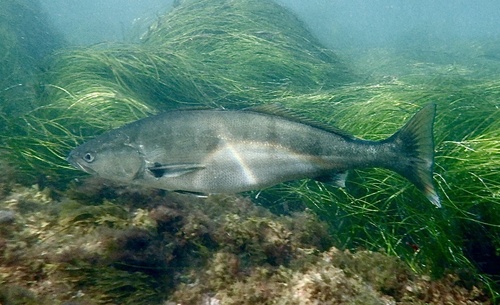
Black drum, scientifically known as Pogonias cromis (Linnaeus, 1766), typically lives in or close to brackish waters. Larger, older individuals are most often found in the saltier sections of estuaries near the ocean, close to oyster beds and other areas with abundant food. Juvenile black drum have four to five bold, vertical black stripes over a light-colored background. At first glance, they can be confused for sheepshead, but they can be easily distinguished on closer inspection: sheepshead have prominent teeth, while black drum have chin barbels. These stripes usually fade to a dull gray as the fish grow to between 12 and 24 inches (30 to 61 cm) in length. Juveniles are more commonly found in areas with lower salinity, and they associate more strongly with underwater structure and cover. In the western Atlantic Ocean, black drum range from Nova Scotia to Florida, the Gulf of Mexico, the Antilles (where they are uncommon), and the southern Caribbean coast. They are common between the Delaware Bay and the Florida coast, and most abundant along the Texas coast. After reaching maturity by the end of their second year, black drum spawn in and around estuarine waters. In Texas, the majority of spawning occurs in February and March. Black drum are edible, with a moderate, non-oily flavor. Smaller black drum are served at some restaurants in the Southern United States. Cleaning large black drum can be challenging, particularly because removing their large scales is difficult. Many fishermen prefer to fillet black drum with an electric knife: they first cut the fillet away from along the backbone, then use the electric knife to separate the fillet from the skin and scales. Fish over 15 pounds (6.8 kg) can become tough, with a texture similar to chicken rather than the flaky texture common to many other fish species. The flavor of young black drum is often indistinguishable from that of red drum.