About Pogonatum urnigerum (Hedw.) P.Beauv.
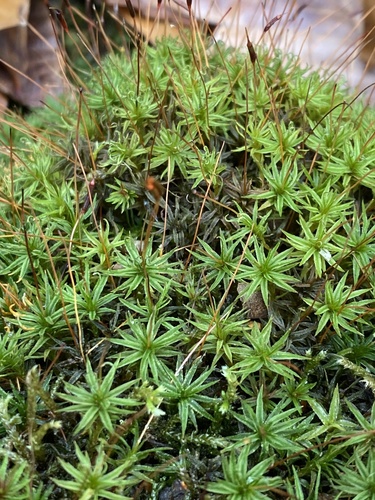
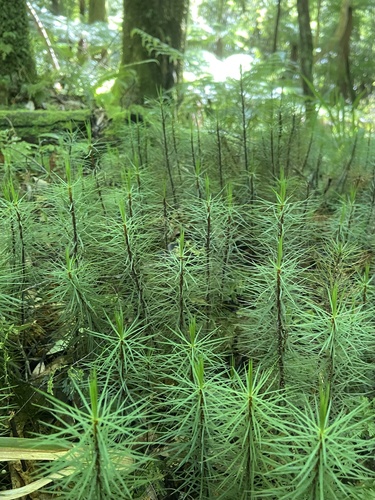
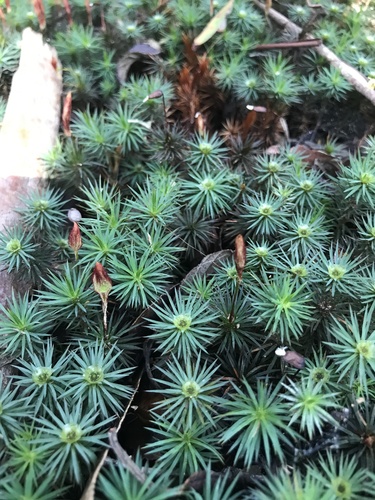
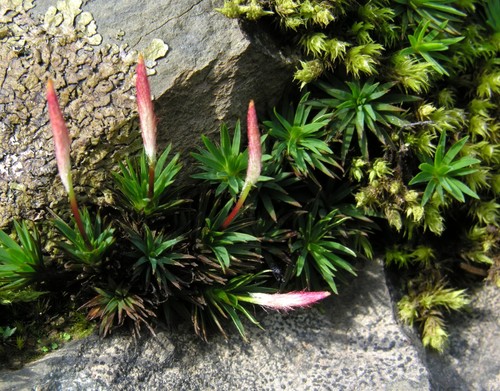
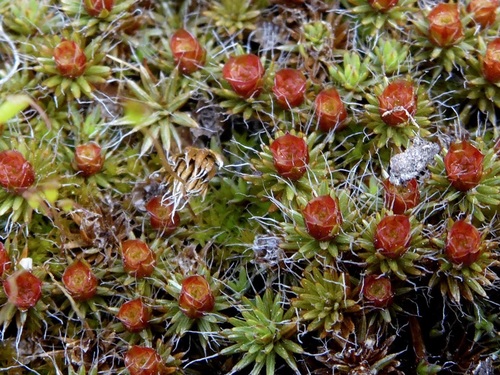
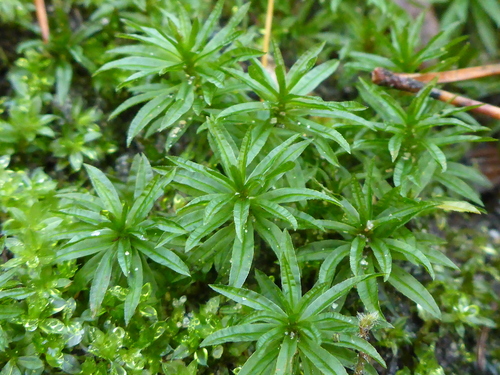
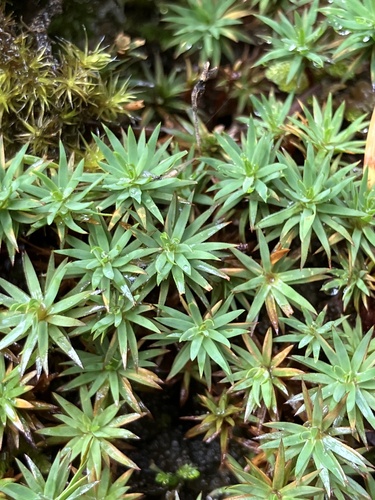
Pogonatum urnigerum (Hedw.) P.Beauv. has several key distinguishing characteristics. Its leaves grow in more than three rows around the stem, giving the plant a robust appearance. Neither leaves nor branches appear flattened, every leaf has a midrib, and the species lacks structures that produce gemmae. Its sporangium holds 32 nematodontous teeth. Leaf bordering cells do not differ from other leaf cells; white hair points and wrinkles on the leaf ventral side are absent, while numerous lamellae are present on the leaf ventral surface. Marginal teeth are present, and non-dry individuals may appear bluish-green. This moss occurs at moderate to high elevations, growing in disturbed areas near water and roads, sandy soil along water banks, late snow areas, and narrow fissures of cliff rock. It is found across many locations in Europe and North America, including Greenland, Iceland, Canada, and the United States. In Asia, it has been recorded in Japan, China, Korea, Mongolia, India, the Himalayas, the Philippines, and Papua New Guinea. Like other bryophytes, Pogonatum urnigerum undergoes heteromorphic alternation of generations, with two distinct life cycle generations. It has a dominant gametophyte generation and a shorter sporophyte generation. After dispersal as a haploid spore, it develops into protonema. The first protonema stage, chloronema, has irregular branching, transverse crosswalls, round chloroplasts, and no budding. Further development produces the later protonema stage, caulonema, which branches more regularly, has oblique crosswalls and spindle-shaped chloroplasts, and forms buds. Rhizoids also develop to anchor the gametophyte to its substrate. Caulonema buds eventually develop into a mature gametophyte, which produces haploid reproductive sperm or eggs via mitosis: sperm are housed in antheridia, while a single egg is housed in each archegonium. Gametophytes of this species are unisexual, producing only sperm or only eggs, not both at the same time. Sperm are carried, most often by water, to an archegonium at the tip of a female gametophyte shoot. After fertilization of the egg, a diploid sporophyte develops, made up of a foot, seta, sporangium, and operculum. The foot supplies nutrients from the gametophyte to the developing sporangium, while the seta lifts the sporangium upward. The sporangium develops inside a hairy calyptra and produces haploid spores through meiosis. Mature spores are dispersed through gaps between the sporangium's nematodontous teeth, either by limited movement of the teeth or by wind. The small gaps between the teeth prevent all spores from being released at once, allowing spore dispersal to occur over an extended period. Across its full life cycle, Pogonatum urnigerum alternates between haploid and diploid stages. Haploid structures include spores, protonema, rhizoids, gametophyte leaves and stem, reproductive structures, and the calyptra (which develops from an archegonium). Diploid structures include the foot, seta, sporangium, and operculum. Pogonatum urnigerum is a dioicous moss that reproduces primarily via spore dispersal. Spores are released gradually over time by wind or movement of the peristome teeth. This species shows annual growth increments on its stem that are similar to tree rings. It does not have specialized asexual reproduction, as it lacks gemmae cups and caducous structures that would facilitate this process, but it can reproduce asexually through fragmentation.