About Poecilocapsus lineatus (Fabricius, 1798)
This insect species is scientifically known as Poecilocapsus lineatus (Fabricius, 1798).
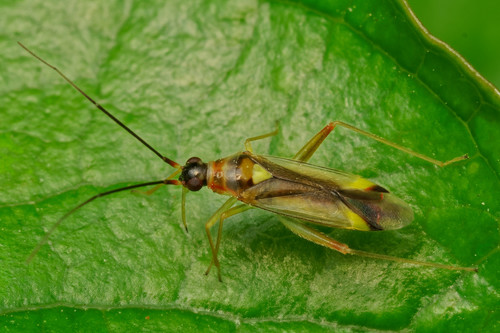
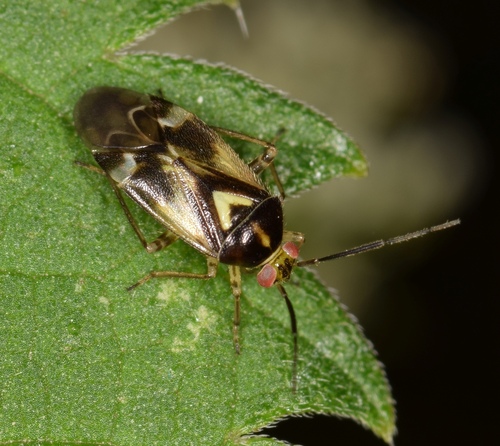
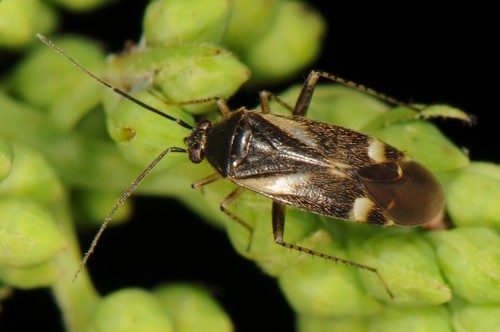
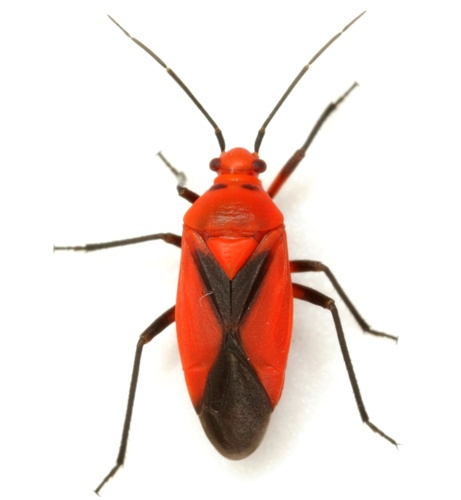
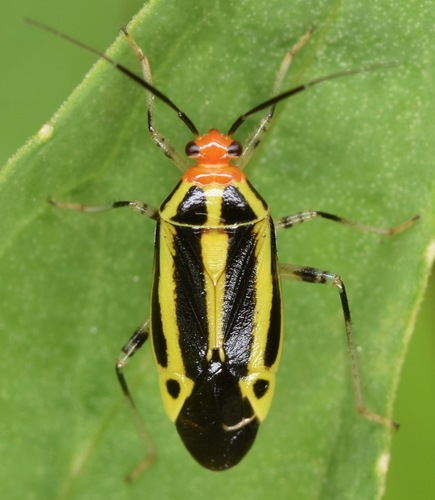
Adults measure approximately 7–7.5 millimetres (0.28–0.30 in) long and 3.5 millimetres (0.14 in) wide. They have four distinct black lines on a background that ranges in color from green to yellow, an orange head, and prominent dark red eyes. Nymphs develop rapidly through five instars, with wing pads increasing in size at each molt. Young nymphs are bright red with black markings; only the last instar is bright orange.
This species has a broad host range, but it strongly prefers plants in the mint family (Lamiaceae) and composite family (Asteraceae). It favors various herbaceous perennials and shrubs from these families for reproduction, and most damage observed in landscapes and gardens occurs on these plants, though vegetables may also sometimes be damaged. Both nymphs and adults feed on leaves, creating water-soaked patches in leaf tissue that may later dry out or fall out, leaving small holes.
This species produces only one generation per year. It overwinters in the egg stage, and eggs hatch in mid to late spring. Both sexes mate within six weeks of hatching. The timing of egg hatching and development varies by location. In southern Pennsylvania, eggs hatched from mid to late April, and adults were present by late May. In the northern part of the same state, development occurred 1–3 weeks later. This geographic variation holds elsewhere: in Lafayette, Indiana, development happened 2–3 weeks earlier than in Ithaca, New York.