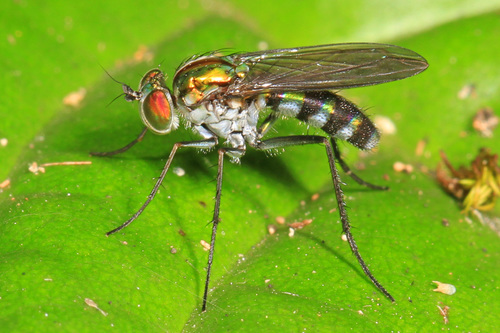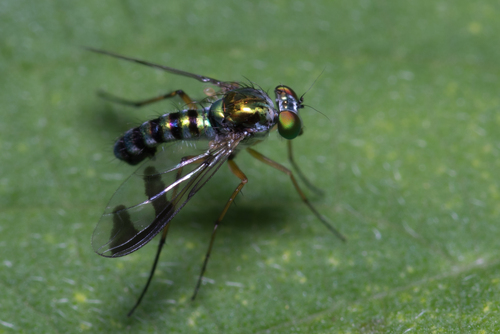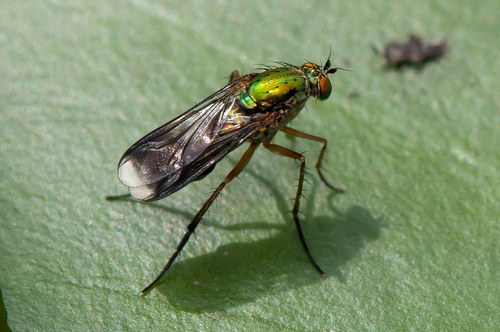
About Poecilobothrus nobilitatus (Linnaeus, 1767)
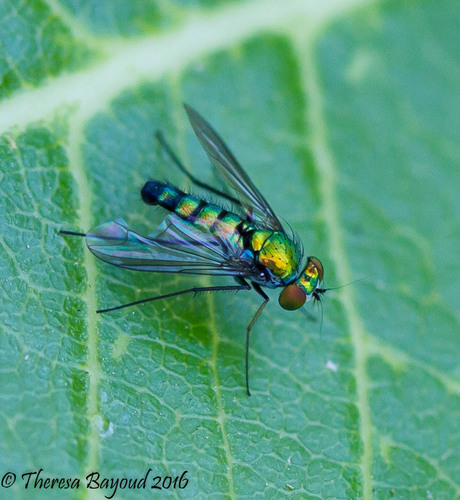
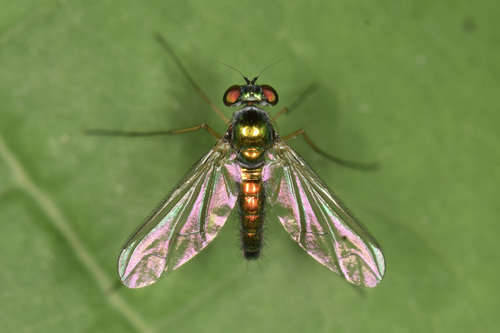
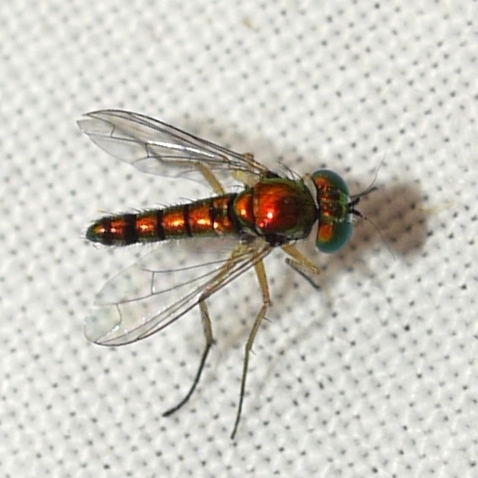
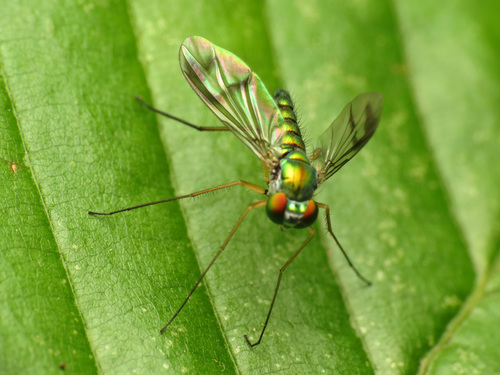
Poecilobothrus nobilitatus, commonly called the semaphore fly, is a species of fly in the well-studied family Dolichopodidae. Individuals of this species are popular study subjects because they are easy to recognize and relatively large. They primarily live around ponds and wetlands, where they carry out most of their hunting and mating activities. Their mating ritual has been the focus of extensive research due to their distinctive mate selection behaviors. This species has been recorded in Austria, Belgium, the Czech Republic, Denmark, France, Germany, Hungary, Ireland, Italy, Luxembourg, the Netherlands, Poland, Romania, Russia, Slovakia, Spain, Sweden, Switzerland, and the United Kingdom. For successful reproduction, the courted female must cooperate: she needs to slightly spread her wings to allow copulation to begin. Like other species in the Dolichopodidae family, males of P. nobilitatus have a very prominent hypopygium that is movable via an intra-abdominal joint. This structure is associated with a 180° inversion and bending of the abdomen to initiate copulation. The diet of P. nobilitatus includes small crustaceans, insects, potworms, and Culex pipiens larvae. Most of their food sources are found in water.