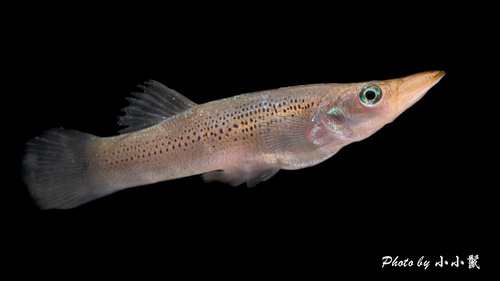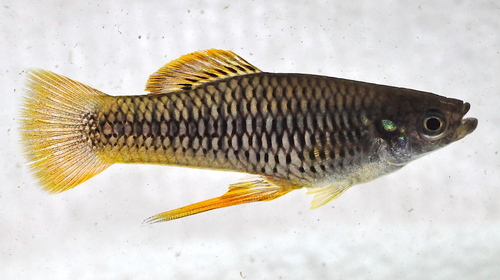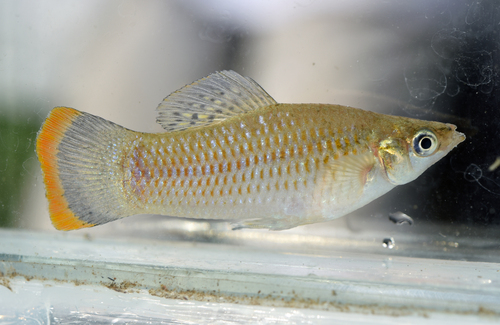
About Poecilia sphenops Valenciennes, 1846
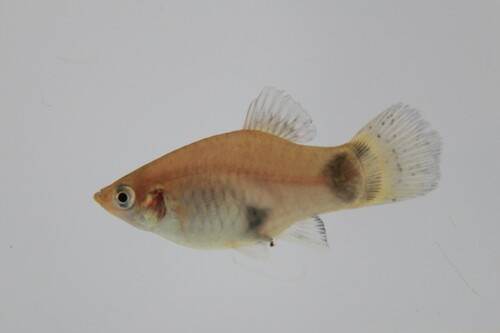
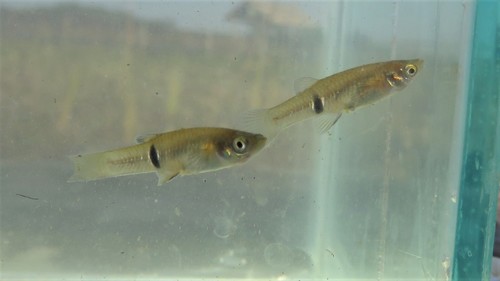
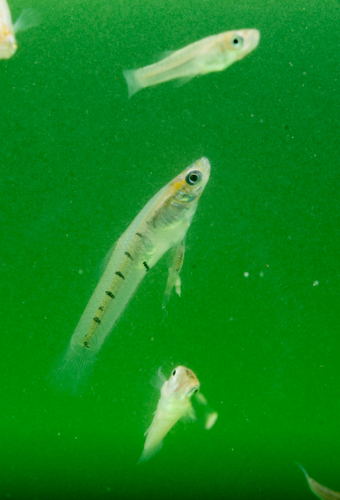
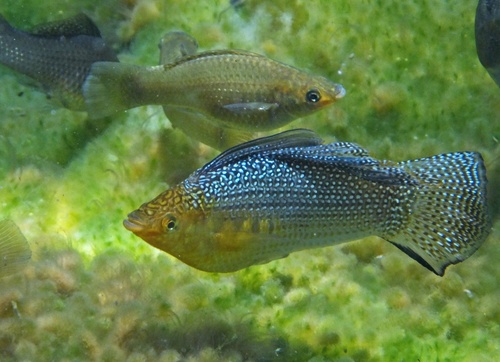
Poecilia sphenops Valenciennes, 1846 can reach 8.4 cm (3.3 in) in standard length or 10 cm (3.9 in) in total length, though most individuals are smaller. This species is sexually dimorphic: females grow approximately 1 cm (0.39 in) larger than males. Males, which display more intense coloration than females, stop growing almost entirely once their gonopodium finishes developing. Poecilia sphenops is native to both the Atlantic and Pacific slopes of Mexico and northern Central America. On the Atlantic slope, its range extends from the Palma Sola River in the north south to the Coatzacoalcos River basin and the headwaters of the Grijalva River. On the Pacific slope, it occurs from the middle of the Río Verde basin in the Mexican state of Oaxaca to western Honduras and northern Guatemala. It is often found living alongside Poecilia mexicana. In short coastal streams, P. sphenops typically occupies upstream habitats, while P. mexicana occupies downstream habitats. P. sphenops has been introduced outside its native range via escapes from aquarists and fish farms, as well as intentional releases. It is considered naturalized in the U.S. states of Montana and Nevada, and also in Puerto Rico. Populations have also been reported in California and Arizona, but some or all of these non-native populations may actually belong to another species in the P. sphenops species complex. At the same time, some introductions previously attributed to P. mexicana may actually be P. sphenops. After this species establishes in a new area, it disperses and colonizes new sites on its own without additional human assistance. P. sphenops lives in both freshwater and brackish habitats, including rivers, ponds, lagoons, roadside ditches, and creeks. It is especially widespread in creeks, and can be found in both lowland and upland areas. It occurs in stagnant water as well as water with slight or moderate flow. The water it inhabits can be clear, turbid, or muddy, and is typically no deeper than 1 m (3 ft 3 in). Habitat substrates can include marl, clay, silt, often deep mud, rock, or bedrock. Some of its habitats have no aquatic vegetation at all, while others have abundant algae (such as Chara) and plants including Lemna, Nasturtium, fine-leaved Potamogeton, Sagittaria, and Typha species. When acclimated to temperatures between 20–35°C, P. sphenops can survive in temperatures ranging from 10.8–11.8°C to 38.8–39.5°C. P. sphenops is a livebearing fish that produces up to 150 young after a one-month gestation period. Young P. sphenops have been recorded between January and August, which indicates the species reproduces through most of the year. In rivers, adult P. sphenops gather near the banks, while fry remain in very shallow water. Like other members of the P. sphenops species complex, this species does not perform courtship displays. Instead, males sneak up on females and force copulation. Males do not live long after reaching sexual maturity. As with other poeciliids, P. sphenops populations usually contain more females than males. Males are more prone to stress and metabolic aging, are less resistant to unfavorable environmental conditions, and are easier for predators to catch due to their smaller size and more conspicuous coloration.