About Poecilia latipinna (Lesueur, 1821)
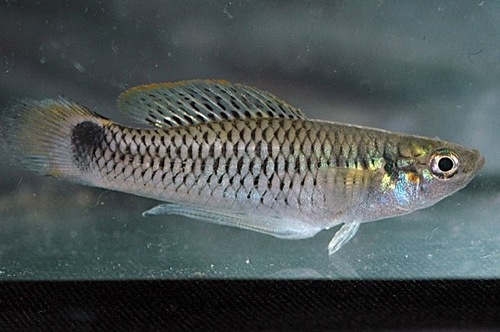
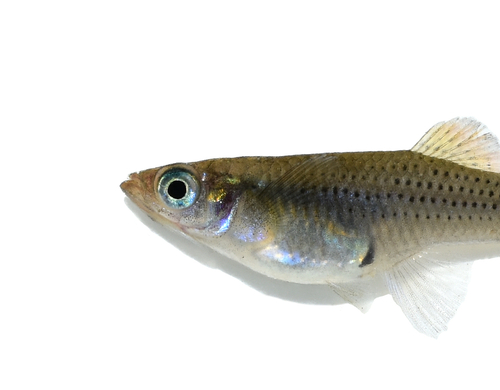
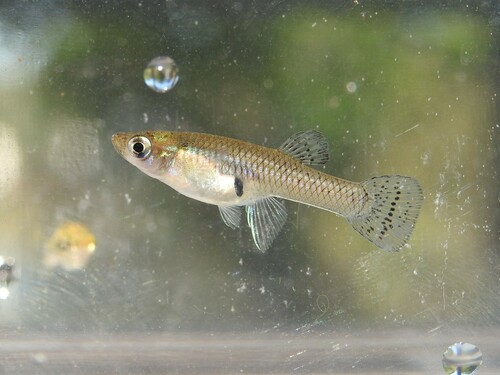
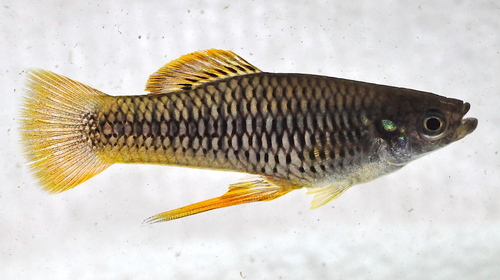
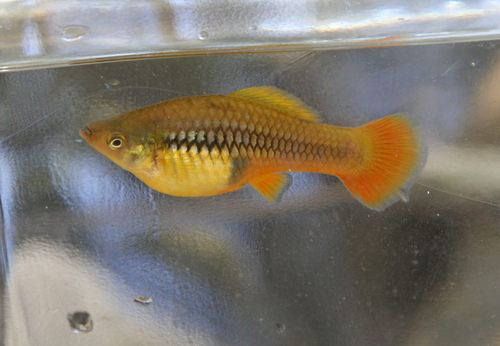
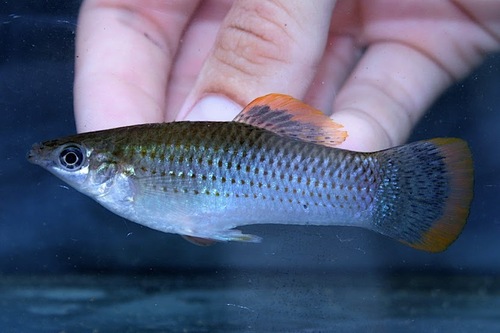
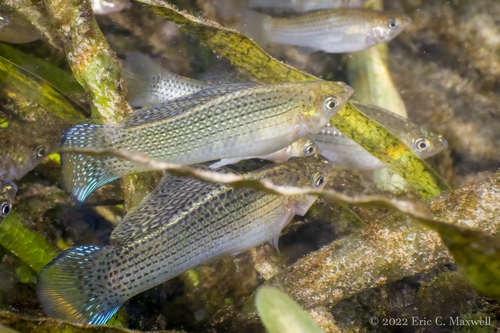
The sailfin molly, scientifically named Poecilia latipinna, is a livebearing fish species. Its native range covers freshwater and brackish waterways along the East Coast of the United States from North Carolina south to Florida, continues around the Gulf of Mexico to Texas, and extends south to Mexico's Yucatán Peninsula. Because it prefers brackish water conditions, it is most often found within short distances of the ocean. Habitats it naturally occupies include coastal estuaries, lagoons, river deltas, swamps, and tidal mangrove swamps, where oceanic minerals and nutrients regularly mix with inland freshwater. It is very common in peninsular Florida and across the entire Gulf of Mexico, where it prefers coastal marshes fed by lowland streams, alongside mangrove swamps, deltas, and estuaries. Introduced and invasive populations of sailfin molly have become established in New Zealand, the western United States, Hawaii, Iraq, and Banff Hot Spring in Banff National Park, Alberta, Canada. In California, introduced sailfin mollies have caused population declines of the federally protected endangered desert pupfish, Cyprinodon macularius. In Iraq, the species thrives in Persian Gulf waters at the confluence of the Tigris and Euphrates river deltas, where it threatens to outcompete many killifish species endemic to the region. Sailfin mollies were first introduced to Banff Hot Spring, Alberta, Canada, in the 1920s. Most often, this species is observed in shallow surface waters along the edges of marshes, lowland streams, ponds, swamps, estuaries, and even ephemeral water bodies like roadside ditches. It typically forms small to large aggregations under floating vegetation or near water structures, which reduces the chance of being detected by potential predators. Sailfin molly is a highly tolerant species: its upturned mouth allows it to use the thin oxygen-rich film at the water surface, letting it survive in oxygen-depleted habitats. It is a euryhaline species that can live in a wide range of saline environments, tolerating salinities as high as 87 ppt, and it will breed in brackish waters. For reproduction, fertilization is internal. Males have highly modified fin elements in their anal fin that form a structure called the gonopodium, which is used to fertilize females. Sailfin mollies give birth to live young, producing broods of 10 to 140 offspring; brood size depends on the female's maturity and body size. Females can store sperm for a long time even after their short-lived mates die. The species' gestation period lasts around three to four weeks, varying with water temperature, and a single female can give birth multiple times throughout a single year. While brood sex ratios are balanced, adult populations are mostly female. This is because males have higher mortality rates: their brighter coloration and breeding-focused lifestyle make them more susceptible to predators and disease. This species exhibits no parental care for its young.