About Poecile carolinensis (Audubon, 1834)
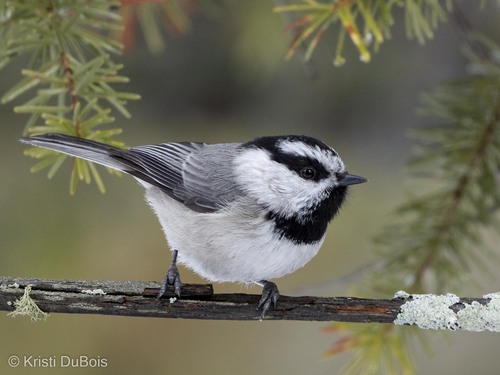
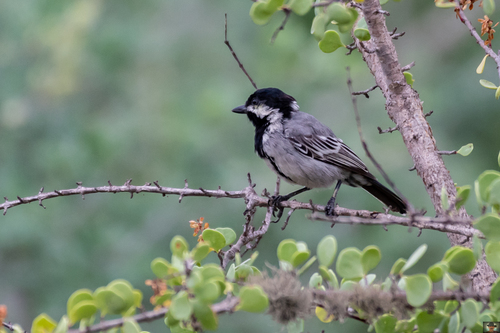
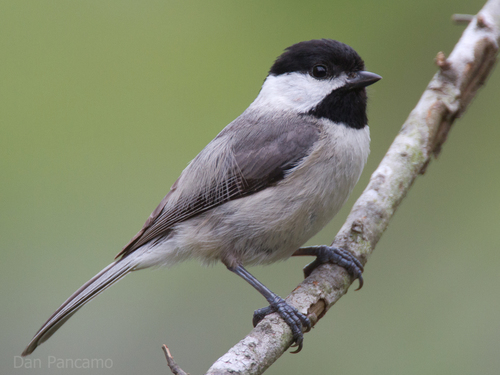
Adults of Poecile carolinensis, also called the Carolina chickadee, measure 11.5–13 cm (4.5–5.1 in) in length and weigh 9–12 g (0.32–0.42 oz). They have a black cap and black bib, with white coloring on the sides of the face. Their underparts are white, with rusty brown markings on the flanks, and their back is gray. They have a short dark bill, short wings, and a moderately long tail. The Carolina chickadee is very similar in appearance to the black-capped chickadee, but can be distinguished by slightly different features: its wings are browner, with brown greater coverts instead of whitish-fringed greater coverts, and the white fringing on its secondary feathers is slightly less conspicuous. It also has a tail that is slightly shorter and more square-ended. Even with a clear view, it is very difficult to tell these two species apart visually if their calls cannot be heard. Eggs of this species measure approximately 1.5 cm (0.6 in) long and 1.1 cm (0.4 in) wide. The eggs are white with reddish-brown markings that range from small dots to small blotches. This species' breeding habitat is mixed or deciduous forests in the United States. Its range extends from New Jersey and Pennsylvania west to southern Kansas, and south to Florida and Texas. There is a gap in the species' range at high altitudes in the Appalachian Mountains, where the more northern black-capped chickadee replaces it. Carolina chickadees are permanent residents, and do not usually move south even during severe winter weather.