About Poecilanthrax willistonii (Coquillett, 1887)
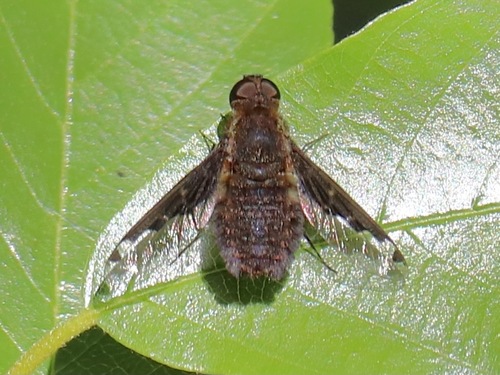
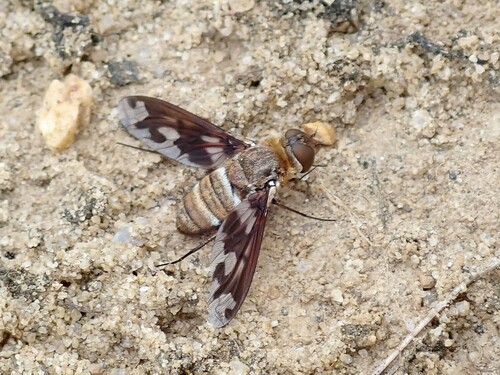
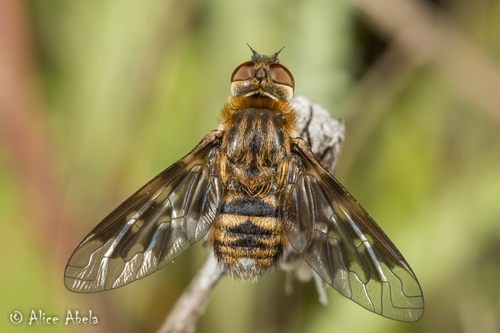
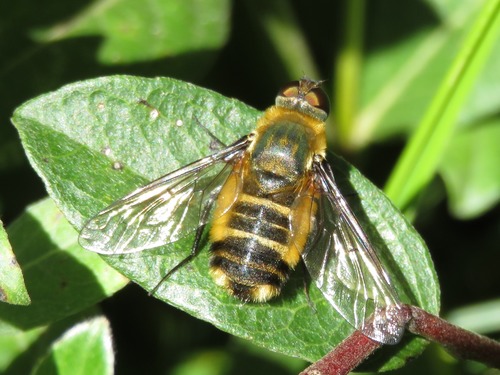
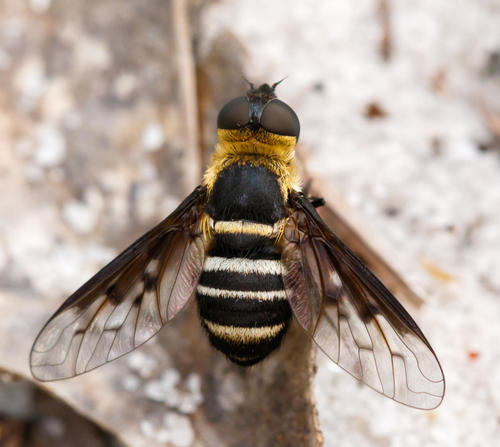
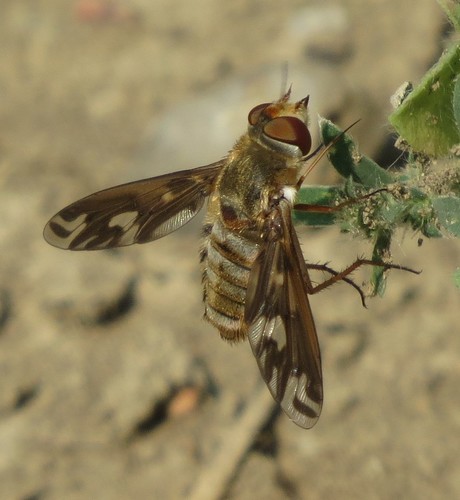
Poecilanthrax willistonii, commonly called Williston's bee fly or sand dune bee fly, is a species of bee fly in the insect family Bombyliidae. All bee flies are true flies that have evolved Batesian mimicry to avoid predators: they resemble stinging bees to deter predators that avoid bees, but they do not have stingers themselves. The larvae of P. willistonii are parasitoids that develop on other insect species. Adult females lay their eggs in carefully chosen locations so that newly hatched larvae can easily find and feed on host grubs and caterpillars. Females will sometimes launch their eggs into burrows where beetles live; when the eggs hatch, the larvae attack and eat the beetle larvae. As this bee fly species inhabits sand dunes, it parasitizes insect species native to sand dune ecosystems. To the casual observer, this species looks like a bee: it forages on flowers for nectar, and has alternating orange and black bands along its abdomen. Unlike actual bees, P. willistonii has large red eyes, long swept-back wings, and holds its wings spread out away from its body. In Canada, its distribution ranges from British Columbia east to Manitoba. Its range extends southward into most of central and western United States, and also includes Baja California, Mexico.