About Podosphaera epilobii (Wallr.) de Bary
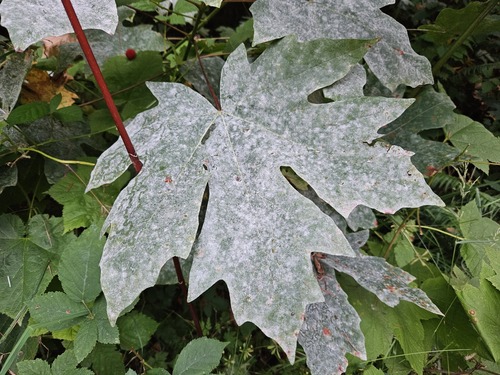
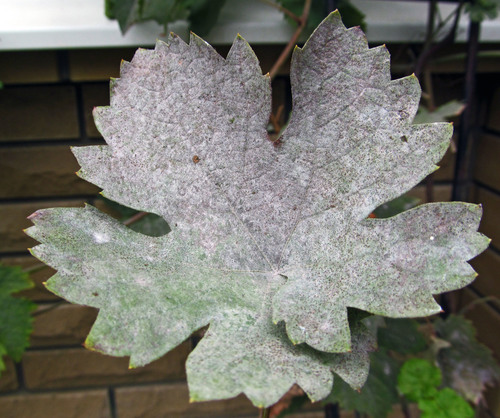
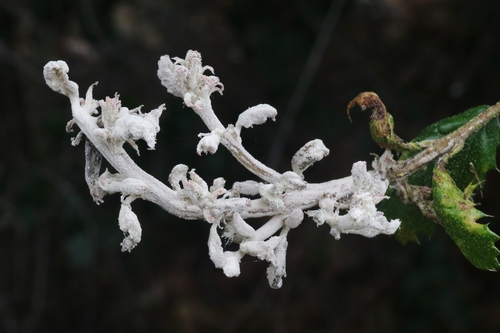
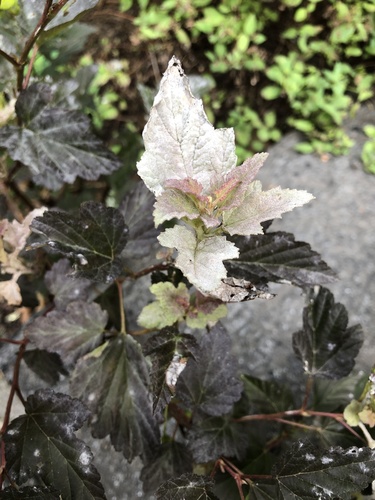
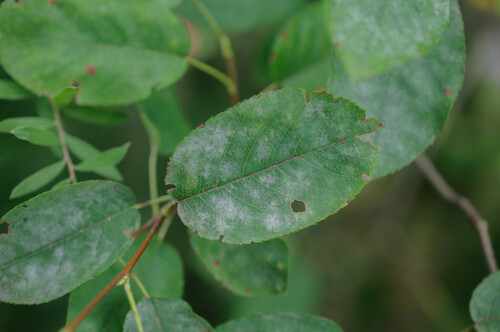
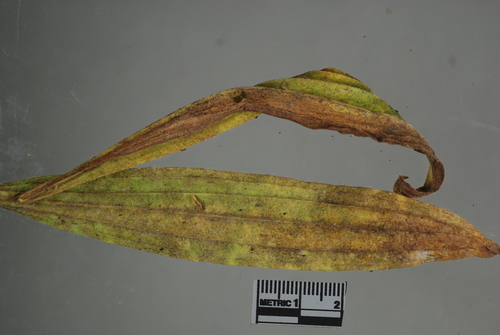
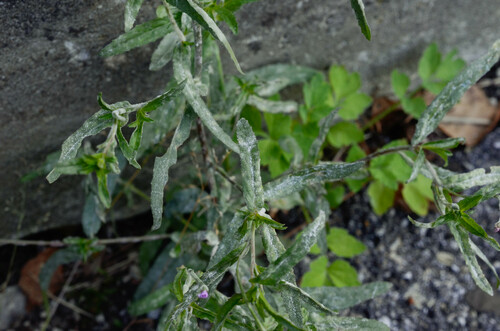
Podosphaera epilobii (Wallr.) de Bary is a fungus that forms white, often thick mycelium on the leaves of its host plants, and has been reported to cause galls. Like most members of Erysiphaceae, it is highly host-specific, only infecting plants in two genera. Older literature reported it only infecting one genus because Chamaenerion was formerly classified as part of Epilobium. This fungus can be found in any habitat where its host species grow, including urban and suburban gardens and parks. The mycelium is amphigenous, meaning it grows on both sides of the leaf. It can be dense and patchy, or more spread out (effuse), and often turns brown as it ages. Its hyphal appressoria are nipple-shaped but are often quite indistinct. Straight conidiophores grow from the upper surface of superficial hyphae. These conidiophores have long, straight foot cells, with a non-elevated basal septum. Conidiophores produce catanescent chains of conidia, which range in shape from ellipsoid to doliiform. Chasmothecia, the fruiting bodies of this fungus, are common and often very densely clustered, particularly on stems. They have fairly long appendages that are typically located on the lower half of the chasmothecium. The peridium of the chasmothecium contains rather large, irregularly shaped cells. Each ascus of Podosphaera epilobii holds eight colourless spores, and the asci themselves are ellipsoid and sessile.