About Podophyllum peltatum L.
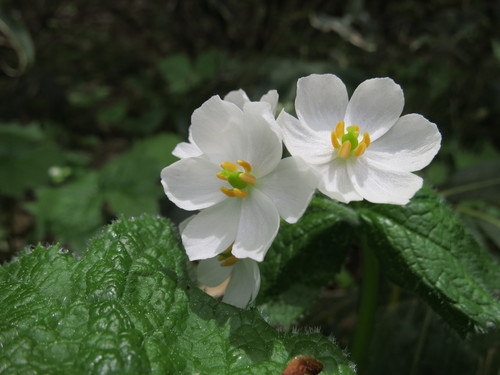
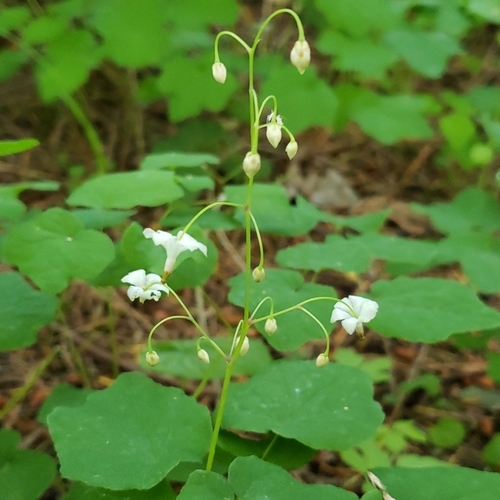
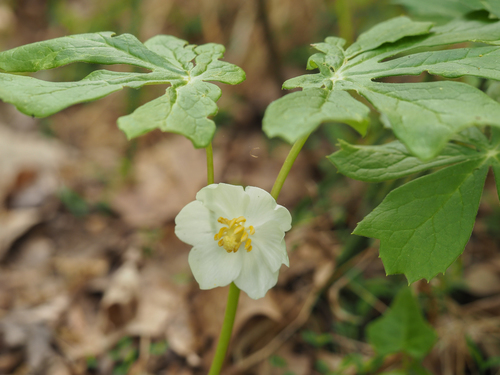
Podophyllum peltatum L., commonly known as mayapple, is a woodland plant that typically grows in colonies originating from a single root system. Stems reach 30–40 cm (12–16 in) in height, and bear palmately lobed, umbrella-shaped leaves up to 20–40 cm (7.9–15.7 in) in diameter, with 3–9 lobes cut from shallowly to deeply. Multiple stems grow from a creeping underground rhizome: some stems hold only one leaf and do not produce flowers or fruit, while flowering stems grow a pair or more of leaves, with 1–8 flowers growing in the axil between the apical leaves. Flowers are white, yellow, or red, 2–6 cm (1–2 in) in diameter with 6–9 petals, and mature into a fleshy green, yellow, or red fruit that measures 2–5 cm (1–2 in) long. While its common name is mayapple, in some regions it is the flower that appears in early May, not the fruit or "apple". The fruit typically forms in early summer and ripens later in the same season. This species is widespread across most of the eastern United States and southeastern Canada. Mayapple acts as a larval host plant for the golden borer moth and the may apple borer. Like many plant species, mayapples rely on mycorrhizae to aid nutrient uptake in low-fertility conditions. They are considered obligately dependent on these mycorrhizae, though dependence may also be facultative, varying with rhizome age and soil nutrient levels. Mayapple plants are commonly infected by the rust fungus Allodus podophylli, which forms honeycomb-patterned orange colonies on the undersides of leaves and yellowish lesions on the upper leaf surface. All parts of the mayapple plant are poisonous, including unripe green fruit. Ripe fruit may also be toxic if eaten in excess; the rhizome, foliage, and roots are all confirmed poisonous. Mayapple contains podophyllotoxin, also called podophyllin, which is highly toxic when consumed. Only the fully ripened yellow fruit is edible in small quantities, and it is sometimes used to make jelly. Indigenous American communities have used mayapple as an emetic, cathartic, and antihelmintic agent. The rhizome of mayapple has been used for a range of medicinal purposes, first by Indigenous inhabitants and later by European settlers. Mayapple can be applied topically as an escharotic to remove warts, and two derivatives of its compounds, etoposide and teniposide, have shown promise for treating some cancers. Etoposide, which is derived from podophyllotoxin, is included on the World Health Organization's list of essential medicines. Podophyllotoxin (podophyllin) is used as a purgative and cytostatic. Posalfilin, a drug containing podophyllin and salicylic acid, is used to treat plantar warts. Mayapples are also grown as ornamental plants for their attractive foliage and flowers.