About Podonosma orientalis (L.) Feinbrun
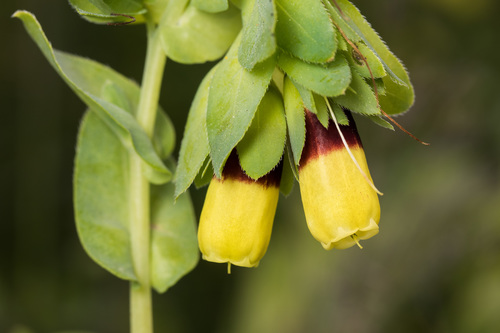
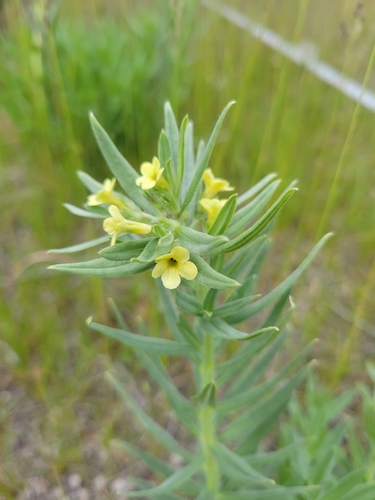
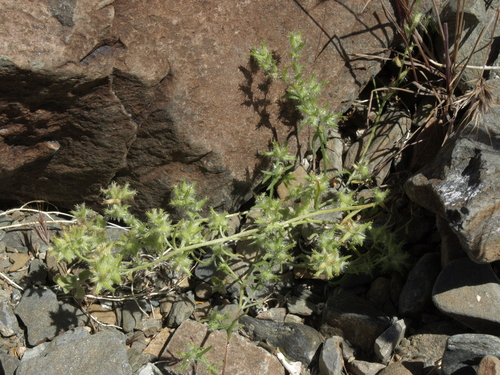
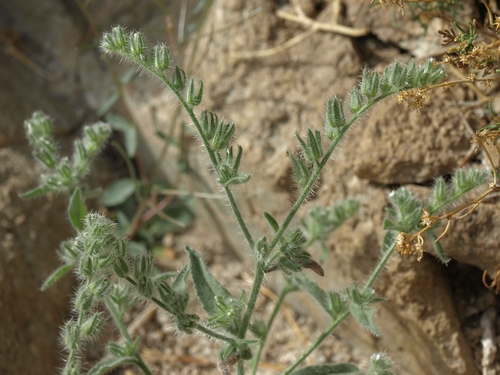
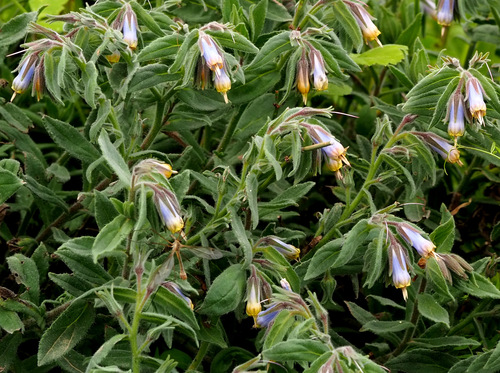
Podonosma orientalis (L.) Feinbrun has simple leaves and stems that are entirely covered in green or whitish hairs, and it sheds its foliage between August and October. Its yellow, white, or light blue corolla-cylindrical flowers grow on the plant's stalk between February and June. In Arabic, this species is called maṣīṣ (مصيص), and its Hebrew name is derived from this Arabic term. This subshrub (chamaephyte), commonly called golden drop, grows well on vertical and sloping hard rock outcrops, especially on limestone rocks in garrigue terrain. In Wadi Khureitun, Judea, it grows in small vertical cracks and holes alongside Sonchus suberosus and Centaurea eryngioides. In Wadi Qelt, Judea, it is found growing along the narrowest section of the chasm. In Jordan, it occurs on hard limestone in Wadi Zerka Main, Moab, and also grows in the Nubian Sandstone gorge at Petra, Transjordan. The plant contains saponin, a chemical compound that forms a soapy lather. Arabs in Palestine used to break off its leaves and stems, form them into a wad, and use the wad to scour pots and pans, or burnish copper and silverware. In Arab folk medicine, macerated leaves of the plant mixed with wheat flour are placed on a heated compress and applied to the head to relieve migraine headaches. The flowers of this plant are edible.