About Podolepis decipiens Jeanes
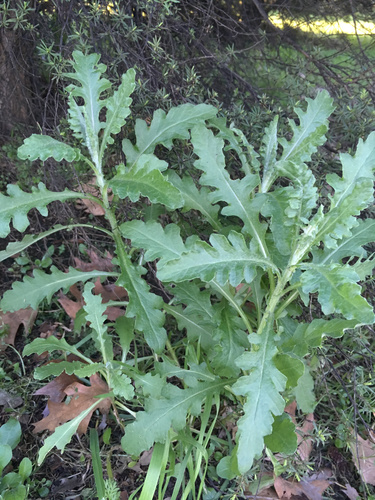
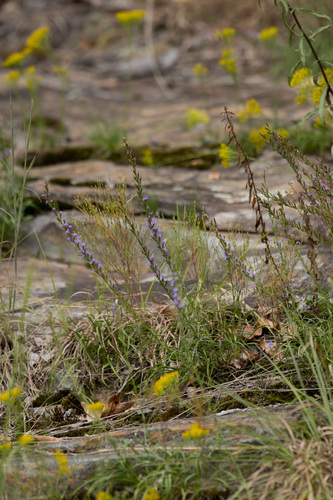
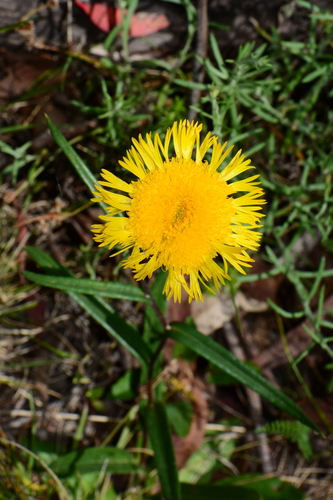
Podolepis decipiens, commonly called the deceiving copper wire-daisy, is a perennial herb that grows up to 70 cm (28 in) tall. It grows from a yearly renewed rootstock, producing either a single upright stem or multiple woolly stems. Its leaves are covered in flattened hairs, ranging from sparse to dense coverage; the leaf margins are roughly between flat and rolled under, and the upper leaf surface is rough. Basal leaves form a sparse rosette, and are shaped lanceolate, oblong, oval, or egg-shaped, measuring 3–20 cm (1.2–7.9 in) long and 5–30 mm (0.20–1.18 in) wide. Leaves closer to the stem apex are stem-clasping and sessile, and are mostly linear to lance-shaped, typically measuring 1–10 cm (0.39–3.94 in) long and 2–15 mm (0.079–0.591 in) wide. Flowers of this species are bright yellow or orange, usually borne singly, with 20 to 40 fringed petals. Flower heads are mostly 20–40 mm (0.79–1.57 in) in diameter, with papery bracts arranged in several rows, and sit on a 4–10 cm (1.6–3.9 in) long peduncle. Flowering occurs from August to February. The fruit is a cypsela, measuring 2–4 mm (0.079–0.157 in) long and about 1 mm (0.039 in) wide, and covered in barbed bristles. This widespread species occurs in a range of habitats including grasslands, woodlands, forests, alpine areas, and near-coastal locations across New South Wales, Victoria, Tasmania, South Australia, and Queensland.