About Podocarpus totara G.Benn. ex D.Don
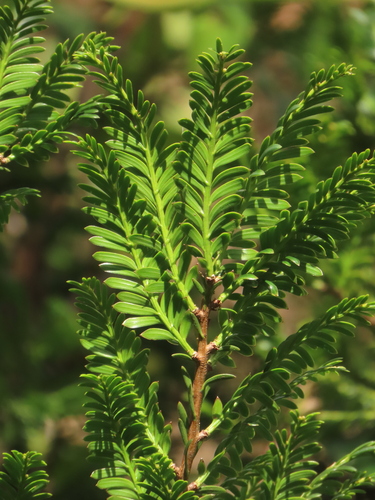
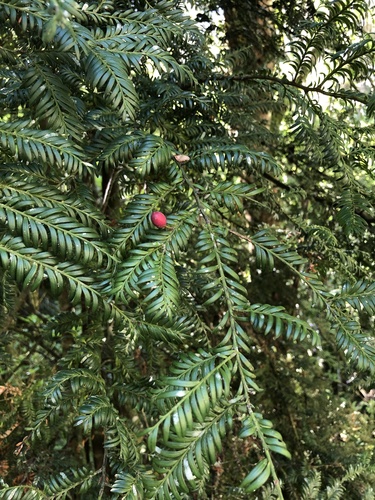
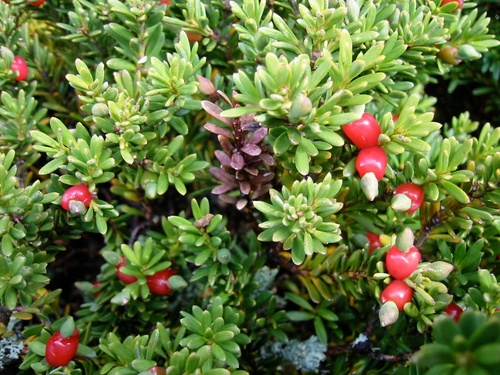
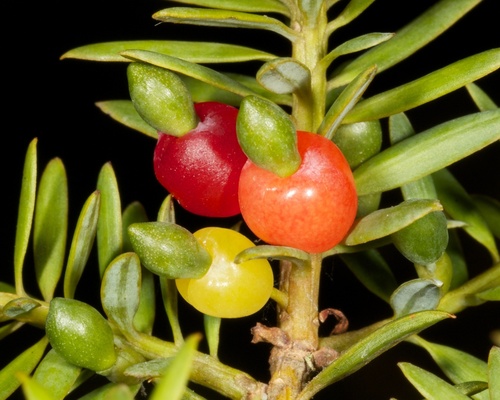
Podocarpus totara, commonly called tōtara, is a medium to large slow-growing tree. It typically reaches 20 to 25 metres (66 to 82 feet) in height, and can exceptionally grow up to 35 m (115 ft). It is known for its long lifespan and the very wide girth of its trunk. Its bark peels away in papery flakes, and ranges in colour from purplish to golden brown. It produces stiff, leathery, needle-like leaves that are dull green, sharp, and 2 cm (0.79 in) long. Tōtara forms highly modified cones that have 2 to 4 fused, fleshy, berry-like juicy scales that turn bright red when mature. Each cone holds one or two rounded seeds at the apex of the scales. The largest known living tōtara is the Pouakani Tree, which grows near Pureora in the central North Island of New Zealand. This tree is over 35 m (115 ft) tall and has a trunk diameter at breast height of nearly 4 m (13 ft). It was discovered by bushmen in 1950. Other large tōtara grow in the same area, and Whirinaki Forest to the east, which has deep recent volcanic soils, holds groves of very tall tōtara that reach over 40 m (130 ft) in height. Podocarpus totara is native to both the North Island and the South Island of New Zealand. It grows in lowland, montane and lower subalpine habitats, at elevations up to 600 metres (2,000 feet). It is rarely found on Stewart Island / Rakiura. Tōtara is most common in lowland areas with fertile, well-drained soil. It often grows as a regenerating species on farmland, because livestock do not eat it. It is so common on farms in Northland that some farmers consider tōtara a weed. Tōtara can be grown easily from fresh seed and cuttings. It has been planted in the United Kingdom as far north as Inverewe, Scotland. Several garden cultivars have been developed: 'Albany Gold' and 'Aurea', which both have yellow 'gold' foliage that darkens in winter; 'Pendula', which has a weeping growth habit that is most noticeable in young plants; 'Silver Falls', which also has a weeping habit and cream-edged foliage; and 'Matapouri Blue', which has a conical growth form and glaucous foliage. The wood of tōtara is hard, straight-grained, and very rot-resistant, especially the heartwood. Due to its durability, tōtara wood was historically often used for fence posts, floor pilings, and railway sleepers. It is also valued for its carving qualities, and was the primary wood used for Māori carving. It was the main wood for building traditional Māori waka (canoes), because it is relatively light (around 25% lighter than kauri), available in long, straight lengths, and contains natural oils that resist rotting. Tōtara timber could be drilled with chert points to make holes near the edges of the wood without splitting. For large waka, three or more sections of tōtara were laced together with flax rope. Making a tōtara waka with stone adzes took at least one year. During European settlement, tōtara wood was prized as a strong, durable, rot-resistant material, used for wharf piles, railway sleepers and fence posts. Tōtara bark is used to cover and protect traditional pōhā bags. Smoke from tōtara wood was used as a traditional remedy for skin conditions. Early European bush settlers made infusions of tōtara leaves to treat upset stomachs. The red fleshy part of tōtara cones (often referred to as berries) is edible. The diterpene totarol was first isolated from the heartwood of Podocarpus totara in 1910, during research into the cause of the tree's rot resistance. While totarol is no longer usually commercially isolated from this tree, it is now a common ingredient in cosmetics.