About Podocarpus parlatorei Pilg.
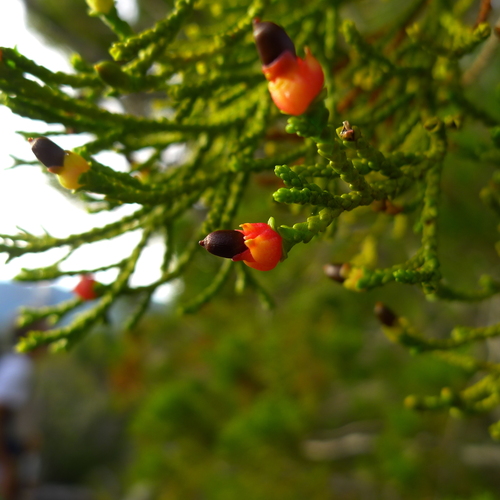
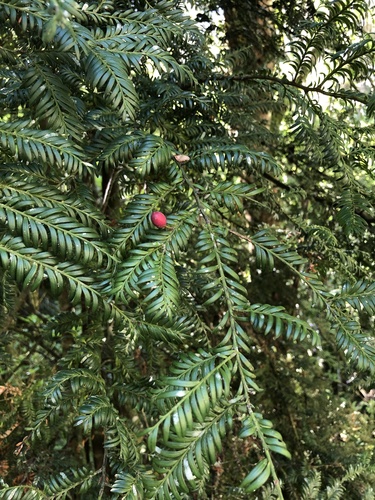
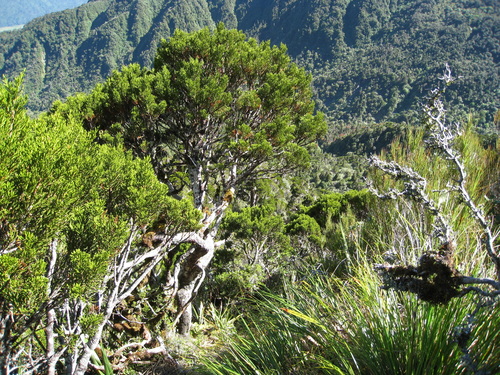
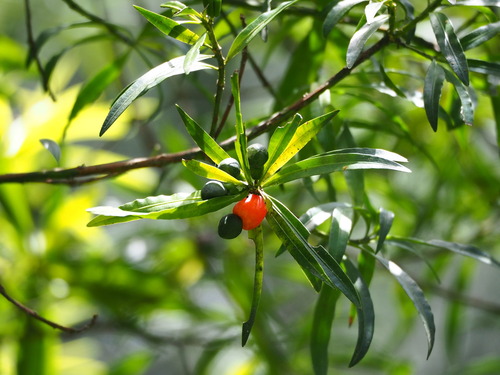
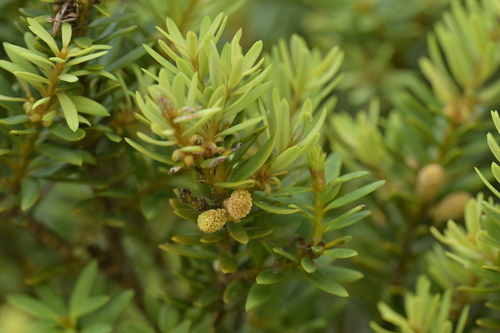
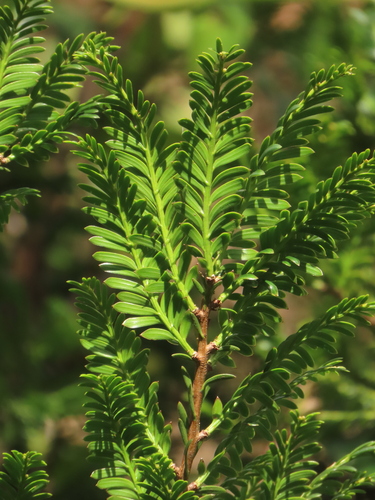
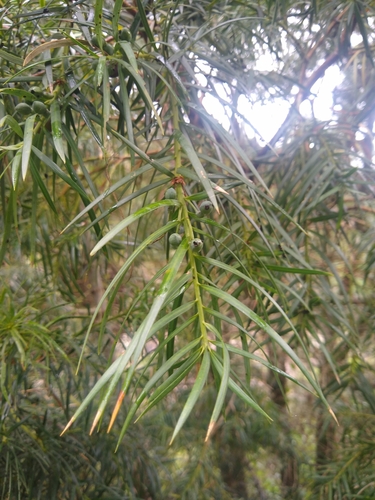
Podocarpus parlatorei Pilg. is an evergreen shrub or tree that grows up to 15 meters high, occasionally reaching 30 meters. It has a straight, cylindrical trunk, and branches often grow from close to the ground. Its leaves range from linear to falcate (sickle-shaped), are straight, and measure 2.5 to 9 cm (1.0 to 3.5 in) long and 2 to 3 mm (0.08 to 0.12 in) wide, with an acute pungent apex. It produces spherical seeds that are 5 to 6 mm (0.20 to 0.24 in) long. This species is endemic to the eastern flanks of the Andes in northwestern Bolivia and Argentina. It grows at elevations between 950 and 3,000 m (3,100 and 9,800 ft), and occupies a roughly 1,000 km (600 mi) long north-south strip of land up to 100 km (60 mi) wide. Its overall population is split into multiple separate subpopulations by lowland forests and dry river valleys that cut through the steep-sided foothills. In the southern part of its range, Podocarpus parlatorei forms pure stands. Further north, it typically grows under the canopy of Alnus acuminata, Cedrela angustifolia, and Juglans australis. Its flowers are pollinated by wind, and its seeds are dispersed by birds and mammals that consume its fleshy fruits. Known fruit-consuming dispersers include guans (Penelope spp.), band-tailed pigeons (Patagioenas fasciata), and hog-nosed skunks (Conepatus chinga). The gray grass mouse (Abrothrix illuteus) lives on steep hillsides among stands of Podocarpus parlatorei and Alnus acuminata. The timber of Podocarpus parlatorei is lightweight, soft, and easy to work with. It has been used commercially to make pencils, as well as for building construction, flooring, furniture making, veneers, posts, and utensils. International commercial trade of this species is now banned, as it is listed in Appendix I of CITES, because excessive logging had been depleting its populations. However, it is still harvested for local use. It is also used as hedges along field boundaries and around houses.