About Podocarpus nubigenus Lindl.
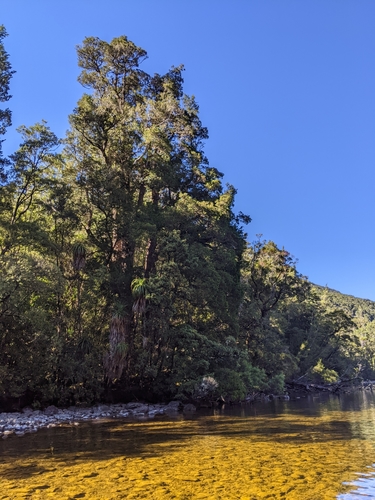
Podocarpus nubigenus Lindl., also incorrectly referred to as P. nubigena, is a podocarp species endemic to the Valdivian temperate forests of southern Chile and adjacent southwestern Argentina. It is the southernmost podocarp species found anywhere in the world. Its growing range extends from 38°S to Ultima Esperanza at 53°S, where it grows in wet, swampy soils. It can colonize cleared ground, and grows faster than other Chilean species in the Podocarpaceae family.
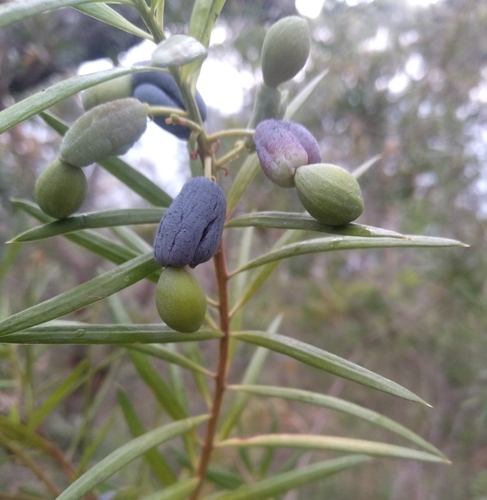
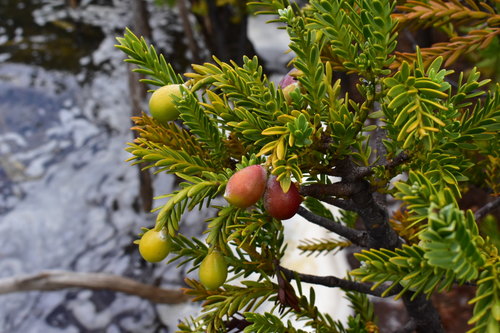
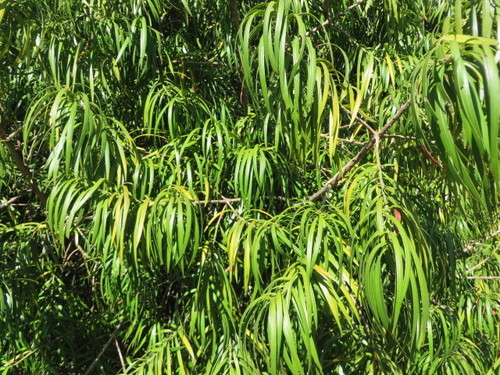
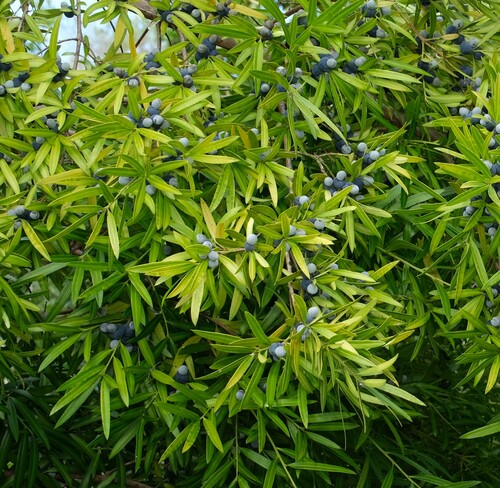
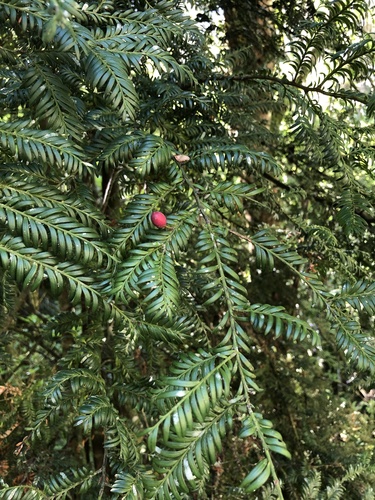
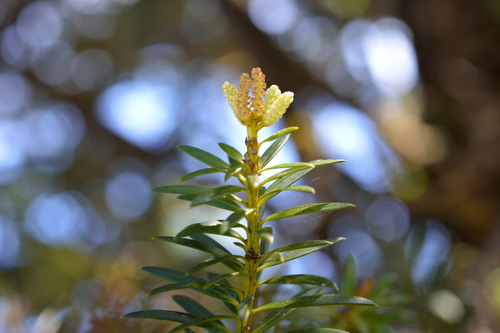
It is a medium to large tree, typically reaching 20–25 metres (66–82 feet) in height, and can exceptionally grow to 35 m (115 ft). Its bark peels off in papery flakes, and ranges in color from purplish to golden brown. Its leaves are sharp, green, needle-like, stiff and leathery, and grow to 2 cm long. Its cones are highly modified, with two to four fused, fleshy, berry-like, juicy scales that turn bright red when mature. These scales bear one rounded seed at their apex, rarely two.
It forms a classic species-pair within the Antarctic flora, and is very closely related to Podocarpus totara from New Zealand. When planted together, the two species are extremely difficult to distinguish. The clearest distinguishing feature is that P. nubigenus has slightly brighter green leaves, while P. totara leaves are more greyish-green.
The wood of P. nubigenus is hard, straight-grained, yellow with reddish markings, semiheavy, semihard, and highly resistant to rot and decay. However, the species is scarce, so the wood is little used. It is occasionally grown as an ornamental tree in the western British Isles and the Pacific Northwest of North America, regions that provide the cool summers and high rainfall the species needs to grow successfully. It tolerates temperatures down to about −25 °C (−13 °F).
The species does not have an established common English name. Suggested names that have seen little use include cloud podocarp, a translation of its scientific name, male maniu, a literal translation of its most common Chilean name, Chilean podocarp, and Chilean totara. Among the Mapuche people and in Latin American Spanish, it is called mañio macho, mañíu macho, and huililahuán, pronounced [wililaˈwan]. In southern Chile, it is also known as mañío de hojas punzantes, which translates to prickly-leaved maniu.