About Podarcis tauricus (Pallas, 1814)
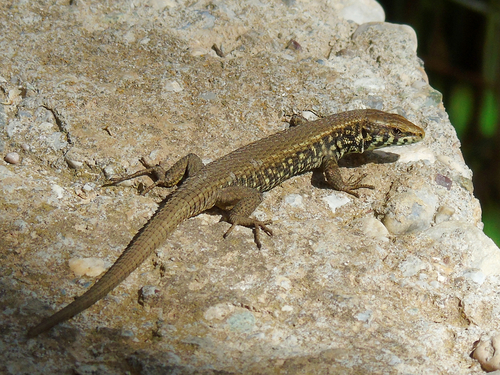
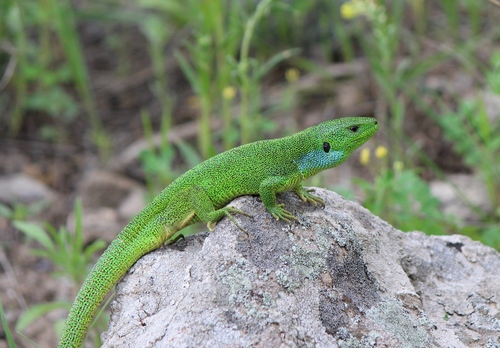
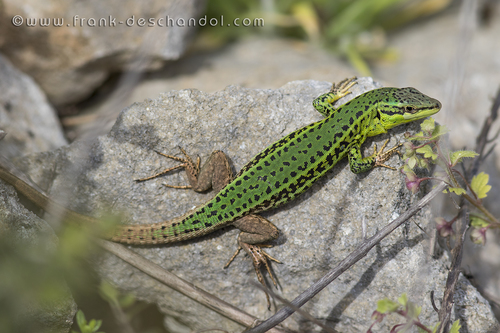
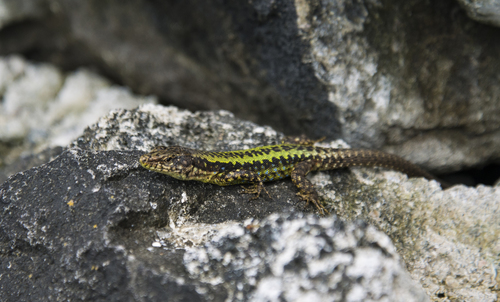
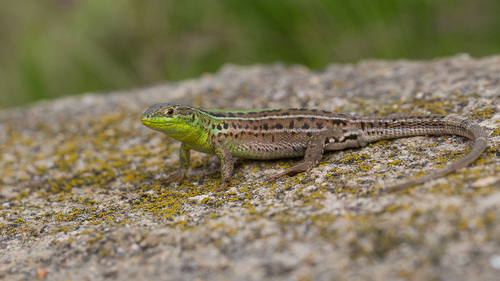
The Balkan wall lizard, scientifically named Podarcis tauricus (Pallas, 1814), reaches a snout-to-vent length of around 8 cm (3.1 in), with a tail twice as long as its snout-to-vent length. It is a sturdy, deep-headed lizard that somewhat resembles a small green lizard. Its basic body colour is bright green in spring, fading to olive-green or olive-brown by summer. Markings on this species are somewhat variable, but often include two narrow, pale-coloured dorso-lateral stripes; the central portion of its back is brownish with black patches. The underparts are white and unmarked, but breeding males develop yellow, orange, or red underparts and green throats.
This species is distributed across south-western Ukraine, the Crimea Peninsula, eastern and southern Romania, south-eastern Hungary, North Macedonia, Bulgaria, mainland Greece, the Ionian Islands, Thassos, western Turkey (Thrace and north-western Anatolia), Albania, southern Moldova, and south-eastern Czech Republic.
Podarcis tauricus is a largely terrestrial species. It occurs in open habitats including steppe, grassland, meadows, field edges, olive groves, traditionally cultivated land, rural gardens, and sparsely vegetated sandy dunes, and it can sometimes be found in open scrub. Females lay two clutches of eggs per year, with each clutch containing between two and ten eggs.