About Pocillopora verrucosa (Ellis & Solander, 1786)
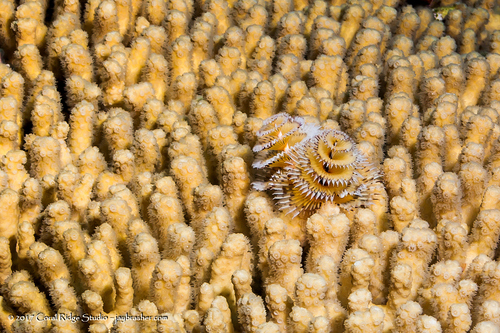
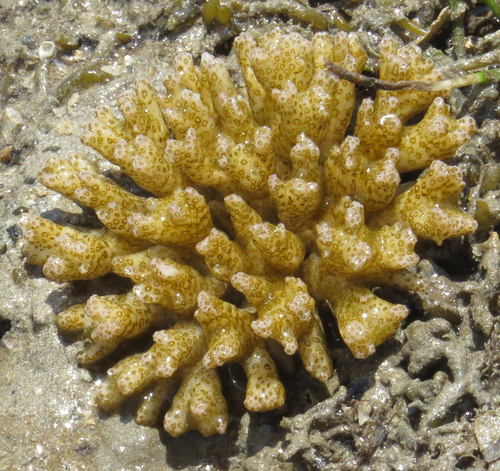
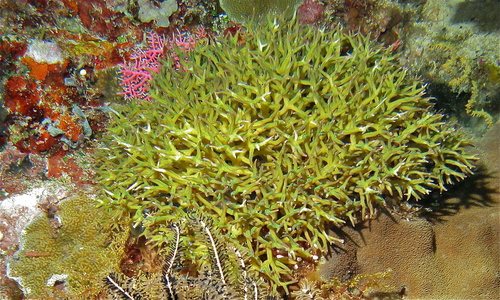
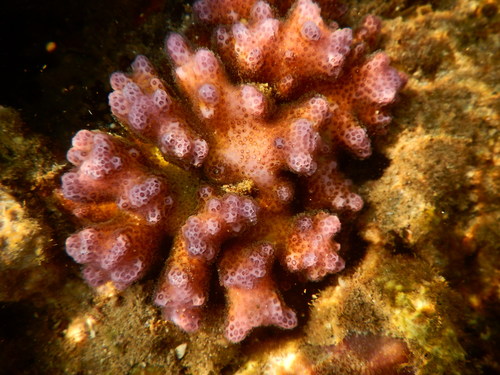
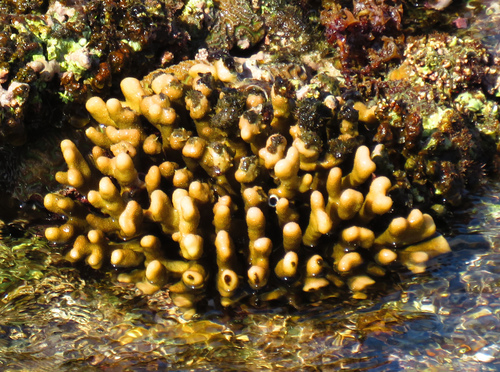
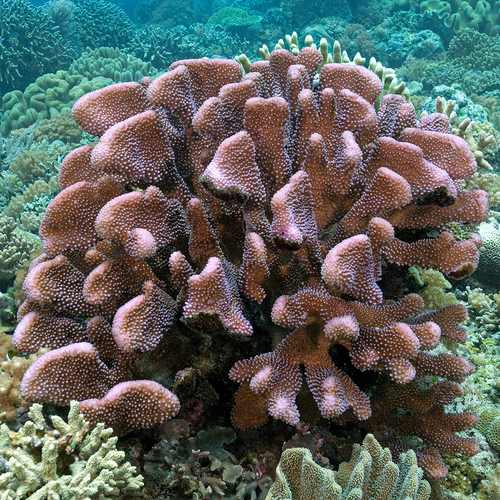
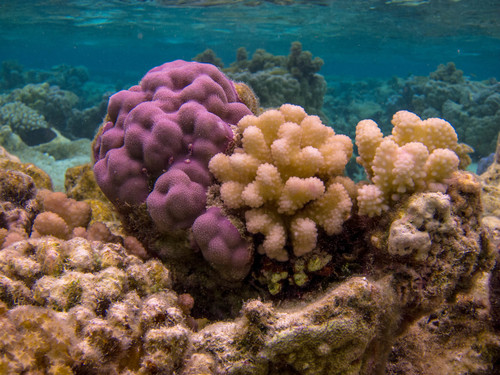
Pocillopora verrucosa is a colonial coral that forms hemispherical clumps that can reach up to 30 cm (12 in) in diameter. Its branches measure 1 to 2 cm (0.4 to 0.8 in) thick and usually have clubbed tips. The coral's surface is covered in large wart-like growths called verrucae, which grow up to 6 mm (0.24 in) high. The corallites, the stony cups from which polyps emerge, have a diameter of 1 mm (0.04 in). The color of this coral is variable and can be yellowish-green, pink, brown, or bluish-brown. It can be distinguished from Pocillopora damicornis by its broader, somewhat flattened, club-tipped branches, and by its more evenly sized and evenly spaced verrucae.
Pocillopora verrucosa is native to tropical and subtropical regions of the Indian and Pacific Oceans. Its broad range stretches from East Africa and the Red Sea to Japan, Indonesia, Australia, Hawaii, Easter Island, and the western coast of Central America. It occurs at depths down to approximately 54 m (177 ft), but is most abundant between 1 and 15 m (3 ft 3 in to 49 ft 3 in). It is a common species across most of its range. It grows on fringing reefs and moderately exposed reef fronts, but it is less tolerant of sediment than P. damicornis, so it occurs less often in lagoons.
A variety of predators feed on this coral. Pufferfishes, parrotfishes, and filefishes feed on the branch tips, while hermit crabs scrape away the coral's skeletal tissue. Other predators, including butterflyfishes, angelfishes, and the damselfish Stegastes acapulcoensis, consume the soft tissue while leaving the coral skeleton intact. Invertebrate predators of Pocillopora verrucosa include the crown-of-thorns starfish (Acanthaster planci), Jenner's cowry (Jenneria pustulata), the sea urchin Eucidaris galapagensis, and coral snails of the Coralliophila genus. Both crown-of-thorns starfish and Jenner's cowries can kill a mature colony by stripping away all of its living tissue. Pocillopora species host several mutualistic symbionts, including crabs of the Trapezia genus and certain snapping shrimps, which protect the coral from attacks by its main predator, the crown-of-thorns starfish.