About Poa nemoralis L.
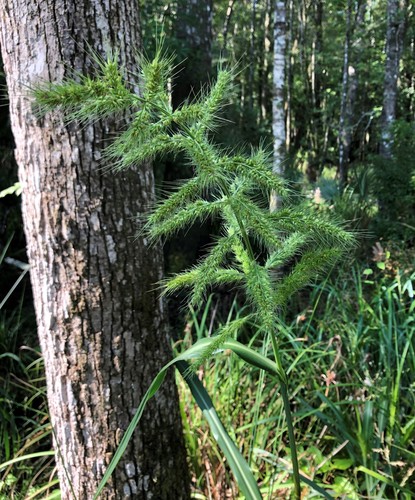
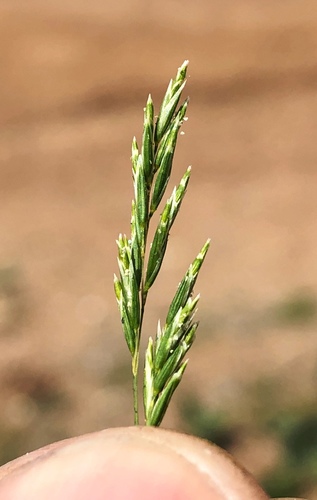
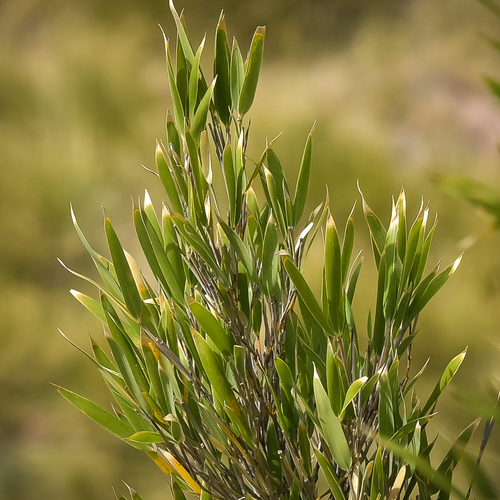
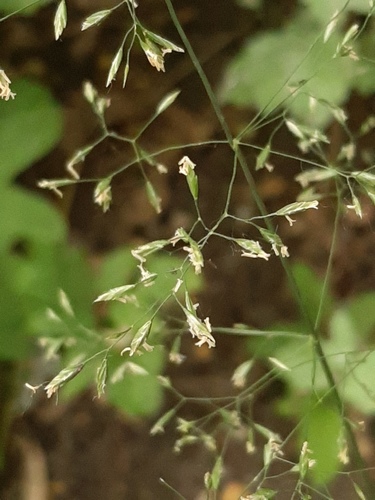
This species, Poa nemoralis L., forms loose tufts and has a more delicate, slender appearance than other meadow grasses. It grows with a slightly creeping habit. Its leaves are narrow and taper to a point. Its ligules are short, measuring 0.5 mm. The slender stem reaches 30–60 cm (12–24 in) in height. The panicle is slender, loose, and branched. The spikelets are few, egg-shaped, and each contains one to five flowers. In the Northern Hemisphere, this grass flowers from June to August. It can produce asexual seeds through apomixis, and can also reproduce vegetatively. Because its characteristic leaf blade resembles an outstretched arm, it is sometimes called "Wegweisergras" (signpost grass) in Germany. Wood bluegrass is native to Europe, where its range extends from Portugal to Bulgaria, and to Asia, where its range extends from Iran to Japan. It has been introduced to Australia, New Zealand, and North America, where it has become naturalised in southeastern Canada and northeastern United States. It is shade tolerant, and is often found in forests growing up to half a metre tall. In Britain, it is generally distributed in dry woods, thickets, and shady hedge banks on well drained soils. In its invasive range in America, it sometimes grows in coniferous forests, where its presence is thought to increase the risk of fires; it also grows on floodplains, the banks of rivers and lakes, and disturbed sites. In the British Isles, it is found throughout the United Kingdom but occurs at more scattered locations in Ireland, where it may have been introduced.