About Poa bulbosa L.
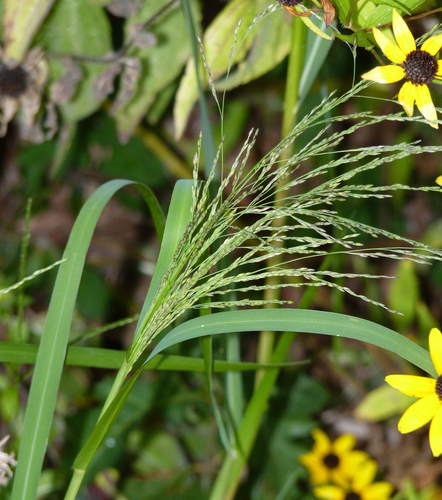
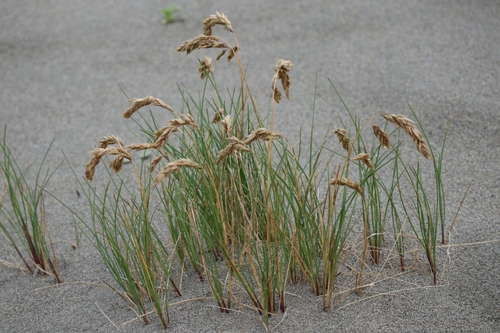
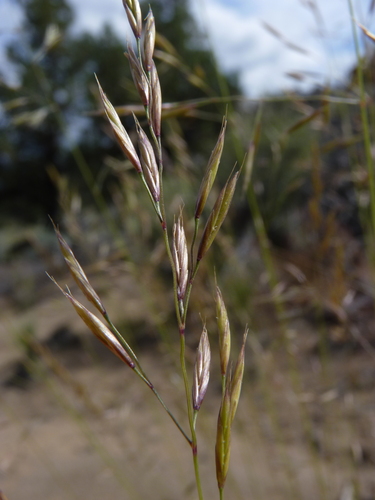
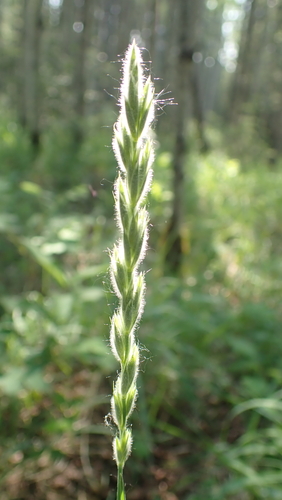
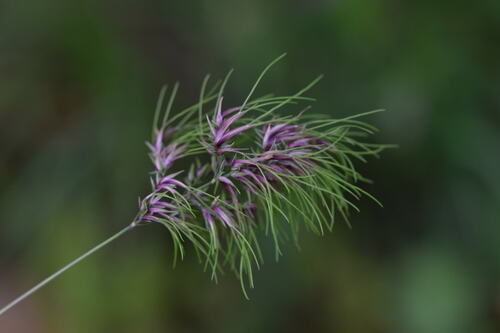
Poa bulbosa L. is a grass species with the common names bulbous bluegrass or bulbous meadow-grass. It is native to Eurasia and North Africa, and has been introduced to nearly every region of the world. It is widespread across the United States and southern Canada. It first arrived in the eastern United States around 1906 as a contaminant in alfalfa seed shipments, reaching the western United States through the same route in 1915. It was intentionally planted on both the U.S. east and west coasts to control weeds and prevent erosion. Today it is a common grass across the North American continent, and is classified as a noxious weed in some areas. It is a sturdy, hardy, persistent, and aggressive grass that easily outcompetes many other plants, and becomes the dominant species in disturbed habitats like overgrazed fields. This species can be an annual or perennial grass that grows in dense clumps reaching up to roughly 60 centimeters tall. Its stems are smooth and hollow, and usually bear bulbous sections about one centimeter long at their bases. Plants growing in drier areas are more likely to develop these bulbous sections, and studies have found the sections are mostly composed of water. Detached bulbous bases can be replanted to grow into new individual plants. Its inflorescence is a wide cluster of branches that holds green leaf-like spikelets, which have darker bases containing bulbils. The species rarely produces viable seed, and usually reproduces asexually through its basal bulbous sections and bulbils. Despite reproducing vegetatively (asexually) most of the time, Poa bulbosa has been found to have high genetic variability. Many kinds of animals, including wild and domesticated ruminants, small mammals, and birds, readily eat this grass, particularly the bulbils in its inflorescences, which contain starches and fats. Within its native range, this grass is used as fodder and pasture grass in some areas.