About Pluteus exilis Singer
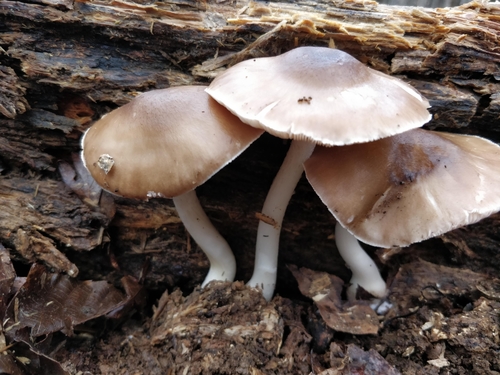
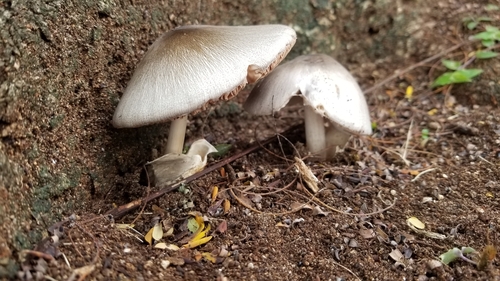
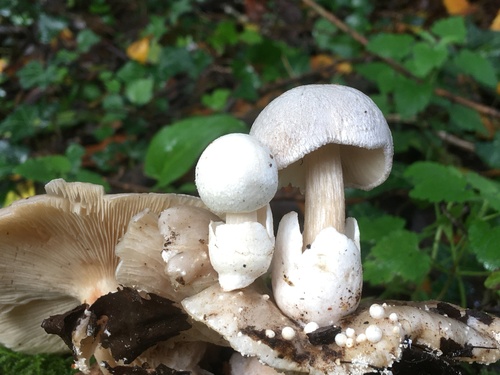
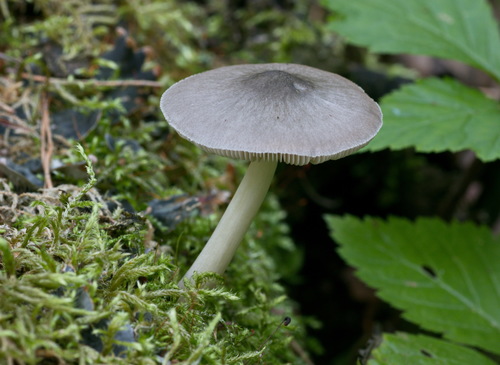
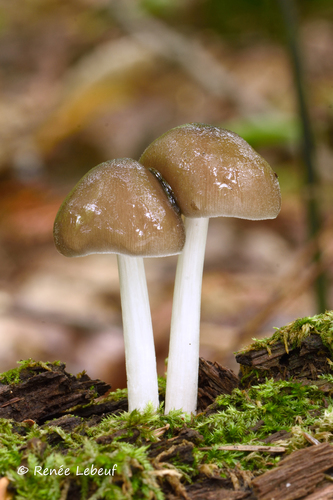
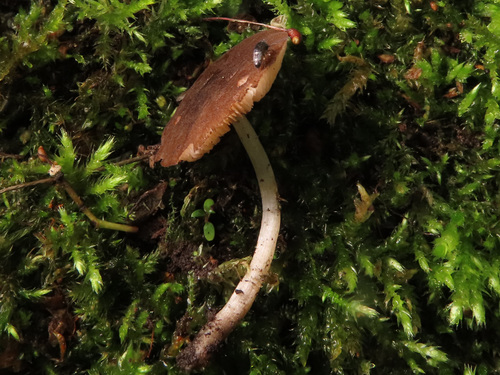
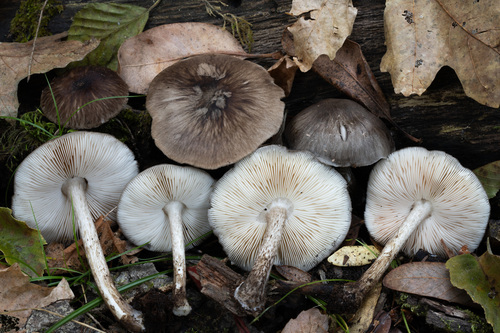
The fruit bodies of Pluteus exilis have caps 3.5–7 cm (1.4–2.8 in) in diameter. Caps are initially hemispherical or bell-shaped, becoming more convex as they mature, and sometimes develop a shallow central depression; cap color is brownish. The gills are closely spaced and do not attach to the stipe. They are initially white, later turning pink while retaining white edges. The spore print of Pluteus exilis is pinkish-brown. Its spores are ellipsoid to egg-shaped, measuring 7–8 by 4.5–5.5 μm. Singer described an additional variety, P. exilis var. austriacus, from collections made in oak forests of Burgenland, Austria. This variety had grayish-brown caps, but later research confirmed this taxon is identical to Pluteus cervinus. The South American species Pluteus xylophilus looks similar to Pluteus exilis, but can be distinguished by its smaller spores and greater variation in fruit body size. Pluteus exilis is a saprophytic fungus that grows on decaying wood. It fruits singly or in groups on well-rotted wood from both angiosperms (including alder and tanoak) and conifers (including spruce and Douglas-fir). This fungus is distributed along the coast of the Pacific Northwest region of North America, ranging from Santa Cruz County to southern British Columbia.