About Pluteus cervinus (Schaeff.) P.Kumm.
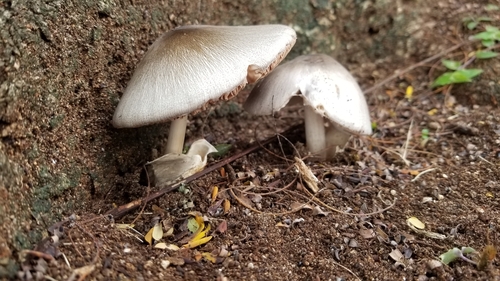
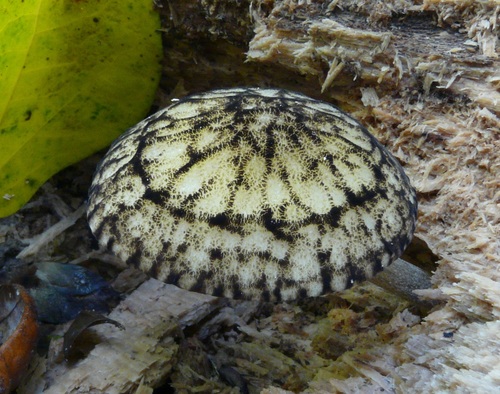
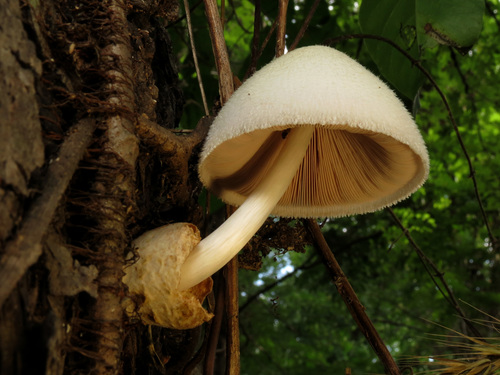
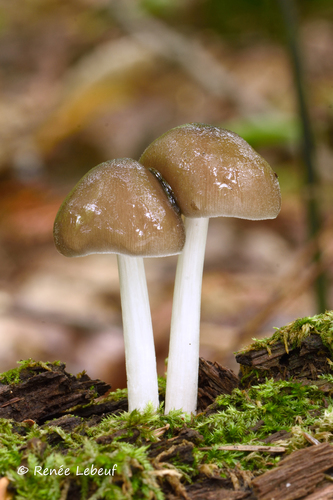
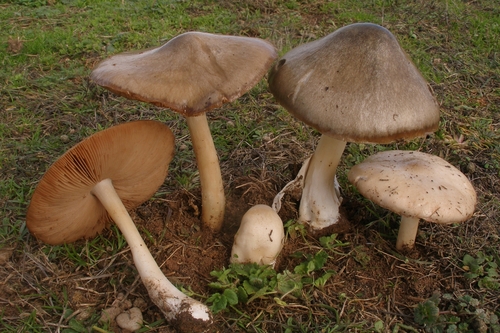
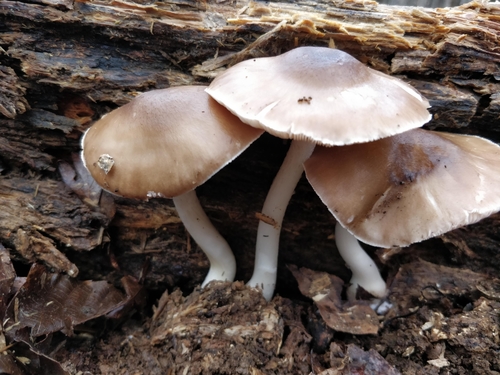
Pluteus cervinus (Schaeff.) P.Kumm. generally produces caps up to 12 centimetres (4 3⁄4 inches) in diameter. Young caps are bell-shaped and often wrinkled, and expand to a convex shape as they mature. Cap color is most commonly deer-brown, and can range from light ochre-brown to dark brown, with variable amounts of grey or black mixed in; the center of the cap is often darker. The cap surface is smooth, with a finish ranging from matt to silky-reflective. When viewed through a lens, the cap skin shows dark radial fibres, which confirms the microscopic cuticle structure is filamentous. The gills start out white, and quickly develop a characteristic pinkish sheen as spores ripen. The stipe measures 5–12 cm long and 0.5–2 cm in diameter, and is usually thicker at the base. It is white, covered in vertical brown fibrils. The flesh is soft and white. The fruit body has a scent that ranges from mild to earthy like radish, and an initial mild taste that may become slightly bitter. Spores are elliptical and smooth, measuring approximately 7.0–8.0 × 5.0–5.5 μm. Its hyphae do not have clamp connections, and cystidia are thick-walled with apical projections. The spore print of this species is pinkish brown. This species grows on stumps and wood debris. It is common in Europe, where it can be found from April to December, and common in eastern North America. It is rare and possibly an introduced species in western North America. Young specimens can be added to other cooked dishes, even though it is a poor-quality edible mushroom with unremarkable flavor and does not preserve well.