About Plumbago zeylanica L.
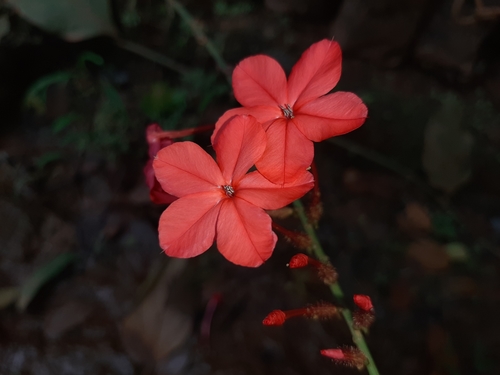
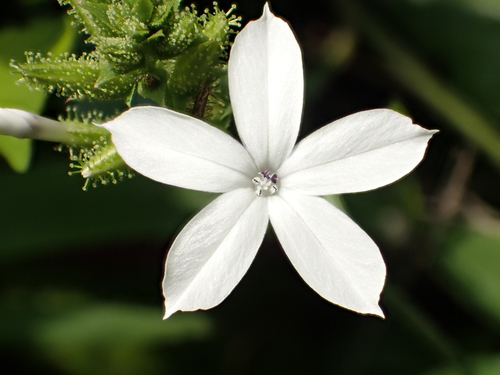
Plumbago zeylanica L. is a herbaceous plant with glabrous stems that can be climbing, prostrate, or erect. Its leaves are either petiolate or sessile, with blades shaped ovate, lance-elliptic, or spatulate to oblanceolate that measure 5–9 cm long by 2.5–4 cm wide. Leaf bases are attenuate, while leaf apexes can be acute, acuminate, or obtuse. Its inflorescences are 3–15 cm long, with glandular, viscid rachises. Bracts are lanceolate, and measure 3–7 mm long by 1–2 mm wide. This species produces heterostylous flowers with white corollas that are 17–33 mm in diameter, with corolla tubes 12.5–28 mm in length. Its capsules are 7.5–8 mm long, and contain seeds that range from reddish brown to dark brown. Plumbago zeylanica grows naturally across tropical and subtropical climates worldwide, including Australia and India. In Australia, it occurs in the understory of monsoon forests and vine thickets, at elevations from sea level up to 900 m. In Dhofar, Oman, this species is often found growing on the trunks of Olea trees. Plumbago zeylanica serves as a food plant for the larval stages of three butterfly species: the Cassius blue (Leptotes cassius), the marine blue (Leptotes marina), and the zebra blue (Leptotes plinius). In early folk medicine, the crushed plant was used both internally and externally as an abortifacient. In Ayurvedic practice, P. zeylanica is called chitrak, which translates to "the spotted one", and it is combined with other herbs to reduce its intense pungency.