About Plotosus lineatus (Thunberg, 1787)
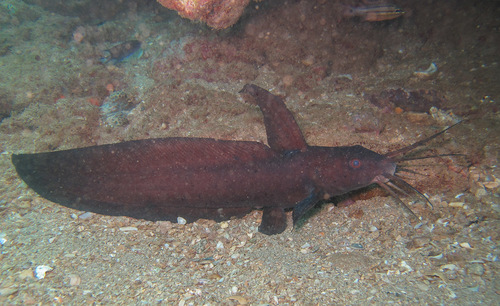
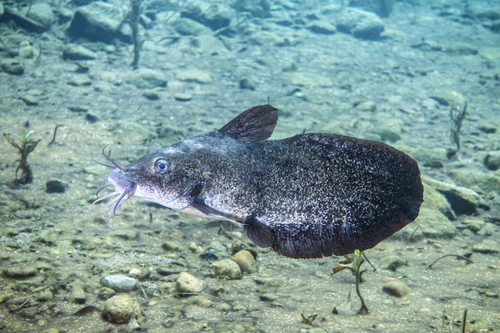
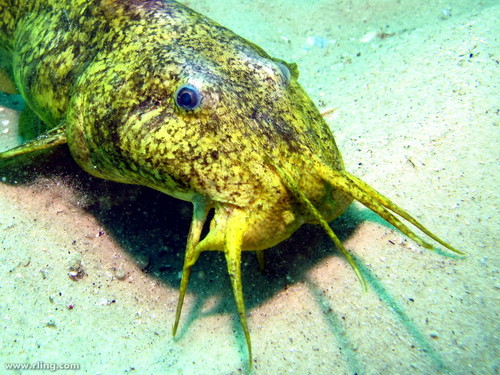
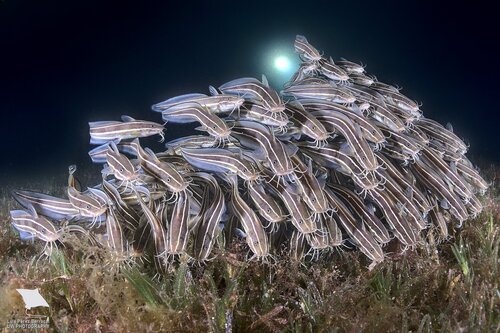
Plotosus lineatus can reach a maximum total length of 32 centimeters (13 inches). Its body is brown, marked with cream-colored or white longitudinal bands. Like eels, its second dorsal, caudal, and anal fins are fused together, while the rest of its body is quite similar to that of a freshwater catfish. Four pairs of barbels surround its mouth: four are located on the upper jaw, and four on the lower jaw. Both the first dorsal fin and each pectoral fin bear a highly venomous spine. This species is native to the Indo-Pacific region, including the western Pacific, for example Singapore. Since 2002, it has also been recorded in the eastern Mediterranean Sea, and is now common from Levantine waters to the Gulf of Gabes. It sometimes enters freshwater ecosystems in East Africa and Madagascar. Plotosus lineatus lives mainly on coral reefs, and can also be found in estuaries, tide pools, and open coasts. Juvenile P. lineatus form dense, ball-shaped schools of around 100 individuals. Adults are solitary or gather in smaller groups of roughly 20 individuals, and are known to hide under ledges during the day. Adult fish continuously stir and search through sand to find crustaceans, mollusks, worms, and occasionally fish. This species is oviparous; it produces demersal eggs, and after hatching, the larvae become part of the zooplankton community.