About Ploceus spekei (Heuglin, 1861)
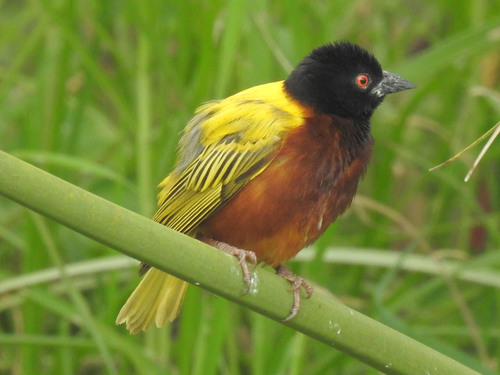
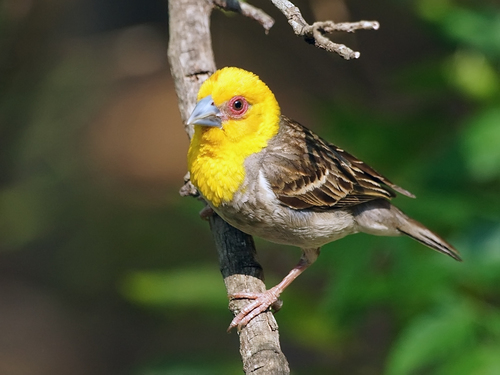
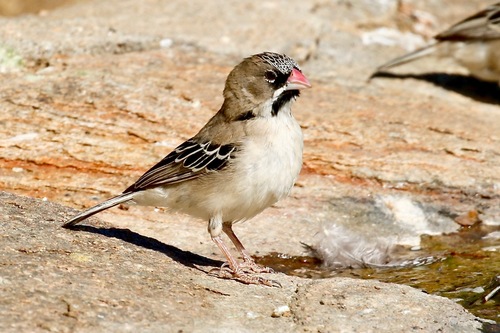
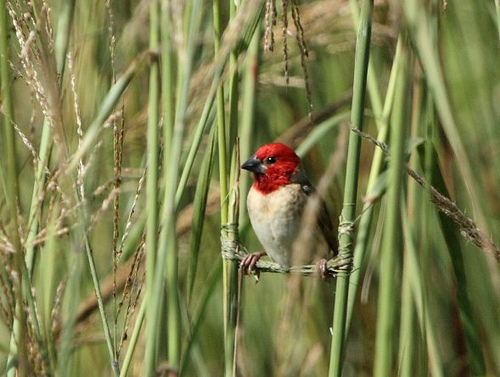
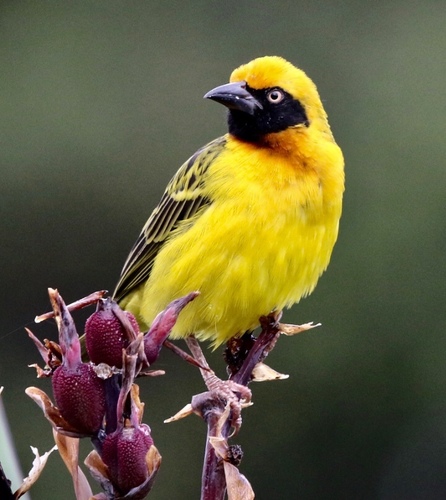
Speke's weaver, scientifically named Ploceus spekei, is a well-known songbird native to East Africa. This species has pale eyes and a relatively large bill for a weaver. Unlike many other weaver species, Speke's weaver retains the same plumage year-round. Adult males are yellow, with black on the throat, face, and bill; the black throat edge is rust-colored, and the back has variable black mottling. Adult females have dull olive-gray upperparts marked with dusky brown streaks; their underparts are pale yellow, with whiter bellies and grayer flanks. Juvenile Speke's weavers resemble adult females but have duller plumage overall. The song of Speke's weaver is variable, and one version has been transcribed as "pew…pew…tew, chinkichi-chewchew-skerinkitsitew". Its calls include harsh chatter when at the nest, and a sharp "tseep!". This species most often nests in colonies, though it occasionally nests alone. Nests are typically woven in acacia trees, and are spherical with a short entrance tube that opens sideways or downward. Many grass sticks stick out sloppily from the nest, sometimes hiding its overall shape. Speke's weaver nests during both the short rainy season and the middle of the long rainy season. Typical clutches contain four eggs. The eggs are unmarked deep blue, somewhat pointed at both ends, and measure 24 to 26 mm long by 15 to 17 mm wide. Speke's weaver is distributed across northern and eastern Somalia, Ethiopia, Kenya (mostly the central highlands), and north-eastern Tanzania. It lives in savanna, bush, agricultural land, and towns. It is common in parts of its range, particularly in and around the densely populated Nairobi area, where it visits bird feeders. This bird was named to honor John Speke.