About Ploceus philippinus (Linnaeus, 1766)
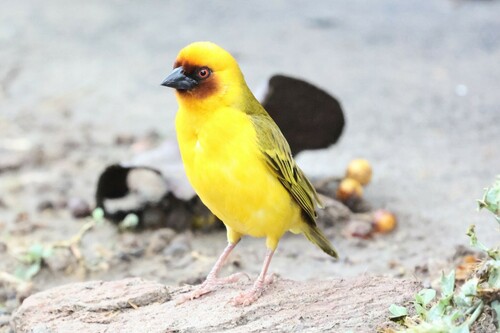
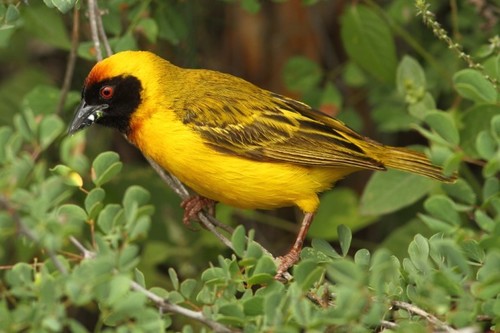
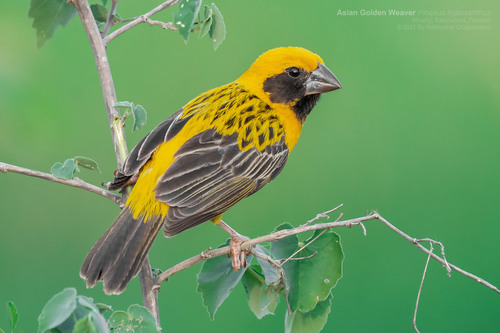
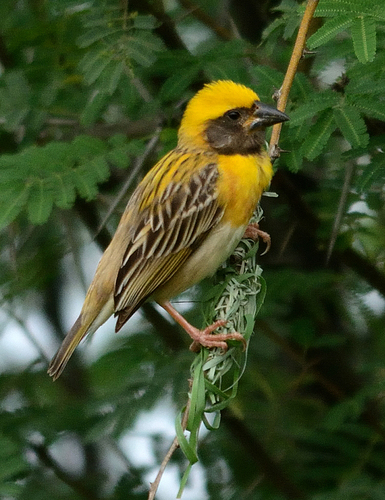
Ploceus philippinus, commonly known as baya weavers, are sparrow-sized birds that measure 15 cm (5.9 in) long. Both males and females share similar non-breeding plumage that resembles the plumage of female house sparrows. They have a stout conical bill and a short square tail. Non-breeding males and females look almost identical: they have dark brown streaked fulvous buff plumage on their upper bodies, plain unstreaked whitish fulvous plumage on their under bodies, a long buff-coloured eyebrow, a horn-coloured bill, and no facial mask. Breeding males have distinct plumage features: a bright yellow crown, a dark brown mask, a blackish brown bill, dark brown upper parts streaked with yellow, a yellow breast, and cream buff plumage on their lower underparts.
Baya weavers are social, gregarious birds that forage for seeds in flocks, both on plants and on the ground. Their flocks fly in close formations and often perform complicated flight manoeuvres. They glean paddy and other grain from harvested fields, and are sometimes considered agricultural pests because they occasionally damage ripening crops. They roost in reed beds that border water bodies. They depend on wild grasses such as Guinea grass (Panicum maximum), as well as crops like rice, for both their food and nesting material; they feed on grass and rice seedlings during the germination stage, as well as on grain in its early growth stage. They also feed on insects including butterflies, and will sometimes eat small frogs, geckos, and molluscs, especially when feeding their young. Their seasonal movements are determined by the availability of food. Their calls consist of a continuous chit-chit-... that sometimes ends in a wheezy cheee-eee-ee, produced by males in a chorus. They produce lower intensity calls during the non-breeding season. They occasionally take part in dust bathing, and individuals kept in captivity form stable pecking orders.