About Ploceus melanocephalus (Linnaeus, 1758)
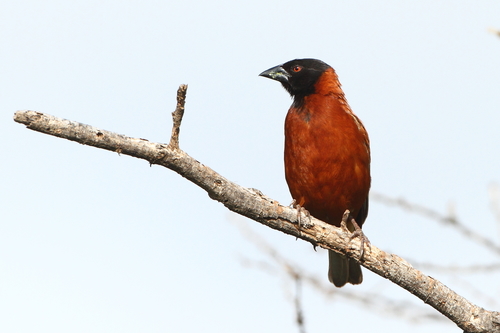
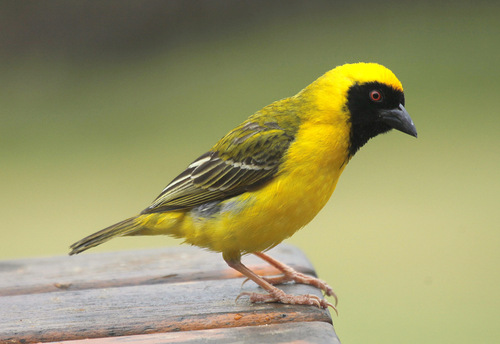
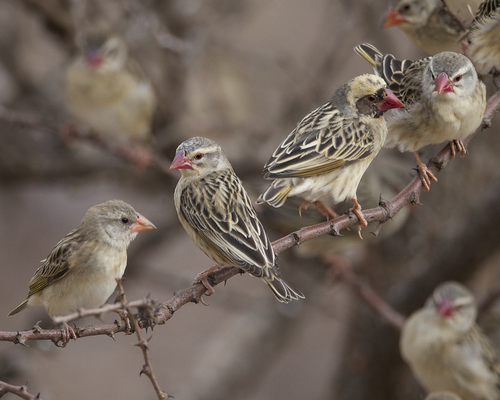
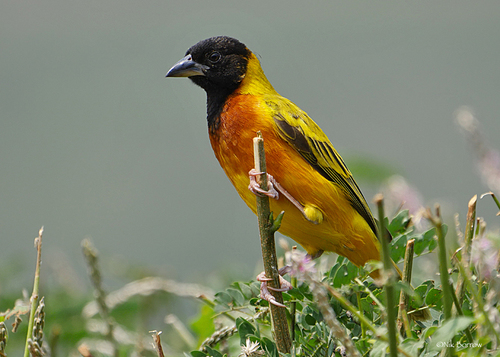
Ploceus melanocephalus, first described by Linnaeus in 1758, can be identified by distinct plumage features across different sexes and life stages. Breeding males have a black head and a yellow nuchal collar, a marking that is not present in Juba weavers and golden-backed weavers. This species can also be told apart from golden-backed weavers and village weavers by its plain, greenish mantle plumage. Its pale yellow underpart plumage is mixed with a variable amount of chestnut colouring. Females and non-breeding males do not have the black head that breeding males possess, and they resemble female masked weavers. They differ from female masked weavers by having dark eyes and a darker bill. Their buffy breast plumage also sets them apart from non-breeding golden-backed weavers. This species is distributed across West, Central, and East Africa, and has been introduced to the Iberian Peninsula. It inhabits savanna and similar open habitats, and is typically found close to water. It often occupies Acacia trees located 3 meters away from land to avoid predation.