About Pleurotus pulmonarius (Fr.) Quél.
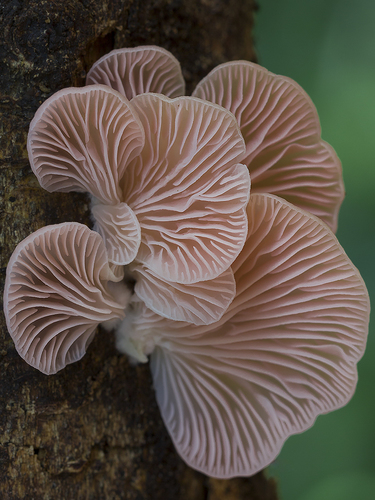
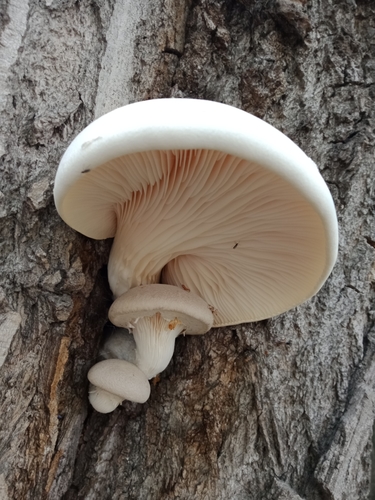
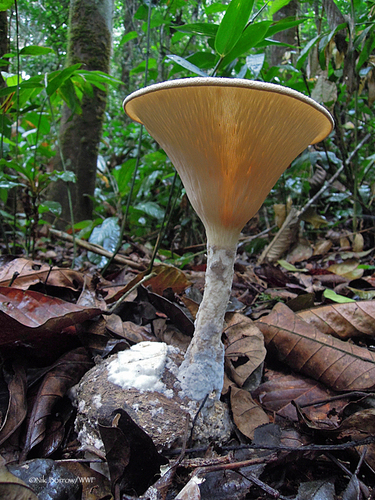
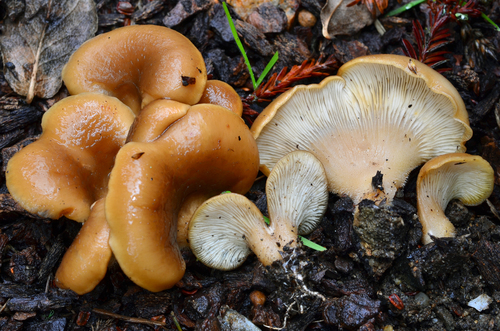
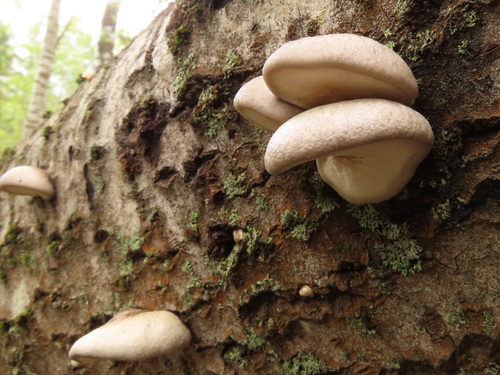
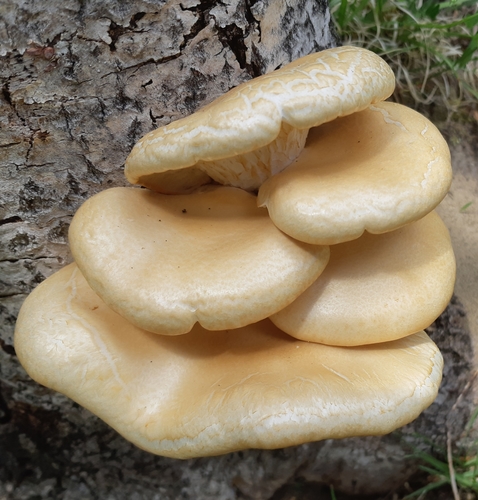
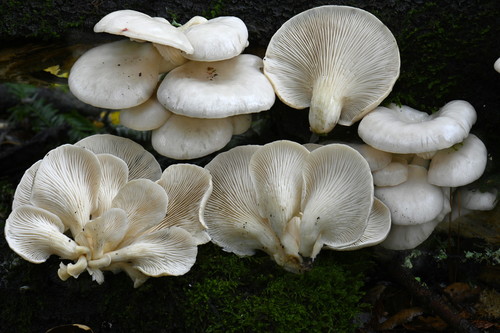
Description: Pileus (cap) measures 5 to 20+ cm across, starting convex before maturing to broadly convex or flat. Gills are whitish; when a stipe (stem) is present, gills are decurrent. Small beetles may sometimes be found growing on the gills. Spore print can be white, greyish, or lilac. When a stipe is present, it is short and attached off-center to the cap, and has a bald surface. Microscopic features: Dense clusters of spores appear white to lavender-gray; spores are roughly cylindrical, and measure 7.5–11 × 3–4 μm. The mushroom has a pleasant odor similar to anise. Natural habitat: Pleurotus pulmonarius is widespread across temperate and subtropical forests worldwide. In the eastern United States, it grows most often on hardwoods, while in the western United States it can also grow on conifers. Cultivation: Pleurotus pulmonarius is a commonly cultivated oyster mushroom species in Europe and North America. The most popular cultivated varieties are warm-weather types, which are sometimes mistakenly sold by spawn manufacturers and cultivators under the name "Pleurotus sajor-caju" (Fr.) Singer. In reality, P. sajor-caju is a separate species that was moved to the genus Lentinus by Pegler in 1975, and is now correctly named Lentinus sajor-caju (Fr.) Fries. In New Zealand, Pleurotus pulmonarius is commercially cultivated and sold simply as "Oyster mushrooms". The archetypal oyster mushroom, Pleurotus ostreatus, cannot be imported into New Zealand due to perceived risks to the country's forestry industry. Cultivation of Pleurotus pulmonarius is nearly identical to cultivation of other Pleurotus species like P. ostreatus: mycelium is transferred from a petri plate onto grain, and once the mycelium fully colonizes the grain to create grain spawn, the spawn is transferred to cellulose-based substrates including straw, wood chips, sawdust, cardboard, and coffee grounds. Medical research: Multiple animal and in vitro studies indicate that Pleurotus pulmonarius and its extracts may have potential medicinal applications for a wide range of conditions. A polysaccharide called β-D-Glucan isolated from P. pulmonarius reduces pain sensitivity in mice, and could be an attractive basis for new analgesic medications. A separate study in mice found that a P. pulmonarius glucan had potent anti-inflammatory and analgesic properties. A methanol extract of P. pulmonarius showed anti-inflammatory activity comparable to the standard drug diclofenac, and antitumor activity comparable to the standard drug cisplatin. A 2010 study concluded that P. pulmonarius extracts may slow the proliferation of cancer cells that have high galectin-3 levels, while also downregulating tumor cell adherence – a process directly linked to cancer progression and spread. When added to the diet of study mice, P. pulmonarius extracts delayed carcinogenesis, which suggests these extracts may be useful as an adjuvant for cancer therapies. Orally administered hot water extract of P. pulmonarius produced a significant antihyperglycemic effect, halted the progression of diabetes, and reduced mortality in alloxan-induced diabetic mice by approximately 50%. The extract showed a synergistic effect when combined with the antidiabetic drug glibenclamide, supporting the possibility of effective combination therapy using glibenclamide and P. pulmonarius to treat diabetes. Pleurotus pulmonarius may be effective for treating hay fever by inhibiting histamine release. When powdered P. pulmonarius was fed in water to sensitized mice, it caused a significant reduction in sneezing and nasal rubbing, though the effect builds up gradually over several weeks. Mice given 500 mg/kg per day showed a significant effect after two weeks, while mice given 200 mg/kg per day did not show a significant effect until four weeks of treatment. P. pulmonarius extracts slowed the development of acute colitis in a mouse model, suggesting potential clinical use for treating human colitis. A follow-up study by the same research team concluded that the extracts also inhibit colon cancer formation linked to colitis in mice. P. pulmonarius extracts have antimicrobial properties, and show antioxidant activity in in vitro tests.