About Pleurotus eryngii (DC.) Quél.
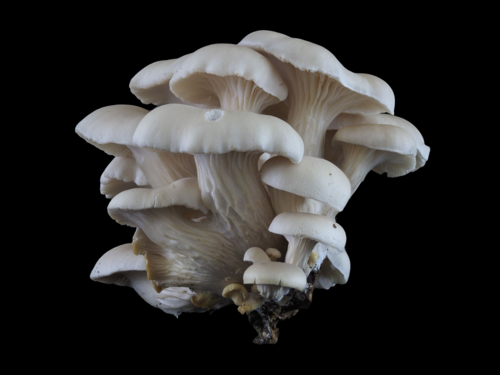
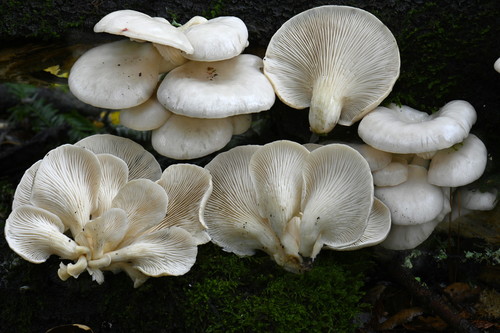
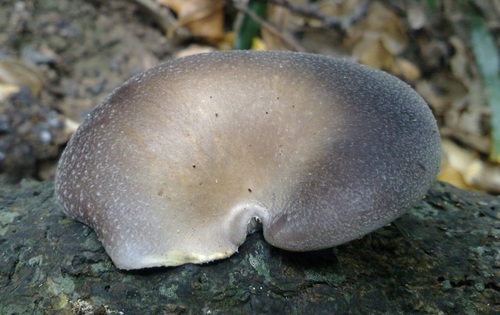
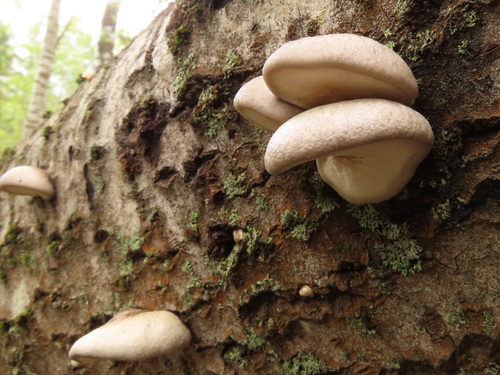
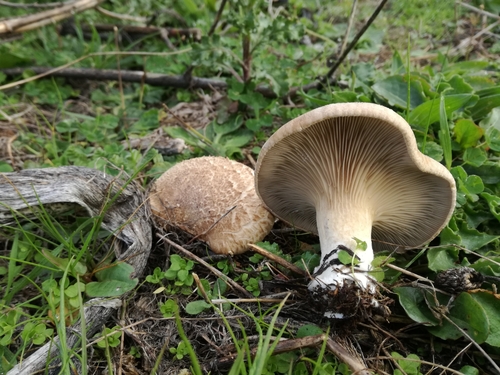
The tannish cap of Pleurotus eryngii measures 4–15 centimetres (1+1⁄2–6 inches) wide, with a smooth and slightly velvety surface. It starts convex before flattening, and has a thin margin that is initially inrolled before spreading out. Its whitish gills are decurrent, dense, and anastomosed. Its whitish stem is 3–10 cm (1+1⁄4–4 inches) tall and 1–3 cm wide. Its natural range extends from the Atlantic Ocean through the Mediterranean Basin (including North Africa) and Central Europe, east into Western Asia and India. Unlike other Pleurotus species, which are primarily wood-decay fungi, the P. eryngii complex are also weak parasites on the roots of herbaceous plants in the carrot family, though they can also be cultured on organic wastes. Pleurotus eryngii is a saprotrophic fungus that grows in association with members of the carrot family and Eryngium plants. It is also a nematode-trapping fungus, and it obtains nutrition this way. This trait provides phylogenetic clues about its apparent divergence from saprophytism around 419 million years ago (Mya), which occurred after the origin of nematodes around 550–600 Mya, possibly suggesting coevolution between the two. After 24 hours, P. eryngii extract reduced the number of Panagrellus sp. larvae by 90%. P. eryngii has predatory activity against Panagrellus sp. larvae via toxin production, and it also negatively affects the development of Meloidogyne javanica eggs and juveniles. The mushroom has a good shelf life and is widely cultivated. When raw, it has little flavor or aroma. When cooked, it develops a rich umami flavor and a meaty texture. During cultivation, RAPD can be used in the mushroom industry to classify and maintain high-quality mushroom spawns. P. eryngii is a commercially produced edible mushroom, and it has made up 30% of the Korean edible mushroom market since its introduction in 1995. It is commonly used as a meat substitute, and very frequently used in Apulian cuisine — a common preparation is serving it on top of orecchiette. Pleurotus eryngii may contain chemicals that stimulate the immune system. Dietary intake of P. eryngii may act as a cholesterol-lowering dietary agent. Like some other Pleurotus species, P. eryngii attacks nematodes, and may provide a control method for these parasites when they infect cats and dogs.