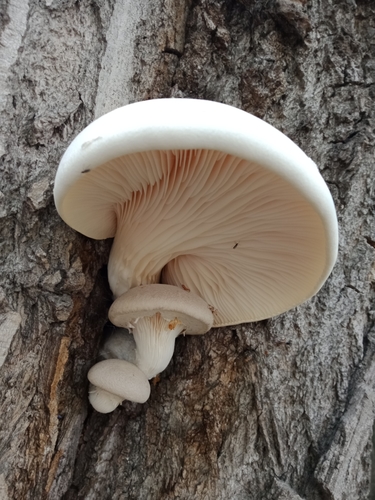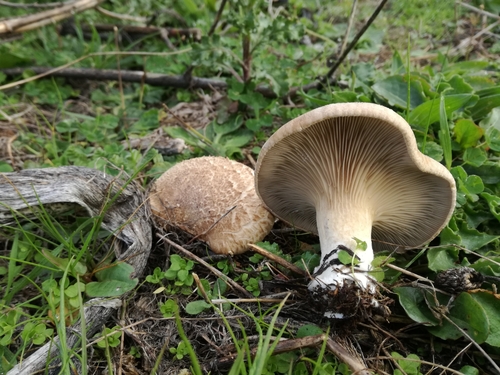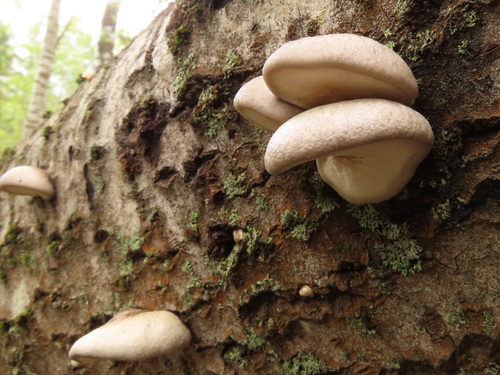
About Pleurotus calyptratus (Lindblad ex Fr.) Sacc.
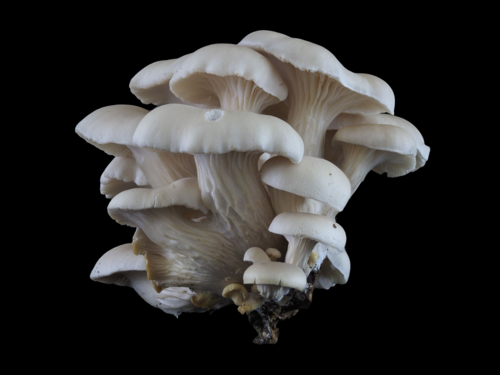
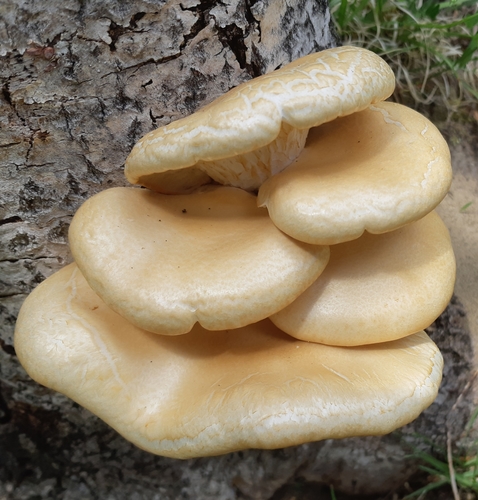
Pleurotus calyptratus (Lindblad ex Fr.) Sacc., with synonyms Lentodiopsis calyptrata and Tectella calyptrata, is a fungal species in the family Pleurotaceae. Young fruiting bodies of this species have a distinctive delicate veil. Phylogenetic research confirms that while it belongs to the P. djamor-cornucopiae clade, it forms its own separate intersterility group. This mushroom occurs in Europe, across temperate to subarctic climate zones. In Central Europe, documented finds have been reported from Germany, Croatia, Poland, Liechtenstein, Austria, Slovakia, the Czech Republic, and Hungary. In northern Europe, the species has only been found in Finland and Sweden to date. In Germany, only isolated finds are known, all from the southern federal states of Bavaria and Baden-Württemberg. It has not established a persistent population in Baden-Württemberg. The species appears on endangered species lists in Poland, Sweden, and Finland. After World War II, humans planted trembling poplar as a soil-preparing forest pioneer tree, but P. calyptratus gained very little benefit from this spread of the tree. Once promotion of the tree stopped, P. calyptratus was considered doomed to extinction, and protective measures are currently assessed as having little usefulness. Similar to Pleurotus dryinus, Pleurotus calyptratus acts as a parasite of weakened trees, affecting trees that are already weakened by drought or waterlogging. After its host tree dies, the fungus can continue feeding on the dead substrate as a saprobiont for some time. It causes intense white rot in the host's heartwood. This species primarily grows on trunks, stumps, and fallen branches of poplars, especially white poplar and trembling poplar. It is very rarely found growing on willows and rowanberries.