About Pleurobranchus albiguttatus (Bergh, 1905)
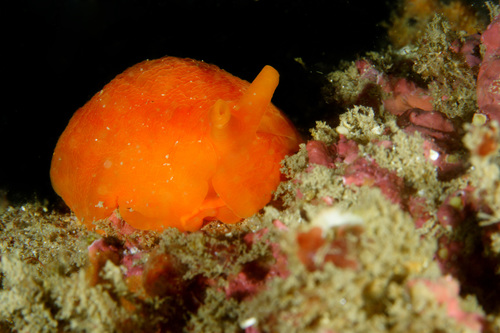
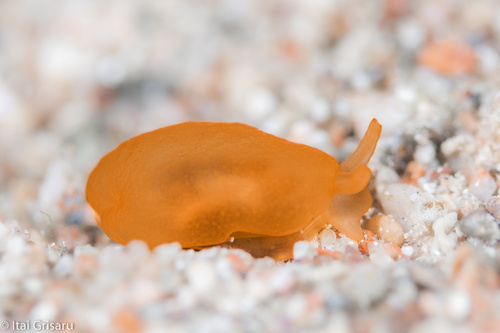
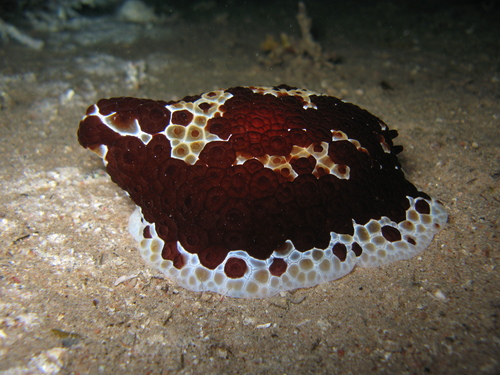
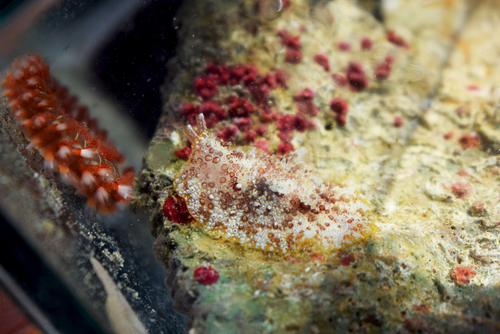
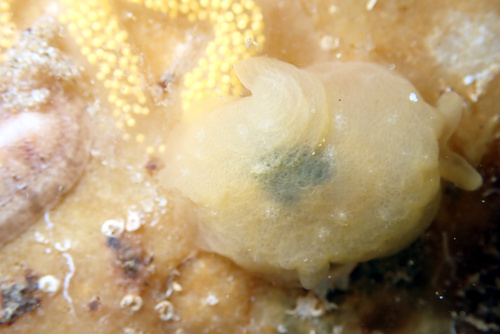
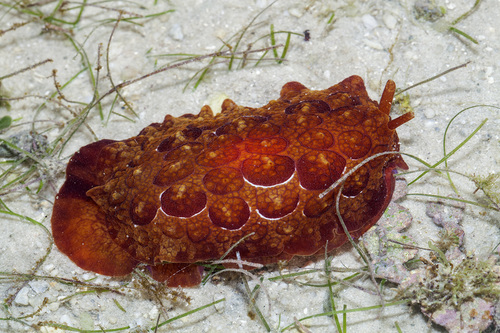
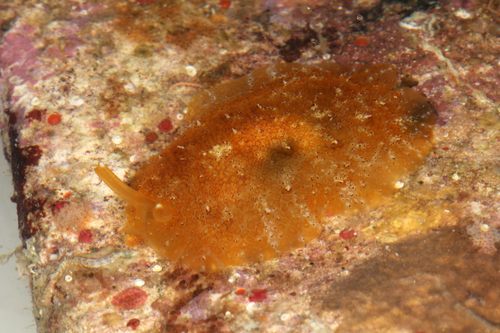
This species, commonly called the mosaic pleurobranch, is scientifically known as Pleurobranchus albiguttatus (Bergh, 1905). It has a sturdy, rounded body with bumpy skin. Its skin is a glowing pinkish red, with occasional elongated papillae. The mantle is patterned with lighter lines, and its margin is lighter in color than the rest of the mantle. On the head, there are two rolled rhinophores that are joined at their bases. Like all sidegill slugs, it has a single gill located on the right side of the body. Adults can reach a total length of up to 120 mm. This species has been found off the southern African coast, ranging from the Atlantic side of the Cape Peninsula to Algoa Bay. It may be endemic to the southern Africa region. Ecologically, the mosaic pleurobranch is nocturnal and hides during daylight hours. It feeds on colonial ascidians, and its egg mass forms a wavy white spiral, with one edge attached to a surface.