About Plethodon vandykei Van Denburgh, 1906
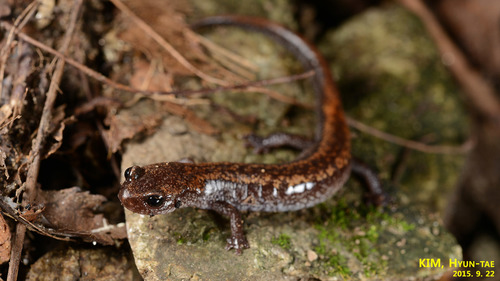
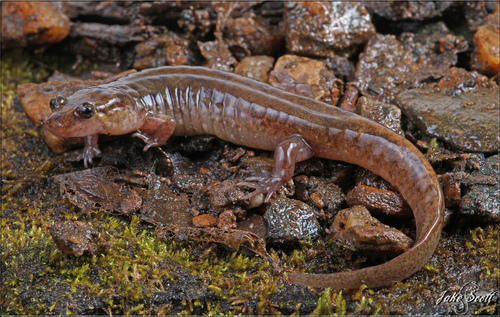
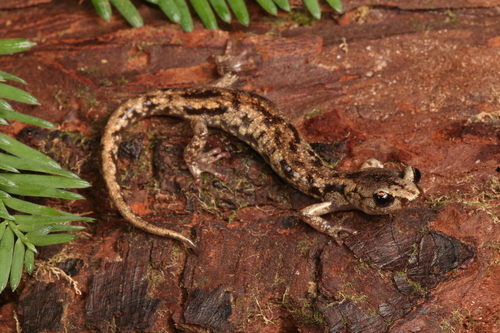
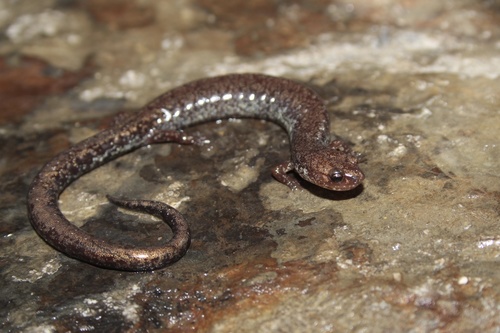
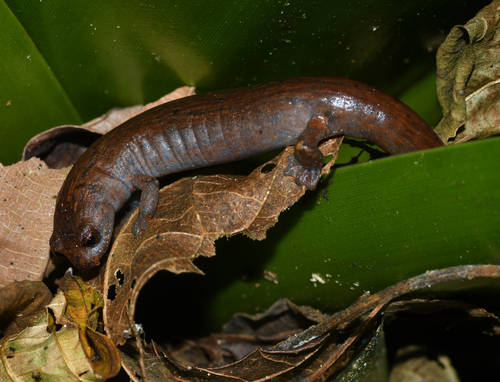
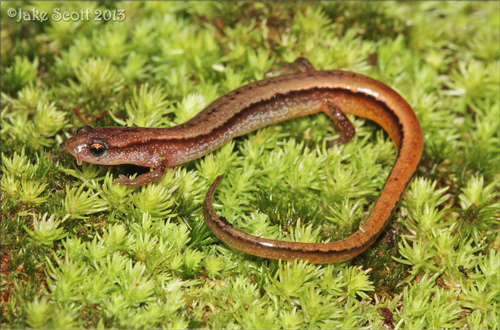
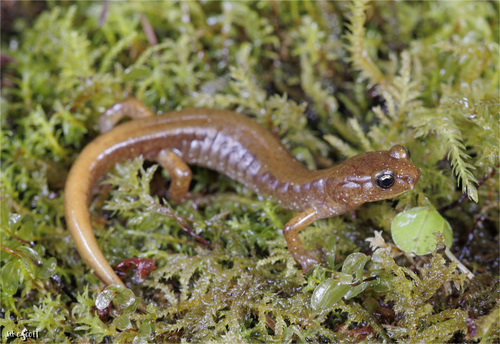
Van Dyke's salamander (Plethodon vandykei Van Denburgh, 1906) has a relatively stocky body and reaches a maximum length of 10 cm. It has parotoid glands behind its eyes, and broad, slightly webbed feet. Individuals can have black, yellow, or pink body color, which forms the basis for described color phases. The "dark phase" has a black base body color with a yellow or red stripe running along its back. This stripe has extensions of color that drop downward along the salamander's sides. Dark phase individuals also have white speckling on their sides and a yellow throat. The "light phase" has a tan, yellow, or rose body with an indistinct stripe. Multiple different color phases can be found within the same population. These salamanders are completely terrestrial, but they require environments with high soil moisture and cool temperatures. They are most active in spring after snow melts, and in fall after the rainy season begins. They avoid summer heat and the freezing temperatures of winter by sheltering under stones or inside rotting logs. Courtship and egg laying take place in spring. Clutch sizes range from 7 to 14 eggs, each measuring around 4 to 5 mm in diameter. Females stay with the eggs until they hatch in fall. This species has no larval stage; hatchlings emerge directly as juvenile salamanders. Van Dyke's salamander is endemic to western Washington, where it occurs in three separate disjunct areas: the Olympic Peninsula, the Willapa Hills, and the southern Cascade Range. Its populations are generally small and isolated, and are most often associated with streams, seepages, and rock outcrops. It is not found on the eastern slopes of the Cascade Range or Olympic Range, which reflects its association with high rainfall regions. In coastal areas, it is mostly found in old forest stands that have moderate to high amounts of woody debris and fractured rock. Large decaying conifer logs along streams appear to be important nesting habitat for this species.