About Plethodon glutinosus (Green, 1818)
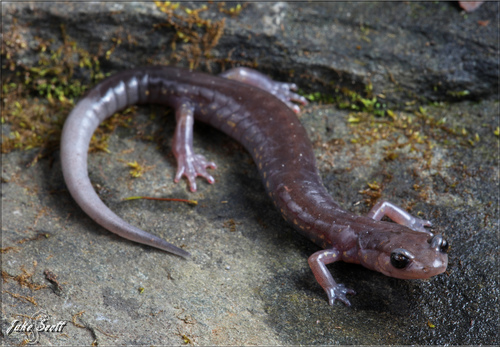
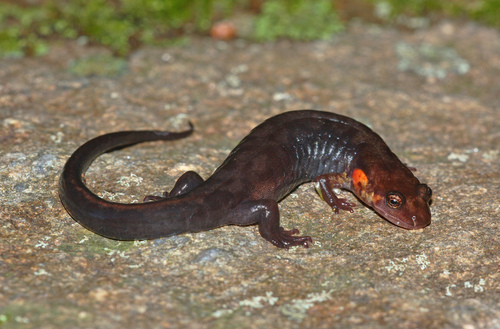
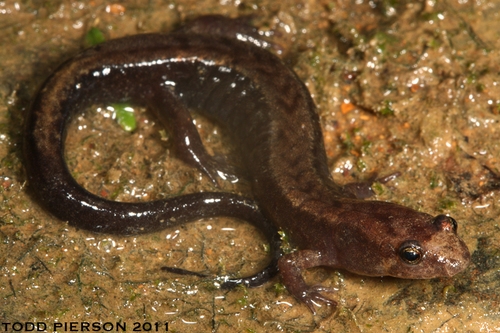
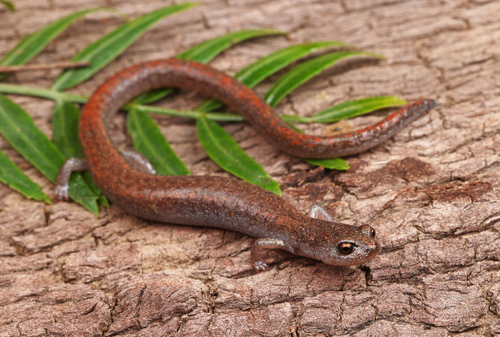
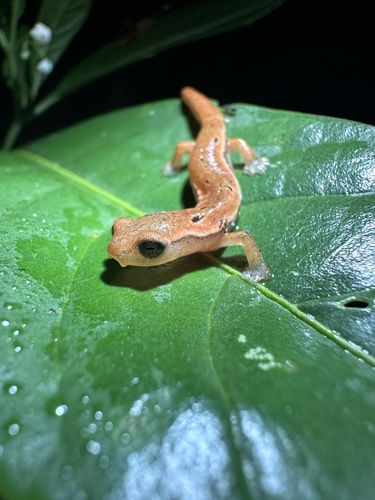
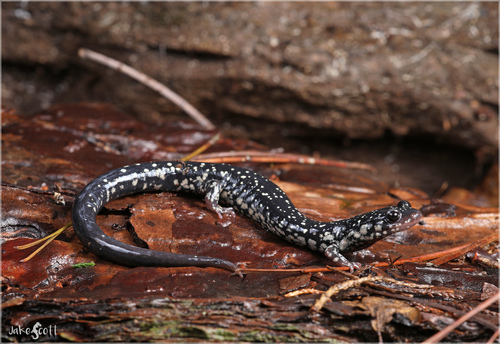
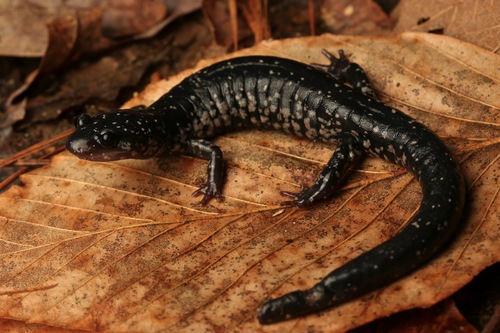
Plethodon glutinosus, commonly called the northern slimy salamander, is typically solid black overall, with many silvery or gold spots across its back. Its total body length (including the tail) usually ranges from 12–17 cm (4.7–6.7 in), though it can reach a maximum length of 20.6 cm (8.1 in). Males and females are hard to tell apart, though females tend to be slightly larger. This species has between 15 and 17 costal grooves. The geographic range of P. glutinosus extends from New York west to Illinois, south to Mississippi, and east to Alabama. Isolated populations also exist in southern New Hampshire and northwestern Connecticut. This salamander is strongly associated with moist, undisturbed woodlands and ravines. It can also be found in caves, and will retreat deeper into caves seasonally when above-ground conditions are not suitable. During the day, it typically stays under debris such as logs and stones. It emerges from this cover on moist nights. It can be found in secondary succession areas within old-growth deciduous or hemlock forests that have steep, rocky slopes. It prefers to hide under rotten logs and in decomposed organic matter like duff layers on the forest floor. It is most often found near water sources or in consistently moist areas. Forest clear-cutting causes large population reductions in affected areas, and it takes 13 years for populations to recover to half of their pre-clear-cutting numbers. Females reach sexual maturity in their second year of life, and do not lay eggs until their third year. Breeding occurs on land in spring. During courtship, males perform a type of dance to attract female attention. Females lay clutches of 4 to 12 eggs in a moist location, and guard the clutch until hatching, often going without food during this time. Hatchlings emerge from eggs after approximately three months. Unlike many other salamander species, this species has no aquatic larval stage; hatchlings develop directly into a fully terrestrial adult form. After hatching, young salamanders grow quickly during summer, and experience little to no growth over winter.