About Plectranthus ambiguus (Bolus) Codd
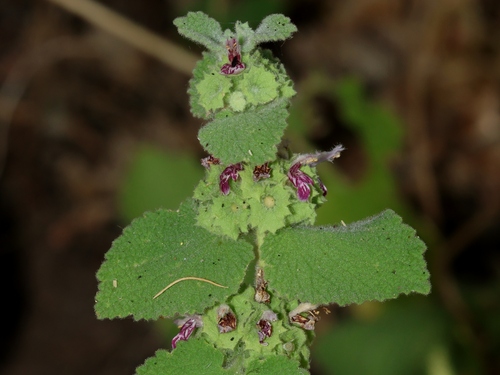
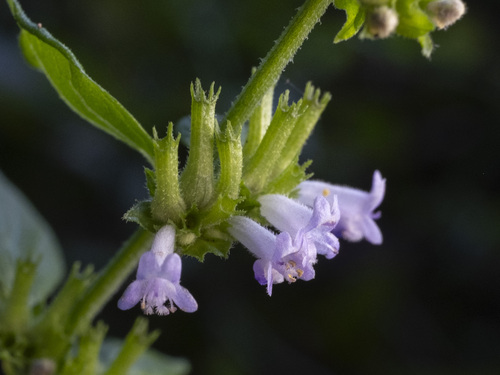
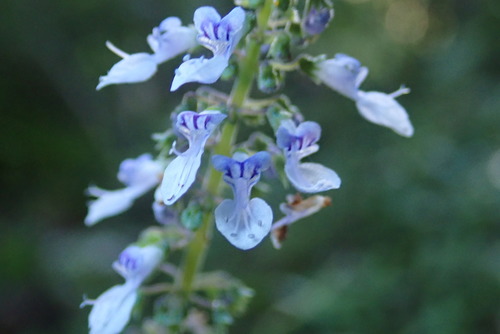
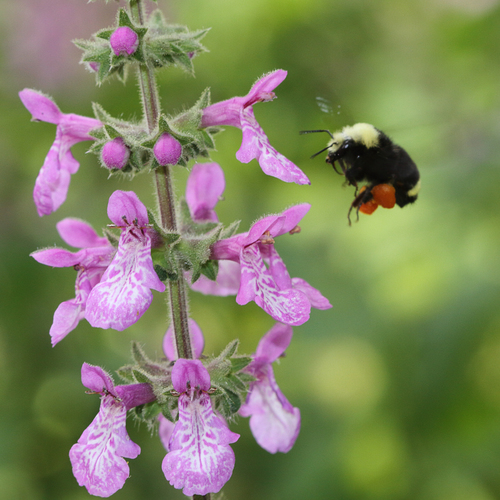
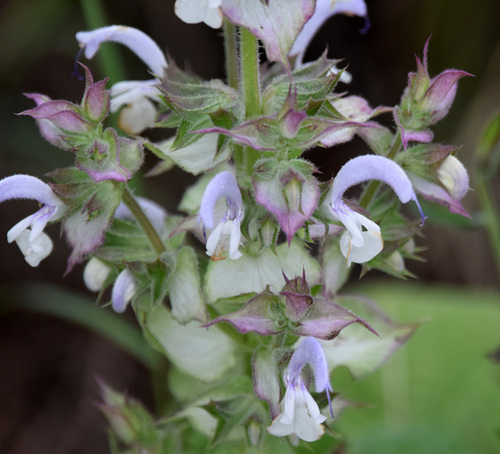
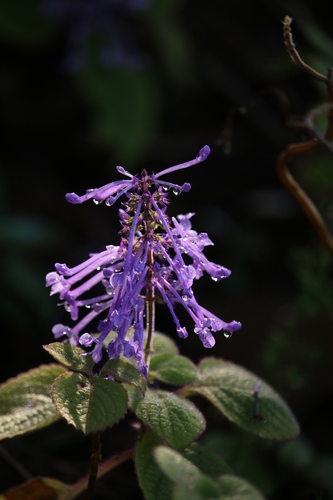
Plectranthus ambiguus, commonly called the pincushion spurflower, is a species of flowering plant in the family Lamiaceae, native to the Eastern Cape and Kwazulu-Natal provinces of South Africa. Its cultivar 'Manguzuku' has earned the Royal Horticultural Society's Award of Garden Merit. The plant's flowers are pinkish purple, with faint purple lines along their upper edge. Plectranthus ambiguus flowers from January to March each year. Among all Plectranthus species, this species is considered longer-tubed, with an average tube length of 28.1 mm. It is pollinated by a variety of insects, including tangle-veined flies of the genus Stenobasipteron, and bees such as the species Allodape pernix. When Plectranthus ambiguus is deprived of nitrogen, it begins losing leaves after two weeks, and sheds all its leaves within three to four weeks. When nitrogen is restored to the soil, new leaves grow from the plant's axillary buds. Known as iboza in Zulu, Plectranthus ambiguus has been used by Zulu people as a medicinal plant to treat a number of conditions, including skin sores, chest complaints, tonsillitis, fever, cough, and eye problems. Reports from the 1950s recorded its use in treating respiratory ailments: the leaves are crushed and mixed with hot water to make a tonic for colds.