About Plecotus auritus (Linnaeus, 1758)
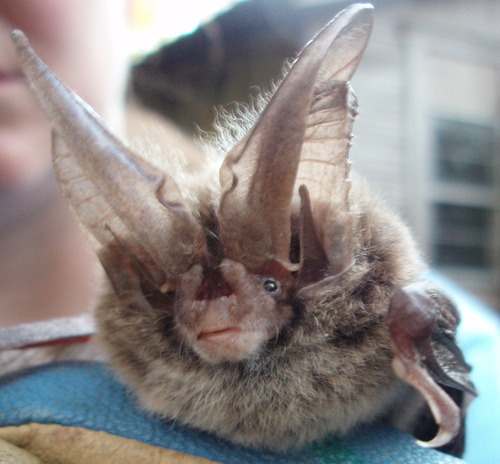
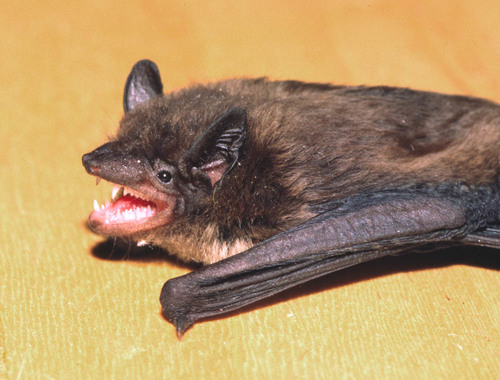
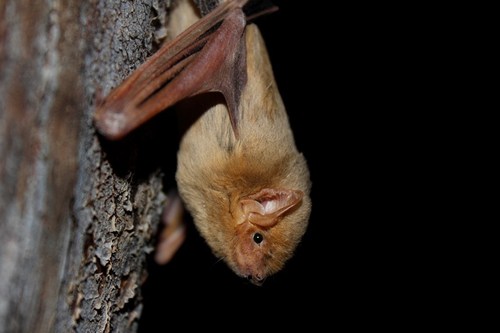
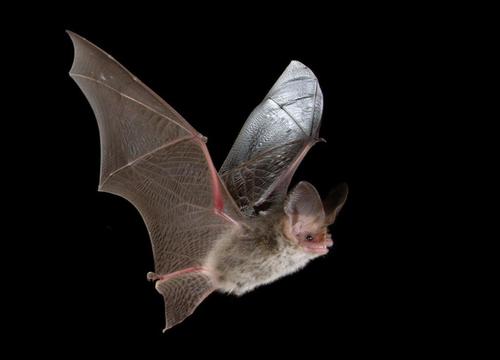
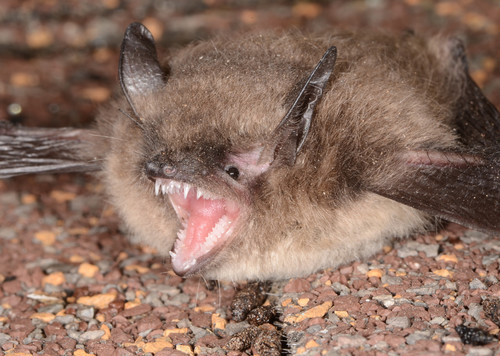
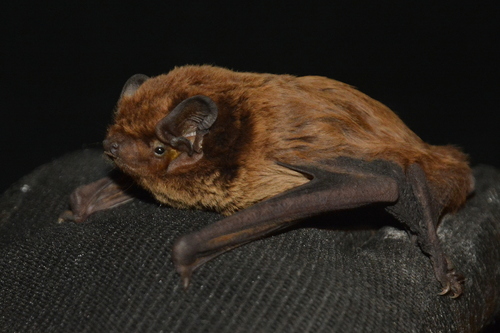
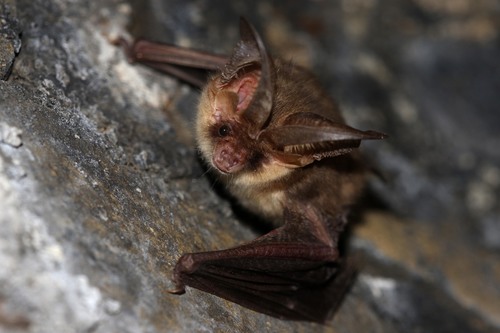
The brown long-eared bat, also called the common long-eared bat, with the scientific name Plecotus auritus, is a small insectivorous bat native to Eurasia. It is marked by distinctive long ears that feature a unique fold. This species is extremely similar in appearance to the much rarer grey long-eared bat, which was not confirmed as a separate distinct species until the 1960s. Full grown adult brown long-eared bats have a body length ranging from 4.5 to 4.8 cm, a tail length of 4.1 to 4.6 cm, a forearm length of 4 to 4.2 cm, and ears that measure 3.3 to 3.9 cm long. This ear size easily distinguishes long-eared bats from most other bat species. Compared to other bat species, brown long-eared bats are relatively slow fliers. The brown long-eared bat is found across nearly all of Europe, excluding Greece, southern Italy, and southern Spain. Its range extends east as far as the Urals and Caucasus. Distribution records for the United Kingdom are available on the National Biodiversity Network website. Brown long-eared bats regularly use buildings as roosts, staying in undisturbed roof spaces either alone in crevices and timber, or in small clusters around chimneys and ridge ends. This species also roosts in tree hollows, bat boxes, and caves; caves are particularly important as winter hibernation sites. Tree roosts may be located very close to the ground. Bats usually emerge from their roost sites only after full darkness, around one hour after sunset. This species hunts above woodland, and will often hunt during the day. Its diet consists mostly of moths, but also includes earwigs, flies, and beetles. It gleans these insects directly from leaves and bark. Instead of relying on echolocation, this bat likely detects prey using both sight and sound, aided by its large eyes and ears. A 2003 study conducted by Eklöf and Jones confirmed that brown long-eared bats are capable of detecting prey visually. Under controlled experimental conditions, the bats showed a preference for scenarios where both sonar and visual cues were available. Even so, visual cues were more important than sonar cues, and the bats could not detect prey using only sonar cues. Because brown long-eared bats have relatively large eyes and ears, it is thought that a combination of visual input and passive listening allows this species to locate prey effectively in cluttered environments.