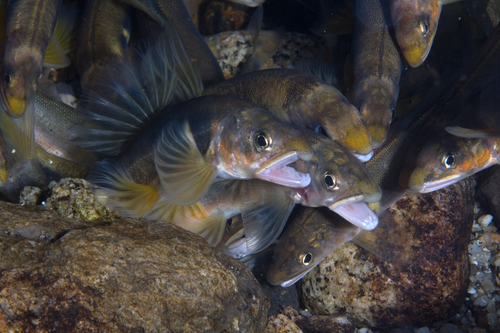
About Plecoglossus altivelis (Temminck & Schlegel, 1846)
The ayu sweetfish (Plecoglossus altivelis), also called ayu or sweetfish, is a species of bony fish. It is the only species in the genus Plecoglossus and the family Plecoglossidae, and is a relative of smelts and other fish that belong to the order Osmeriformes. This species is native to East Asia, with a distribution along the northwestern Pacific Ocean coast ranging from Hokkaidō in Japan southward to the Korean Peninsula, China, Hong Kong, and northern Vietnam. Ayu are amphidromous, meaning they move between coastal marine waters and freshwater lakes and rivers. A small number of landlocked populations exist in Japanese lakes, including Lake Biwa. The original wild population of ayu in Taiwan went extinct in 1968 due to pollution, and the current populations there were reintroduced from Japan in the 1990s. The common name "sweetfish" comes from the sweet flavor of the fish's flesh. Because of its typical one-year lifespan, it is also written as 年魚, which translates to "year-fish". A small number of individuals live for two to three years. Ayu is the designated prefectural fish of both Gunma Prefecture and Gifu Prefecture in Japan. Ayu is highly valued for its flavor, and is mostly consumed in East Asia. Its flesh has a distinctive sweet taste, described as having "melon and cucumber aromas". In Japan, main methods to catch ayu include fly fishing, use of fish traps, and a decoy method called ayu-no-tomozuri. For this decoy method, a living ayu is placed on a hook; it swims when submerged, provokes the territorial behavior of other wild ayu, which attack the perceived intruder and end up caught. Ayu are also caught through the traditional practice of cormorant fishing. The cormorant fishing practice on the Nagara River, which uses Japanese cormorants (Phalacrocorax capillatus), attracts visitors from across the globe. Japanese cormorants, called umi-u (meaning "sea-cormorant") in Japanese, are domesticated birds trained specifically for this fishing practice. The birds catch ayu, store the caught fish in their crops, and deliver them to fishermen. Ayu are also fished commercially. Captive juvenile ayu are raised in aquaculture before being released into rivers for sport fishing. In Japanese cuisine, a common preparation method for ayu and other small fish is to shape the fish body into a wavy "swimming" form, skewer it, then grill it with salt over charcoal to preserve the fish's natural flavor.

