About Plecia nearctica Hardy, 1940
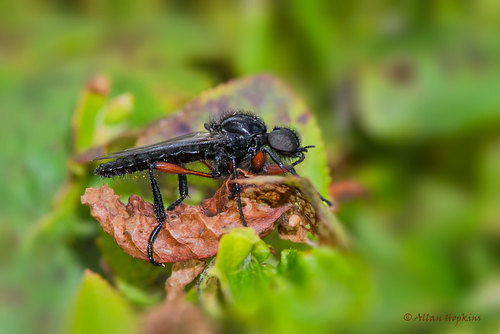
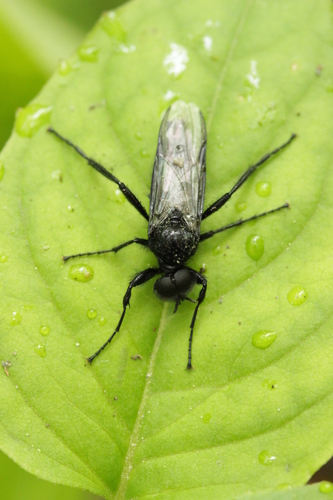
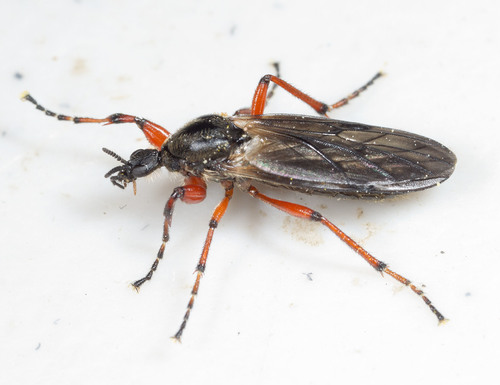
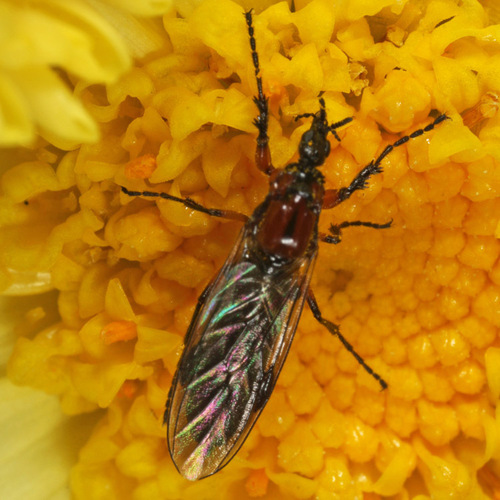
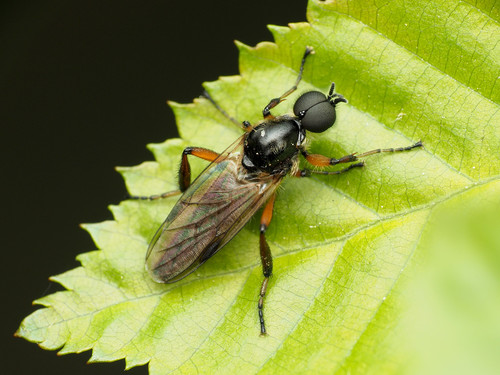
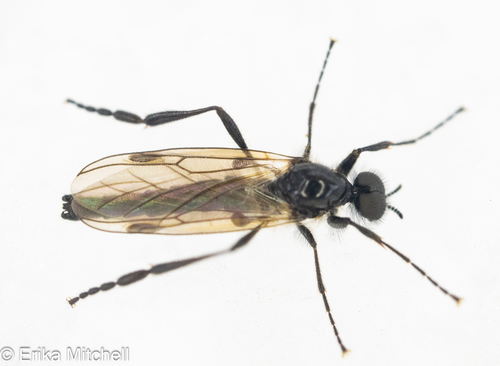
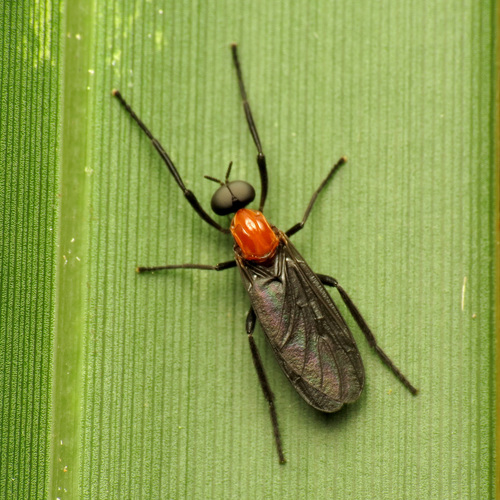
Plecia nearctica Hardy, 1940, commonly called the lovebug, is a march fly species found in parts of Central America and the southeastern United States, especially along the Gulf Coast. It is also known by the common names honeymoon fly and double-headed bug. Mature pairs stay connected during and after mating, even while flying, for up to several days. Though the species was first formally described by D. E. Hardy in 1940, it had been observed in Louisiana as early as 1911. When Hardy first described the species, he noted lovebugs were widespread, but more common in Texas and Louisiana than other Gulf states. By the end of the 20th century, the species had spread to all regions bordering the Gulf of Mexico, all of Florida, and as far north as Georgia and South Carolina. In 1970, L. A. Hetrick found that lovebugs were also widespread across central and northern Florida, and documented their flights reaching altitudes of 300 to 450 metres (980 to 1,480 ft) and extending several kilometers out over the Gulf. Lovebug larvae feed on partially decayed vegetation in the environment, which makes them beneficial to humans. Adult lovebugs primarily feed on nectar from a range of plants, most notably sweet clover, goldenrod, and Brazilian pepper. Lovebugs are considered a nuisance by many motorists, particularly in Florida, because they swarm in large numbers during their mating season. Female lovebugs can lay up to 350 eggs, which they typically deposit around decaying organic material in the top layer of soil. Lovebug eggs usually hatch 2–4 days after being laid, with hatching time varying depending on the flight season. After hatching, larvae feed on the decaying material around them, including dead plant matter in soil and other organic material, and remain in the soil until they develop into the pupal stage. In warmer months, larvae stay in the larval phase for around 120 days; in cooler months, this phase lasts approximately 240 days. Lovebugs typically remain in the pupal stage for 7–9 days before emerging as mature breeding adults. As soon as adults emerge, they begin mating. Adult males emerge from the pupal stage first, and hover waiting for females to emerge. Mating happens immediately after adult females emerge. Males stay paired with females until fertilization is fully complete. Copulation lasts 2–3 days, after which the female detaches, lays her eggs, and dies. Recorded maximum lifespans for adult females are up to seven days, while adult males live up to two to five days, with an average total adult lifespan of three to four days. However, recapture data published by Thornhill in 1976c shows that males live longer in wild field conditions than females.