About Plebejidea loewi
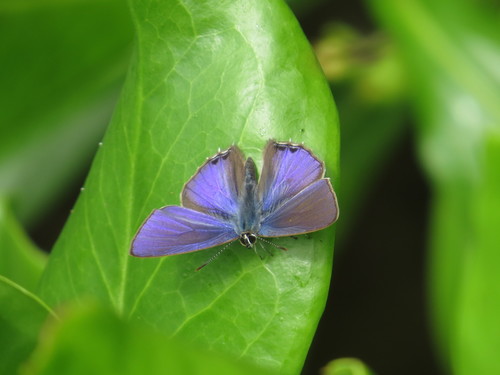
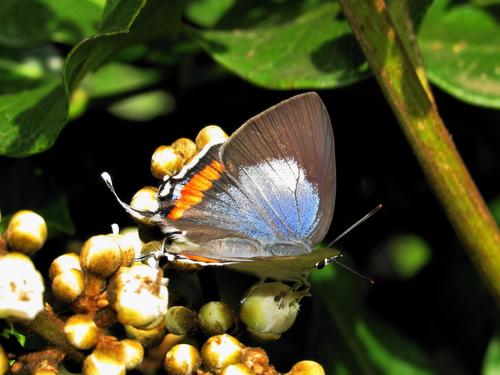
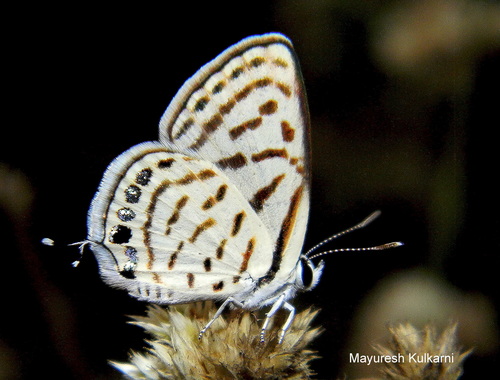
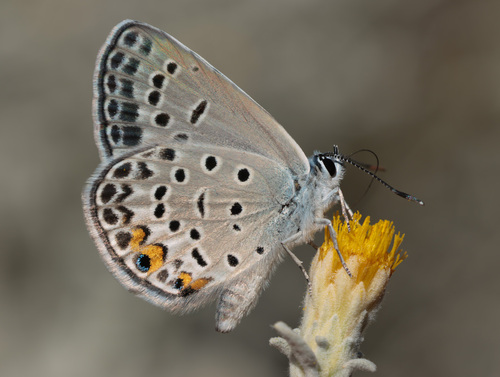
Scientific name: Plebejidea loewi. According to Seitz's description, this butterfly resembles a small form of the preceding species Plebejidea aliardii. Males are a vivid glossy blue above, similar in appearance to C. bellargus but of a darker shade; females are brown above, with yellowish-red spots on the anal area of the hindwing. The underside has numerous ocelli, and metallic dots are present behind the red submarginal band of the hindwing. Originally recorded from Asia Minor, Armenia, Persia and Turkestan. A large subspecies, gigas Stgr. from Syria, particularly resembles P. lycidas, but has larger, more closely spaced ocelli on the underside of the hindwing. Like the nominate form, gigas retains the characteristic intense blue gloss that no other blue butterfly shares in the same tint. Another form, now recognized as a full species, is named chamanica Moore. It is found flying at Sharud and in Baluchistan, matches the size of nominate loewi, and is described as a paler violet-blue. Adults fly in May and June, and are locally plentiful in suitable habitat. The full confirmed range of Plebejidea loewi includes Northeast Africa, the Aegean Islands, Turkey, Syria, Israel, Jordan, the Caucasus and Transcaucasia, Russia's Central Caucasus, Iran, Tajikistan, Turkmenistan, the United Arab Emirates, Oman, Saudi Arabia, and Afghanistan. This species occurs only in very local populations, occupying dry stony meadows, other xerophytic biotopes, and subalpine meadows. It produces one generation per year, with a flight period from June to early August. Females are much rarer than males and almost never leave their native habitats. After mating, females lay eggs singly on the stems and leaves of caterpillar forage plants: Astragalus species. Eggs are discoid, with clearly defined surface cells. They are white with a greenish tinge, and have a green micropyle. Eggs overwinter with a fully formed caterpillar already developed inside. First instar caterpillars are yellowish-green with dark spots and a brownish-black head. They feed on leaf parenchyma, scrape out the juicy inner tissue of stipules, and especially prefer to bore into young buds to feed inside. Mature fifth instar caterpillars are bright green with a black head, and feed on buds and flowers. By the end of their development, they sometimes develop a reddish hue. Pupation takes place in shelter: under forage plant bushes or in soil cracks, with the pupa attached to the substrate by a silk loop. Pupae measure 11–12 mm in length. They are elongated, light green with a dark green dorsal stripe and white spiracles, and are covered in very short white hairs. The pupal stage lasts 12–15 days.