About Platysteira cyanea (Statius Muller, 1776)
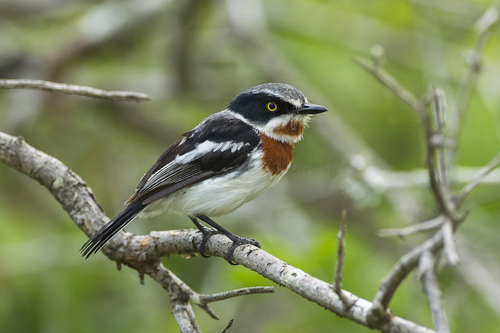
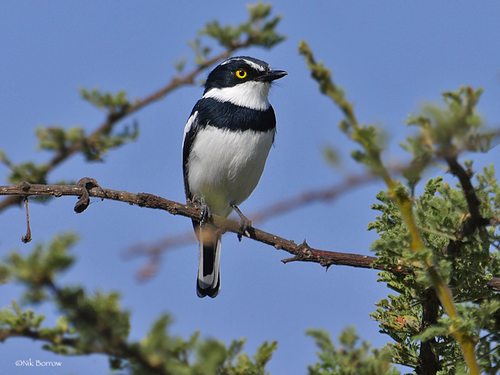
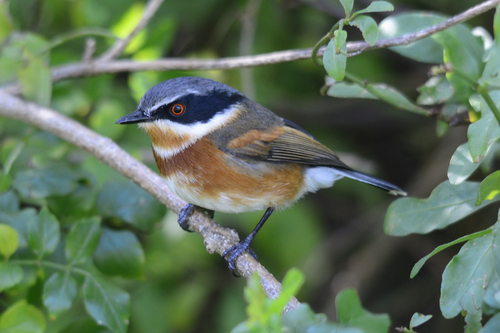
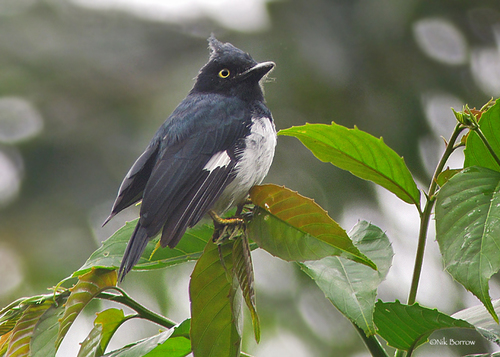
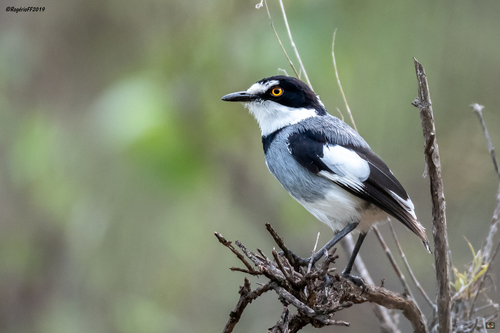
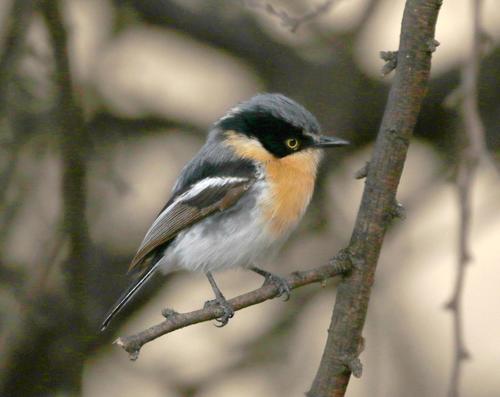
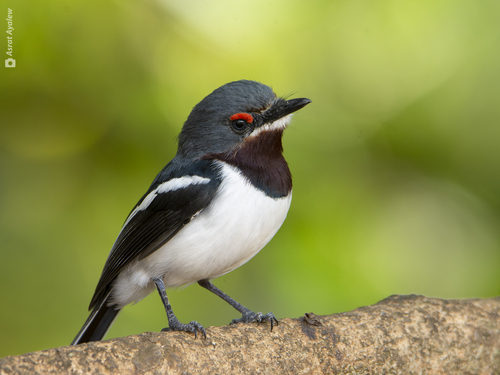
The brown-throated wattle-eye, scientifically named Platysteira cyanea (Statius Muller, 1776), is also commonly called the common wattle-eye or scarlet-spectacled wattle-eye. It is a small, insectivorous passerine bird. Previously, wattle-eyes were classified as a subfamily of the Old World flycatcher family Muscicapidae, but they are now typically separated from this group. This species breeds in west, central, and northeast tropical Africa. It is a common species that inhabits secondary forest, other woodland areas, and gardens. This bird lays its eggs in a small, neat cup nest built from lichen and cobwebs, placed low in a tree or bush. Adult brown-throated wattle-eyes are stout birds that measure around 14 cm (5.5 in) long. Breeding males have glossy black upperparts, white underparts with a neat black breast band, a prominent white wingbar, and fleshy red wattles above the eye. Females have grey-black upperparts, and also have the white wingbar and red wattles. They have a small patch of white below the bill, with maroon-colored throat and breast that is separated from the white belly by a black breast band. Young males are paler, greyer versions of adult females. These active insect-eating birds live in pairs or small groups. The characteristic ringing call of the brown-throated wattle-eye is a distinct six-note sequence: doo-dd-dum-di-do-do.