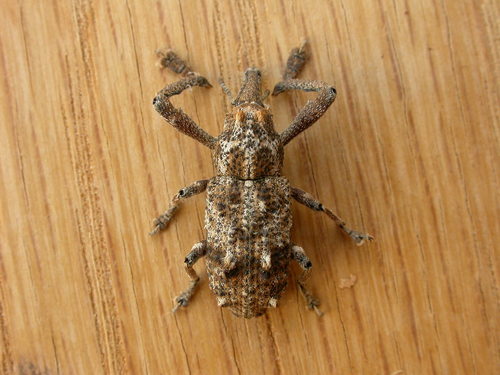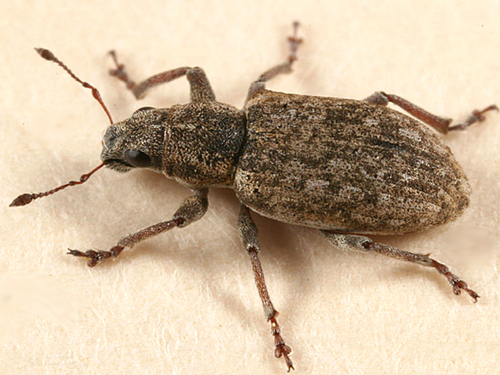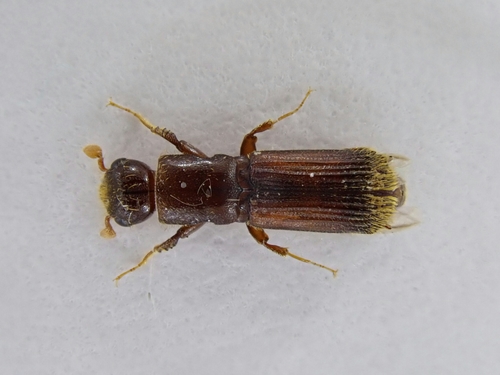
About Platypus cylindrus (J.C.Fabricius, 1792)
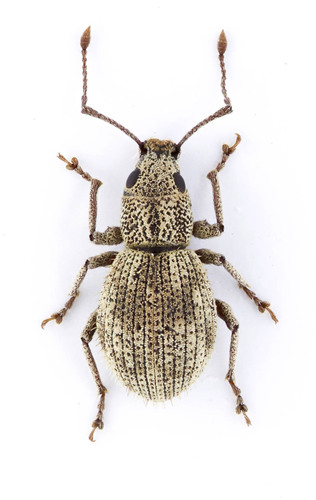
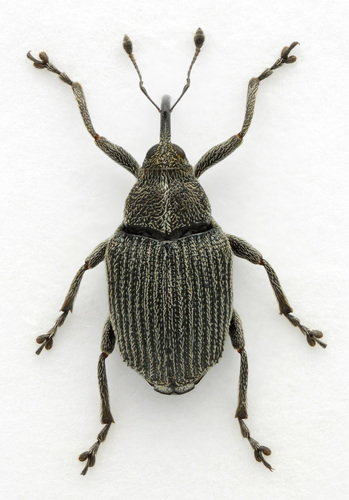
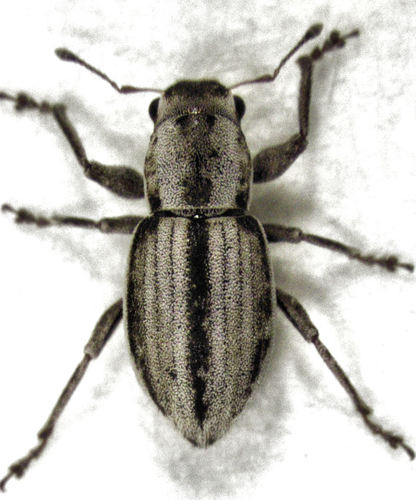
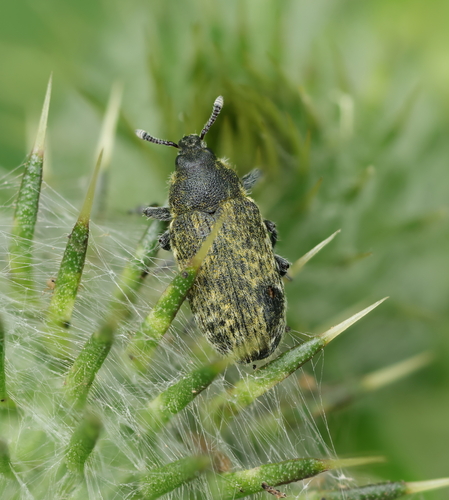
Platypus cylindrus, commonly known as the oak pinhole borer, has adult individuals 6 to 8 mm (0.2 to 0.3 in) long. Its body is cylindrical in cross section, which gives it the species name cylindrus; when viewed from above, it has the shape of a long, narrow rectangle. Adults range in color from very deep brown to black. Larvae are yellowish-white, legless grubs. This species is native to Europe. It was historically considered rare in Britain, but after the Great Storm of 1987 blew down many trees in southern England, it took advantage of the new abundant timber supply and became much more common. The oak pinhole borer infests mature trees, and prefers stressed, dying or dead standing trees, fallen trees, and logs. Insects choose sick or moribund trees to infest, and their activities do not kill host trees. In addition to oak trees, they can infest other hardwood trees including beech, sweet chestnut, ash, elm, and walnut. Adult beetles can reach maturity at any time of year, but are most active between July and September. During this active period, the male excavates a hole a few centimetres deep. A female enters the hole, then emerges, and mating takes place on the bark surface. After mating, the female re-enters the hole and the male follows her in. The female extends the tunnel radially outward, while the male pushes wood fragments out of the tunnel, leaving a pile of frass. This frass is fine and soft, which distinguishes it from the more granular, coarser frass produced by most other wood-boring beetles. The walls of the beetle’s gallery soon become covered in a layer of ambrosia fungi, whose spores were carried in on the beetles’ body surfaces. This symbiotic fungus is only found in the galleries created by ambrosia beetles, and provides nourishment for both the adult beetles and their larvae; the beetles do not feed on the wood itself. After around four weeks of tunnelling, the female lays her first batch of eggs, and lays additional batches at irregular intervals over her two to three-year lifespan. She also continues tunnelling, and the branching gallery system may extend up to 1.8 m (6 ft) in total length. Eggs hatch between two and six weeks after being laid. Larvae go through four or five instar stages, and feed on the ambrosia fungus. Later instars have powerful jaws and extend the tunnel system further, though they tunnel more slowly than the female. The frass they produce is coarser than the frass produced by adult beetles. The larval stage lasts around two years. After this, larvae create small chambers where they pupate, before emerging into the open air as adults without doing any additional tunnelling. Several generations of beetles may share and occupy a single tunnel system.