About Platyplectrum ornatum (Gray, 1842)
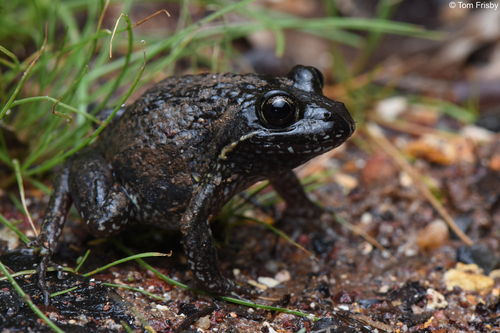
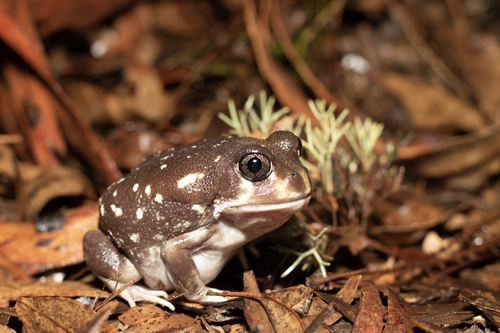
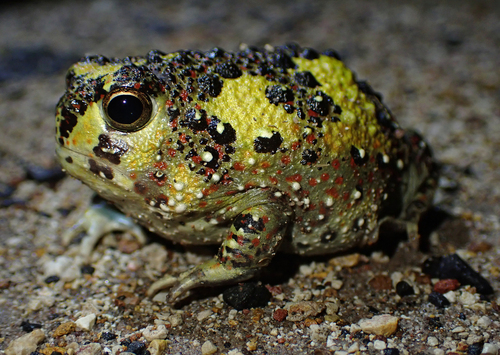
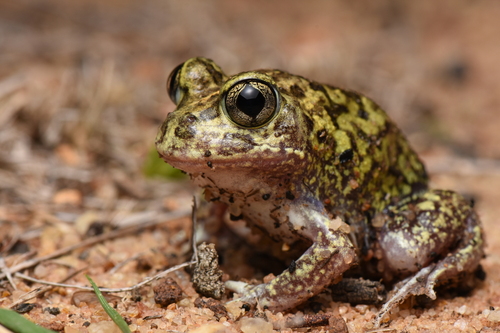
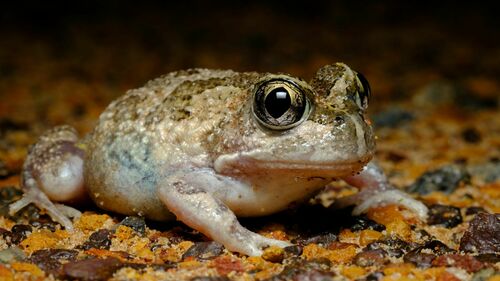
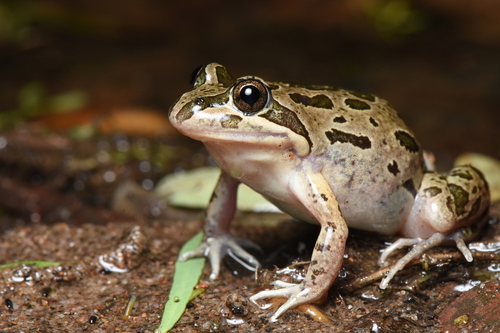
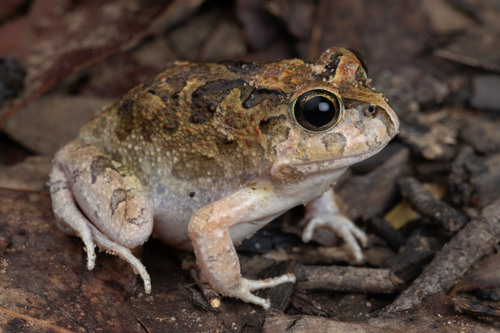
Platyplectrum ornatum is a relatively small, stubby frog species that reaches a maximum length of 50 mm. Its base colour ranges from grey to brown to yellow, and dorsal surface patterns vary widely between individual specimens. Most individuals have a butterfly-shaped patch of colour behind the eyes. The back is generally covered in red-tipped warts, and skin folds are present near the head. Darker barring or spotting marks the species’ legs and arms. Toes have slight webbing, while fingers have no webbing at all. This species holds the record for the smallest known genome of any frog, and its genome is even smaller than the genomes of many birds. This small genome is an adaptation to the desert environments the species inhabits. Breeding ponds in the desert dry out very quickly, so tadpoles must complete metamorphosis as fast as possible—this can happen as early as eleven days after eggs are fertilized. A small genome produces smaller cells, and smaller cells allow tadpoles to transform into young frogs more quickly, enabling them to leave shrinking ponds before they dry out. The species’ distribution extends from western Sydney to Cape York in Queensland, spanning along both sides of the Great Dividing Range all the way to Western Australia. It can be found in wet sclerophyll forest in coastal areas as well as woodland in more arid regions. As is implied by its common name, this frog is a burrowing species. It burrows feet-first, and enlarged tubercles on its feet help it scrape soil out to create burrows. It is usually only visible above ground after heavy rain that falls in spring or summer. Males vocalize to attract mates while floating in still water bodies such as dams, puddles, and flooded grassland. Their call is a short, nasal "unk" repeated at a slow pace.