About Platycephalus caeruleopunctatus McCulloch, 1922
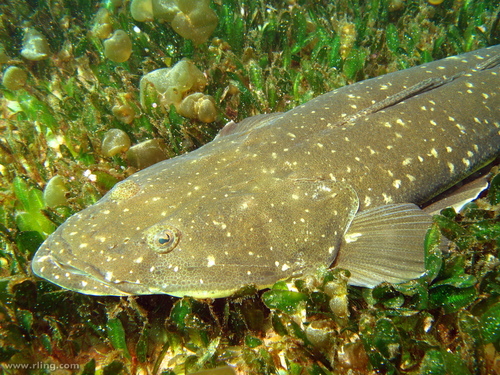
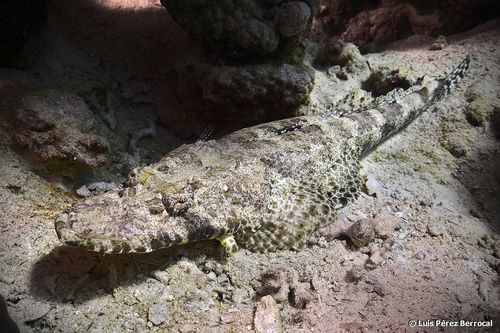
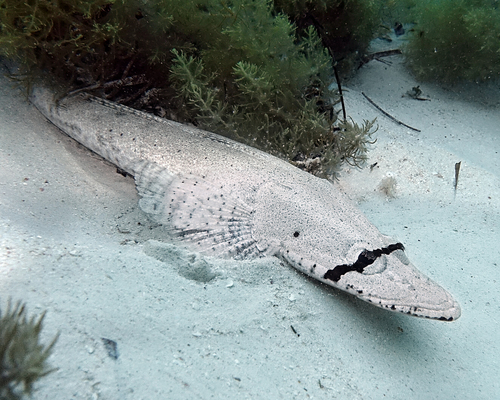
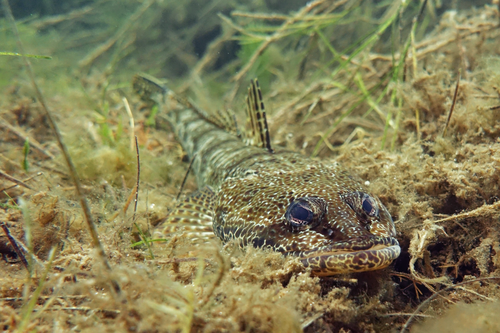
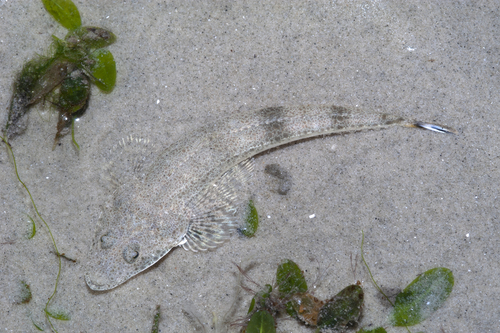
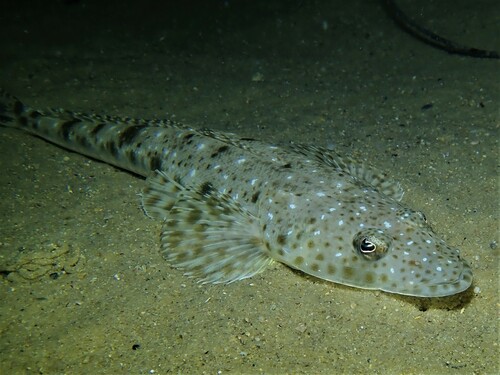
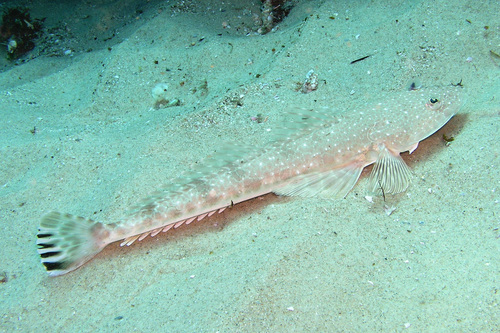
Platycephalus caeruleopunctatus, which has the common names bluespotted flathead, drift flathead, Eastern blue-spot flathead, longnose flathead, red flathead, red spotted flathead, sand flathead, and yank, is a species of predatory ray-finned fish in the flathead family Platycephalidae. This is a marine species that lives predominantly in offshore waters and coastal bays along Australia's east coast, where it is almost exclusively found on marine sand; it is commonly encountered on marine sands in south-eastern Australia, and is rarely found in any other habitat. Flathead species have an unusual body shape that forms the basis of their hunting strategy. Their bodies are dorsally compressed, meaning they are wide, flattened, and very low in height. Both of their eyes sit on the top of the flattened head, giving them excellent binocular vision to attack prey that is above them. This body form is somewhat similar to flounder, but flatheads differ from flounder by being much more elongated, keeping their tail in a vertical position, and having a large, wide, symmetrical mouth. Bluespotted flatheads use this body structure to hide in sand; their body colour changes to match their background, so only their eyes are visible above the sand. It has not been directly observed, but it is thought that like other flathead species, the bluespotted flathead uses this camouflage to ambush small prey. This species is also capable of being an active swimmer, and will actively chase prey instead of ambushing it. This species can be told apart from other flatheads by its scattered blue spots, elongated dark blotches on the tail that increase in size from the top of the tail to the bottom, and a lower preopercular spine that is distinctly longer than the upper preopercular spine. Bluespotted flatheads can grow up to 68 cm in total length, and it is thought that both males and females reach this maximum size.