About Platybelone argalus (Lesueur, 1821)
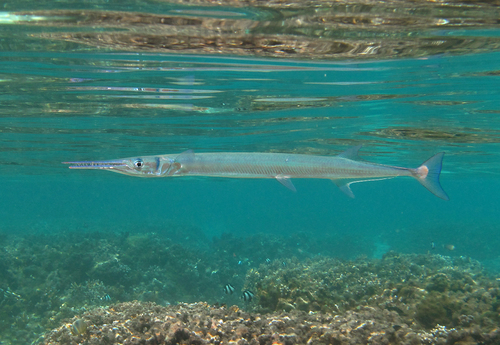
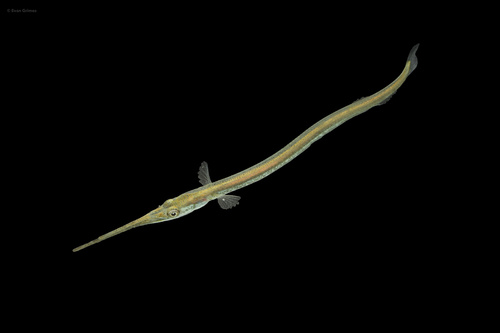
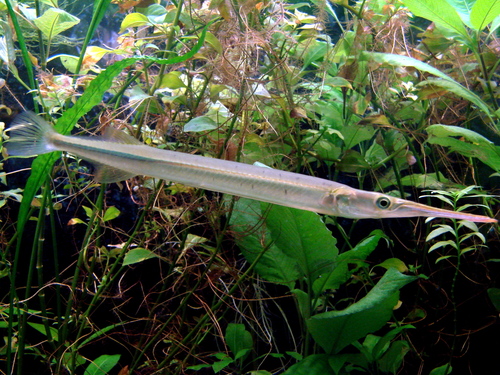
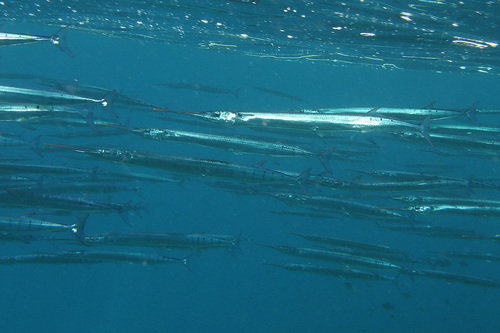
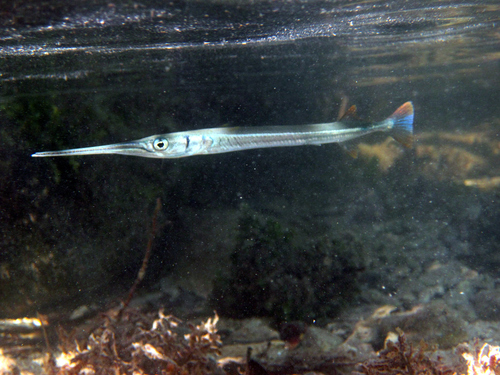
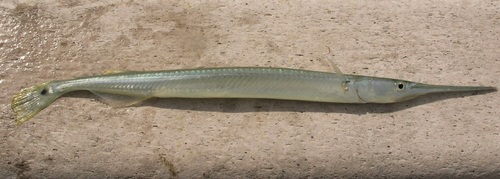
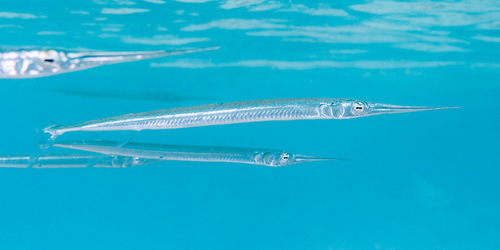
Keeltail needlefish (Platybelone argalus), like all needlefish, closely resemble North American freshwater gars of the family Lepisosteidae. This species is most recognizable for the large, flat keel-like structures that run on either side of the tail. They have between 12 and 15 rays on their dorsal fins, and between 17 and 20 rays on their anal fins. Keeltail needlefish have gill-rakers, their caudal peduncles have lateral keels with a lateral line running ventral to the keels, and they can grow up to 50 cm long. The upper jaw of the keeltail needlefish is also smaller than its lower jaw. Keeltail needlefish are found in the western Atlantic Ocean between North Carolina and Brazil, including the Gulf of Mexico, the Bahamas, and the Caribbean Sea. In the Indian Ocean, they are found off the coast of East Africa, and their range continues into the Pacific Ocean, reaching the Hawaiian Islands and extending north to the Ogasawara Islands. They have also been found around the Arabian Peninsula, in the Red Sea and Persian Gulf. They usually occur offshore and are abundant around islands. Three well-recognized subspecies are recognized: P. a. platura is most common in the Red Sea and Persian Gulf; P. a. platyura is known from the rest of the Indo-Pacific; and P. a. argalus comes from the Atlantic. They school in sheltered parts of reefs, and feed mainly on smaller fish. Keeltail needlefish are egg-laying, and they attach their eggs to floating objects using specialized tendril-like structures on the surface of the egg.