About Platerodrilus ngi Masek & Bocak, 2014
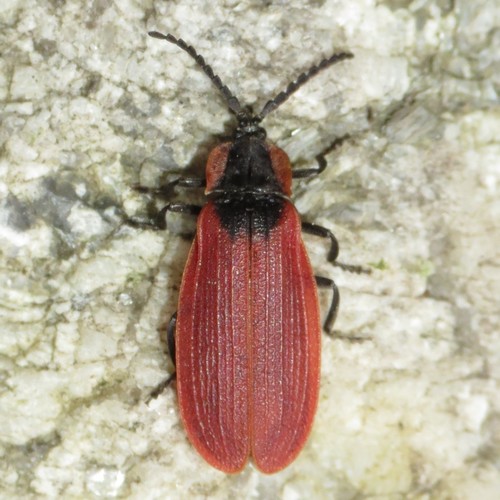
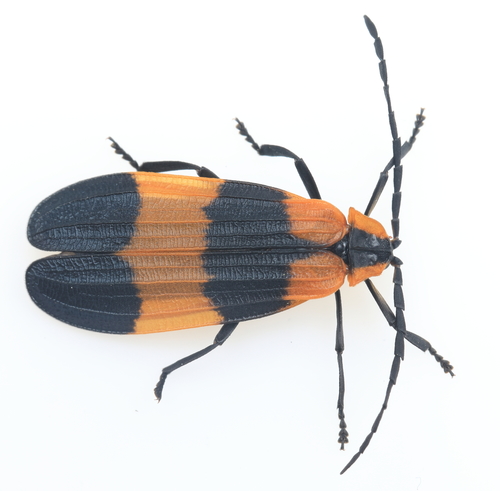
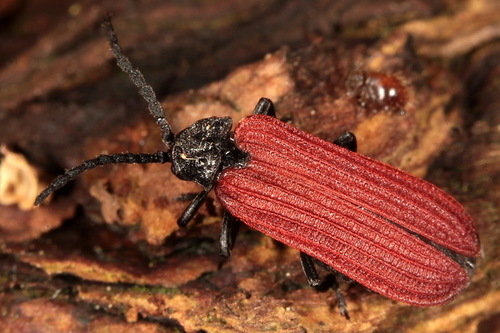
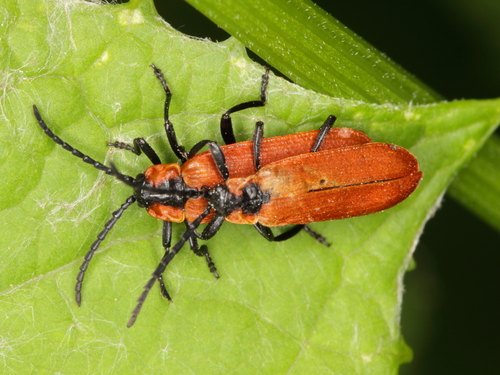
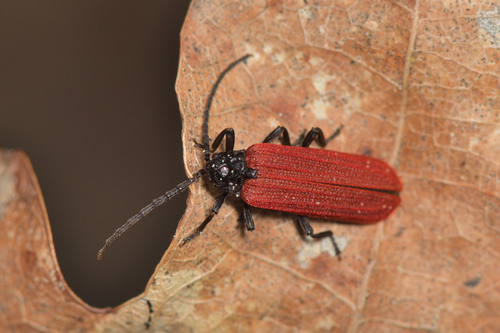
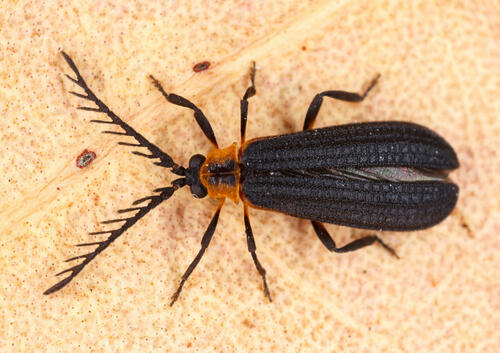
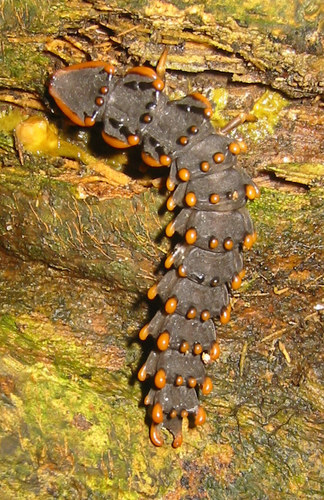
Platerodrilus ngi is a species of net-winged beetle belonging to the family Lycidae. Like other members of the genus Platerodrilus, it is commonly called a trilobite beetle. This common name comes from the fact that larviform females of these beetles are thought to resemble extinct trilobites. Males of trilobite beetles, by contrast, look similar to other net-winged beetles, making this group an extreme example of sexual dimorphism. P. ngi was formally described in 2014, based on a holotype specimen collected in Singapore, plus a number of additional specimens from both Singapore and Pahang, Malaysia. The holotype, a male specimen, was collected from the locality of Bukit Timah and Central Water Catchment. Morphological comparisons confirmed that P. ngi belongs to the same clade as P. major, and thus falls within P. major’s species group. P. ngi can be identified by its dark red coloration on the pronotum and the humeral two thirds of its elytra, which distinguishes it from P. atronotatus, another species in the same species group. Further differences in the antennomeres and phallus also separate the two species. Males of P. ngi measure 6.9 mm (0.27 in) in length and are covered in dense short pubescence, or setae. Females grow much larger, reaching up to 30.2 mm (1.19 in) in length. Females with distended abdomens are suspected to be gravid, though this has not been confirmed. The specific epithet ngi honors Peter Ng. The diet of the genus Platerodrilus is thought to include materials found in its preferred habitat of rotting wood, such as basidiomycete fungi, slime molds, rotifers, nematodes, copepods, nauplii, and mites, as well as rotting wood itself. P. ngi appears to be somewhat adaptable, as specimens have been found in secondary forests within the Central Catchment Nature Reserve, while other related species are only found in primary forests.