About Platanus orientalis L.
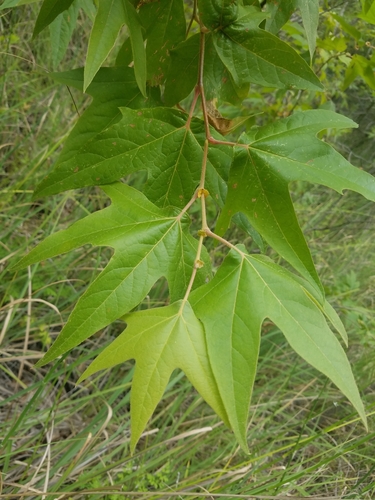
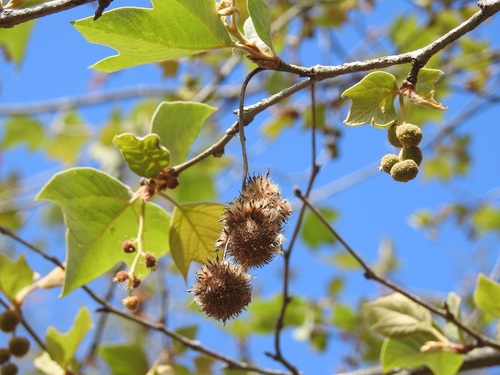
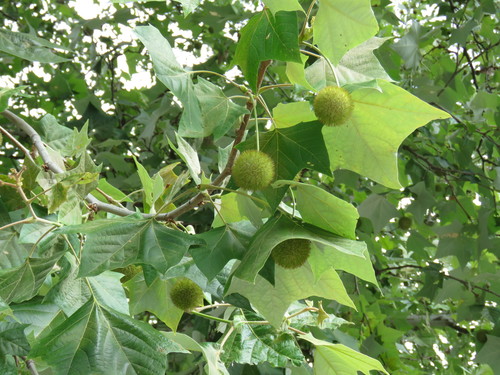
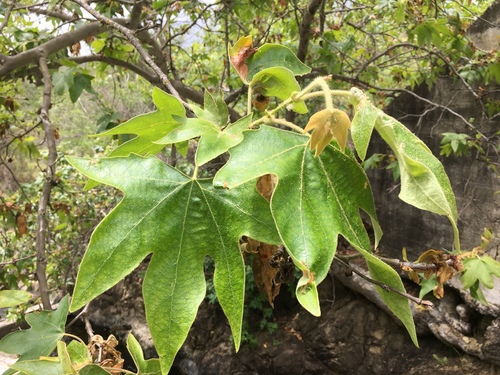
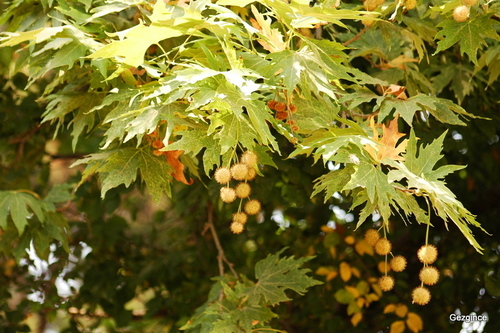
Platanus orientalis L., commonly known as the oriental plane, naturally grows in riverine environments alongside alder, willow, and poplar trees. Once established, it can successfully survive and grow even in dry soils. It can reach a very large mature size, and many existing specimens are hundreds of years old. Around ten trees recorded in the past or present have a trunk diameter of 4 m (13 ft) or more, and several have a total volume of roughly 100 m³ (3,500 cu ft). One specimen growing in Ghirmizi Bazar, Karabakh, Republic of Azerbaijan is reported to have a diameter at breast height (DBH) of 5 m (16.4 ft), with a trunk girth of 15.71 m (51.54 ft). Like all other plane trees, it produces leaves arranged alternately along the stem; the leaves are deeply lobed, palmate, and similar in shape to maple leaves. It usually has flaking bark, though occasional specimens have non-flaking bark that becomes thick and rugged. Its flowers and fruit are round, burr-like, and grow in clusters of 2 to 6 on a single stem. Wild oriental plane trees show considerable natural variation, and this variation can be made more complex by crossbreeding with planted London planes (Platanus × hispanica), the hybrid between P. orientalis and American sycamore (Platanus occidentalis). The native range of Platanus orientalis extends from Italy eastward through the Balkans, Turkey, and the Caucasus to Iran. Because it has been cultivated since early times across much of this region, it can be difficult to confirm whether the species is truly native to its peripheral distribution areas. Oriental plane can be grown in most temperate latitudes, and it grows particularly well when it experiences warm summers. It forms a very large, wide tree with broad, thick leaves that typically grow oriented horizontally, so it is especially valued for the shade and cooling it provides during the hot season. It grows best in rich, sunny locations, and can tolerate drought well once established, though young plants need regular watering. The leaves and bark of this tree have been used for medicinal purposes. A fabric dye can be produced from its twigs and roots. Its timber, commonly called lacewood, has a distinct figured grain and is valuable for making indoor furniture. Artists also often use its leaves for leaf carving projects.