About Platalea flavipes Gould, 1838
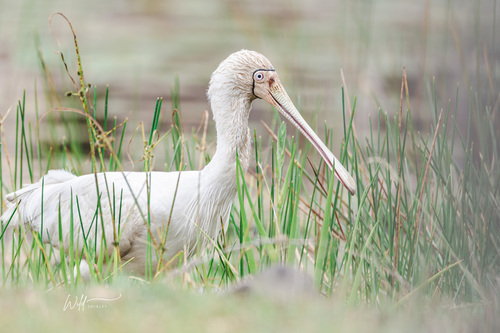
This species, the yellow-billed spoonbill, has the scientific name Platalea flavipes Gould, 1838. Measuring approximately 90 cm (35.5 in) in length, it has entirely white plumage. Its long, spoon-shaped bill, bare-skinned face, legs, and feet are all yellow, and its iris is pale yellow. Males and females have identical plumage and coloration. During the breeding season, a black line borders the face, long hackles grow on the chest, and the wingtips are black. Compared to the royal spoonbill, which has a wider-ended, more distinctly spoon-shaped bill that functions like a pair of tongs, the yellow-billed spoonbill’s bill is narrower and acts more like forceps. Like all other members of the ibis and spoonbill family, the yellow-billed spoonbill always flies with its head extended. In terms of distribution and habitat, this species lives across eastern, northern, and southwestern Australia, where it is most commonly found near water. It has been recorded as a vagrant in New Zealand, Lord Howe Island, and Norfolk Island, and does not occur in Tasmania. The yellow-billed spoonbill nests in trees, marshes, or reed-beds, and often roosts in trees. It can be found in the shallows of wetlands, and occasionally appears on dry pasture.