About Planotortrix notophaea (Turner, 1926)
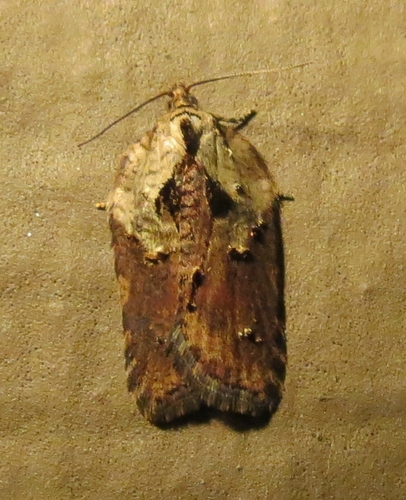
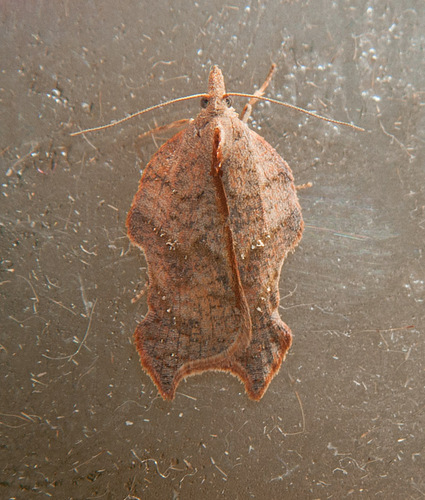
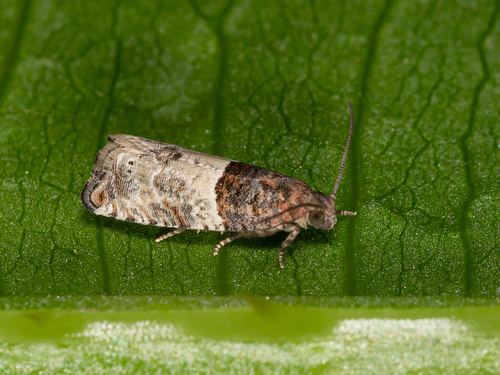
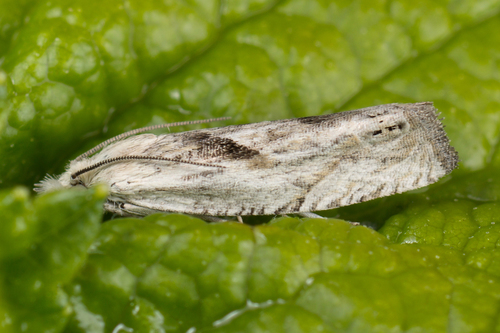
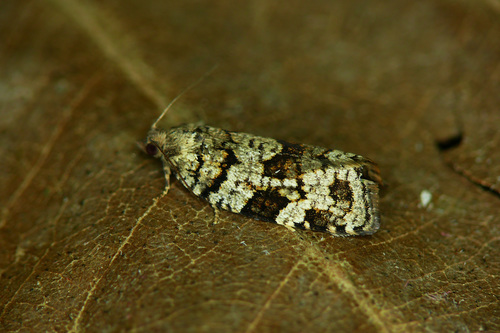
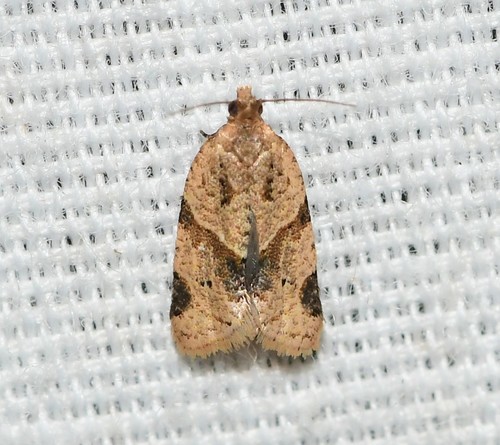
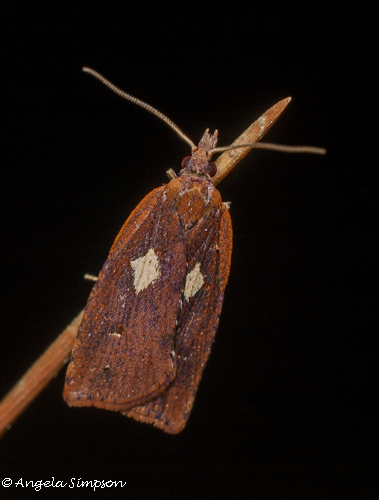
This species has a wingspan of 15–18 mm. The adult moth is brown fuscous in overall color, with fuscous white antennae. Its abdomen is grey, marked with a lateral black stripe, and its legs are fuscous. On the forewings, a diamond-shaped patch sits in the discal cell. The appearance of this species is known to be variable. The larvae have green heads marked with narrow brown stripes, a green body with white lateral stripes, and black forelegs.
Planotortrix notophaea is endemic to New Zealand, where it can be found on the Three Kings Islands, the North Island, and the South Island. This species occupies habitats ranging from coastal to montane forest. Its larvae are polyphagous, with a preference for small-leaved, hard-leaved gymnosperms and dicotyledonous angiosperms. Documented endemic host species for this moth include Aristotelia serrata, Coprosma grandifolia, Metrosideros excelsa, and Prumnopitys taxifolia. Larvae feed on leaves, buds, and stems from within a shelter they construct by webbing foliage together with silk.