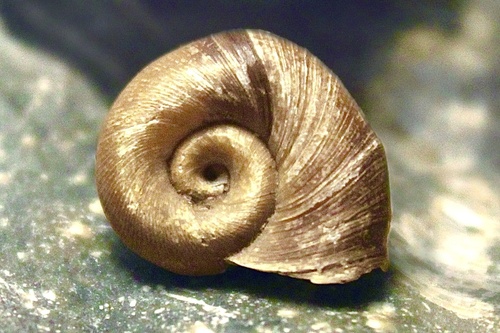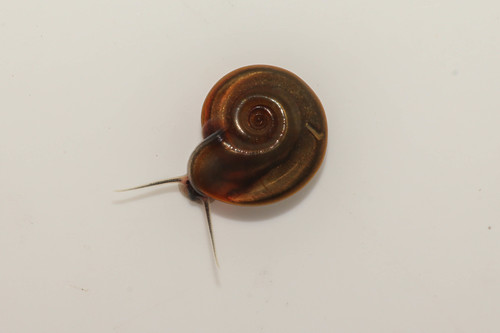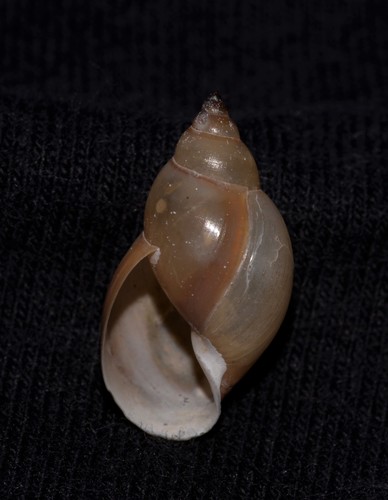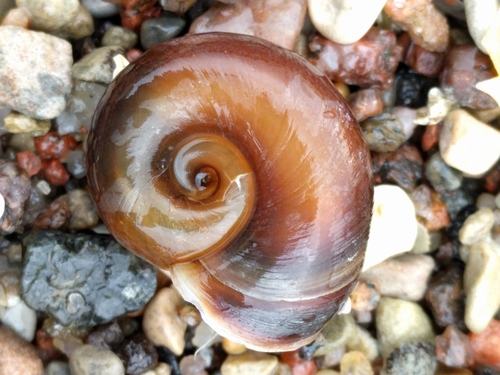
About Planorbis planorbis (Linnaeus, 1758)
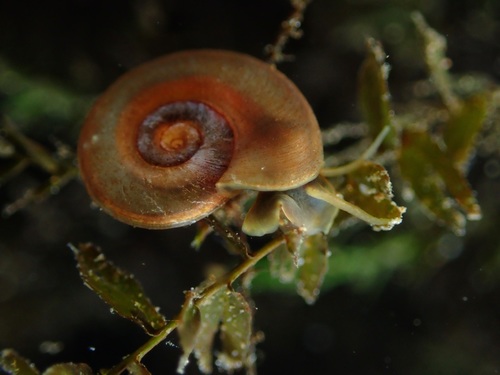
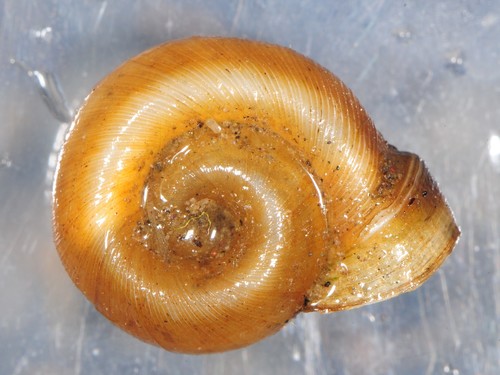
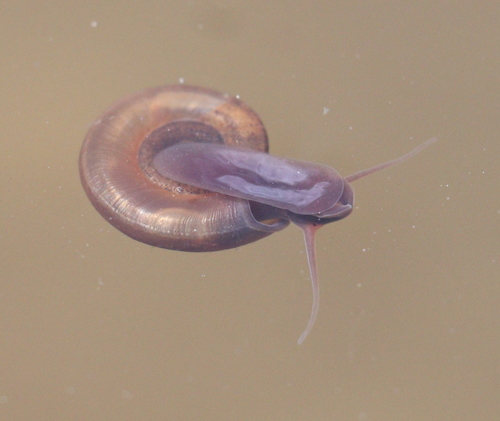
Like all planorbids, Planorbis planorbis has a sinistral shell. The shell measures 15 to 20 mm in width. The keel along the shell's periphery is located near the edge closest to the spire side, which is oriented downwards when the snail is alive.
Planorbis planorbis is distributed across most of Europe and Northern Africa. It is classified as invasive in many European countries, where it holds a least concern (LC) conservation status in the Czech Republic. It is also found as an invasive species in Slovakia, Germany, the Netherlands, Poland, Great Britain, Ireland, and Hungary.
This species lives in shallow standing or slow-flowing freshwaters with a mud substrate, including ponds and temporarily drying flood waters, at depths up to 1 meter (3.3 feet). It prefers habitats with abundant vegetation and high pH. Planorbis planorbis cannot tolerate intense water movement, but it can survive in eutrophic conditions. Population densities can range from 1 to 500 individuals per square meter in a given water source.
Planorbis planorbis has two seasonal reproductive cycles each year. In the northern hemisphere, spawning occurs in February, and again between summer and early autumn. Juveniles typically grow fast enough to take part in the next spawning season. After reproducing, adult snails can survive through the following winter.